 Hearth & Homesteader
The Homestead List
5 Things to Do Before Bringing Chickens Home
Get ready before the first bird arrives. Bringing chickens home starts with decisions about your address, the birds you plan to keep and the people who will care for them. Use these five tasks to organize the questions, supplies and responsibilities before setting an arrival date. The illustrations are planning examples, not construction plans. Decide whether you are starting with chicks or older birds: young chicks need a prepared brooding setup, and an outdoor coop alone is not their complete arrival plan.
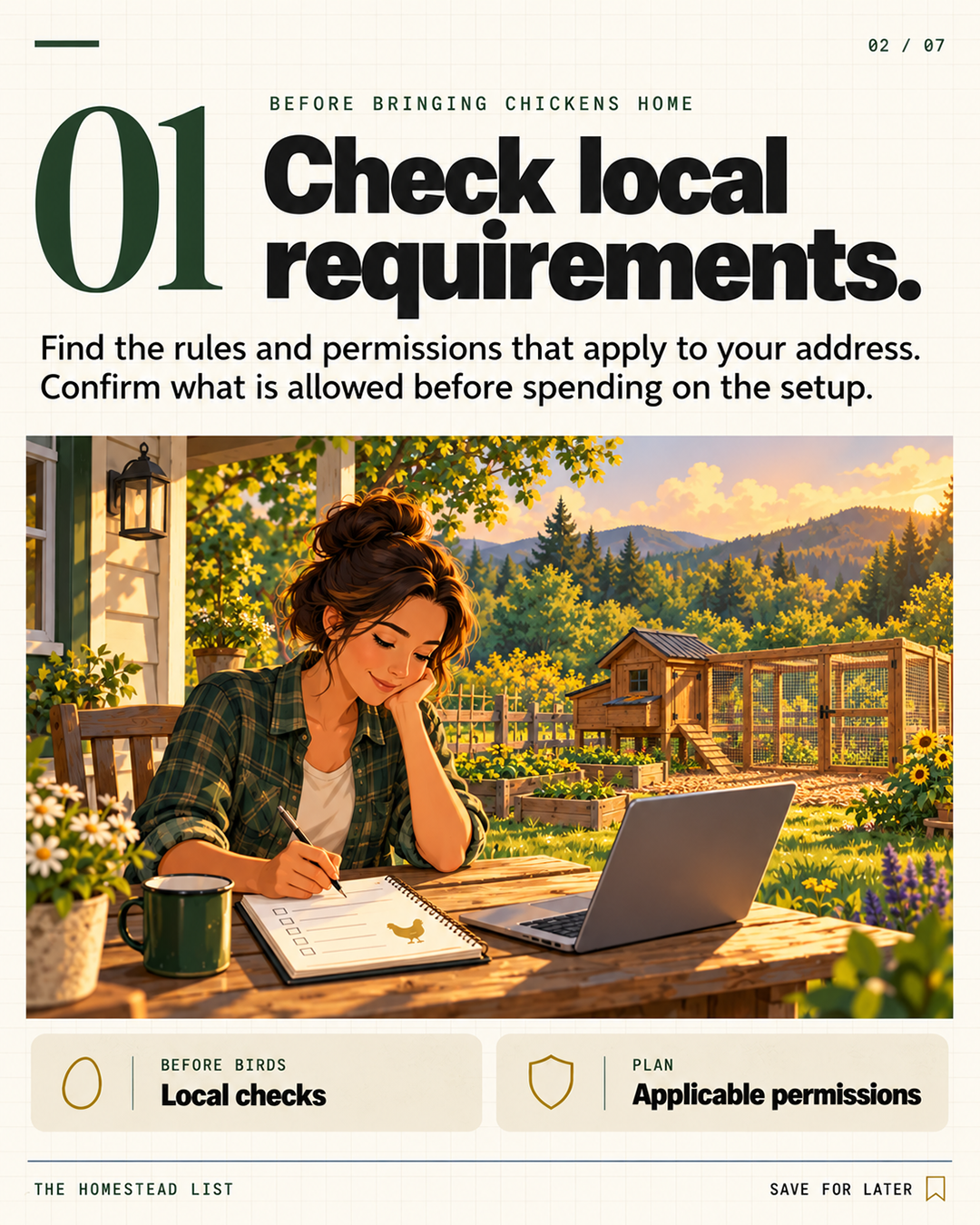
1. Check local requirements.
Find the authorities and property documents relevant to your address. Ask which poultry rules, permissions or restrictions you need to check, including questions about roosters and where a structure may go. Record the source and the date of each answer. If something is unclear, leave it open until the responsible office or document resolves it. CDC advises checking state and local laws before choosing poultry. Do this research before buying birds or materials, rather than relying on what another household is allowed to do.
Try this: Create a short list of address-specific questions, the source to check and any permission still unresolved.
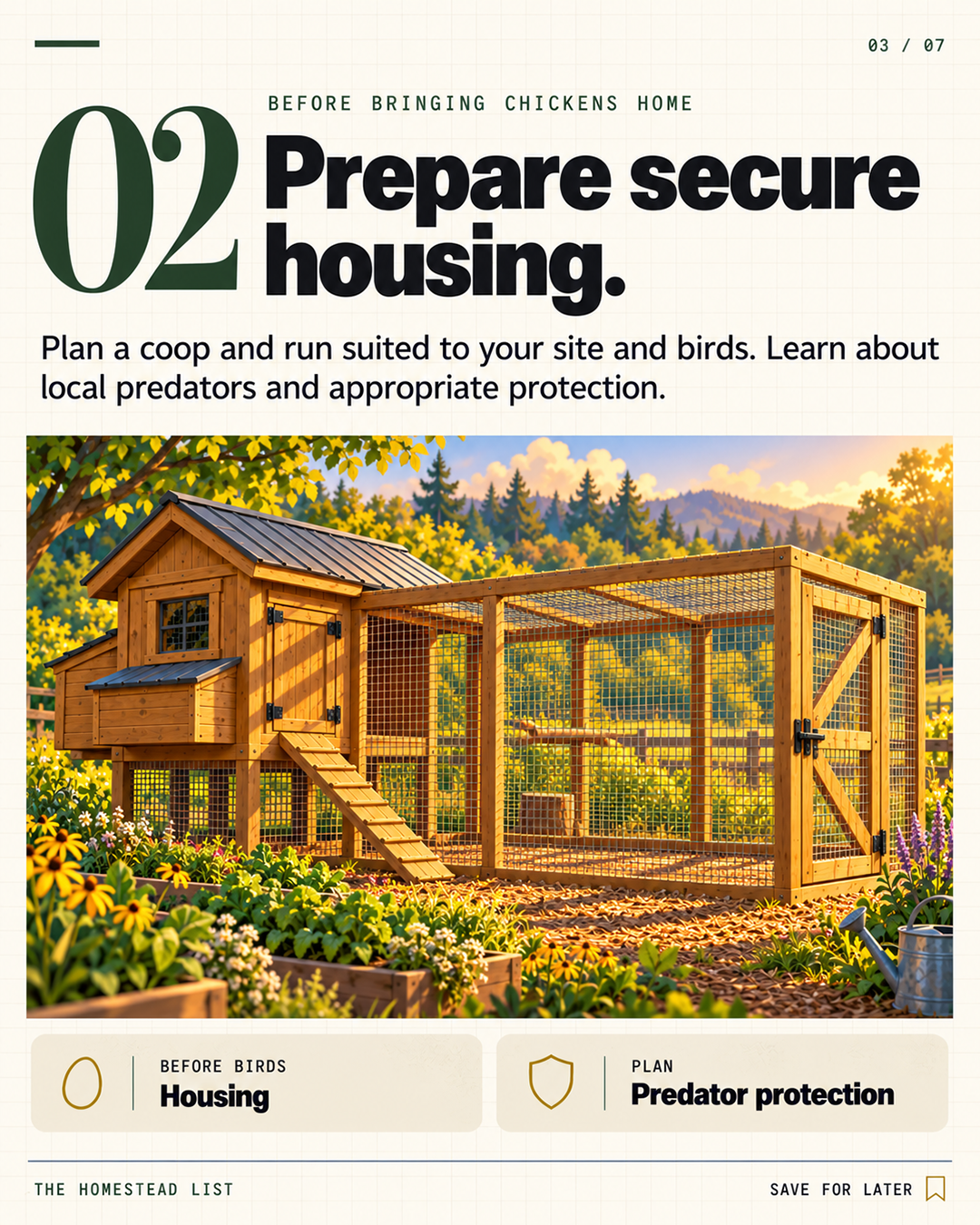
2. Prepare secure housing.
Choose the birds' age and intended flock size before finalizing the setup. University of Minnesota Extension provides separate guidance for laying hens and for raising chicks and pullets. Use the appropriate guidance to work through shelter, ventilation, space, cleaning access and predator protection for your site. Review openings, doors and the run with someone knowledgeable about poultry housing. A drawing or attractive coop photo does not demonstrate that materials and construction suit local threats. If starting with chicks, prepare and check their age-appropriate brooder before arrival.
Try this: Record the birds' expected age and list the housing or brooder questions that need an informed answer.
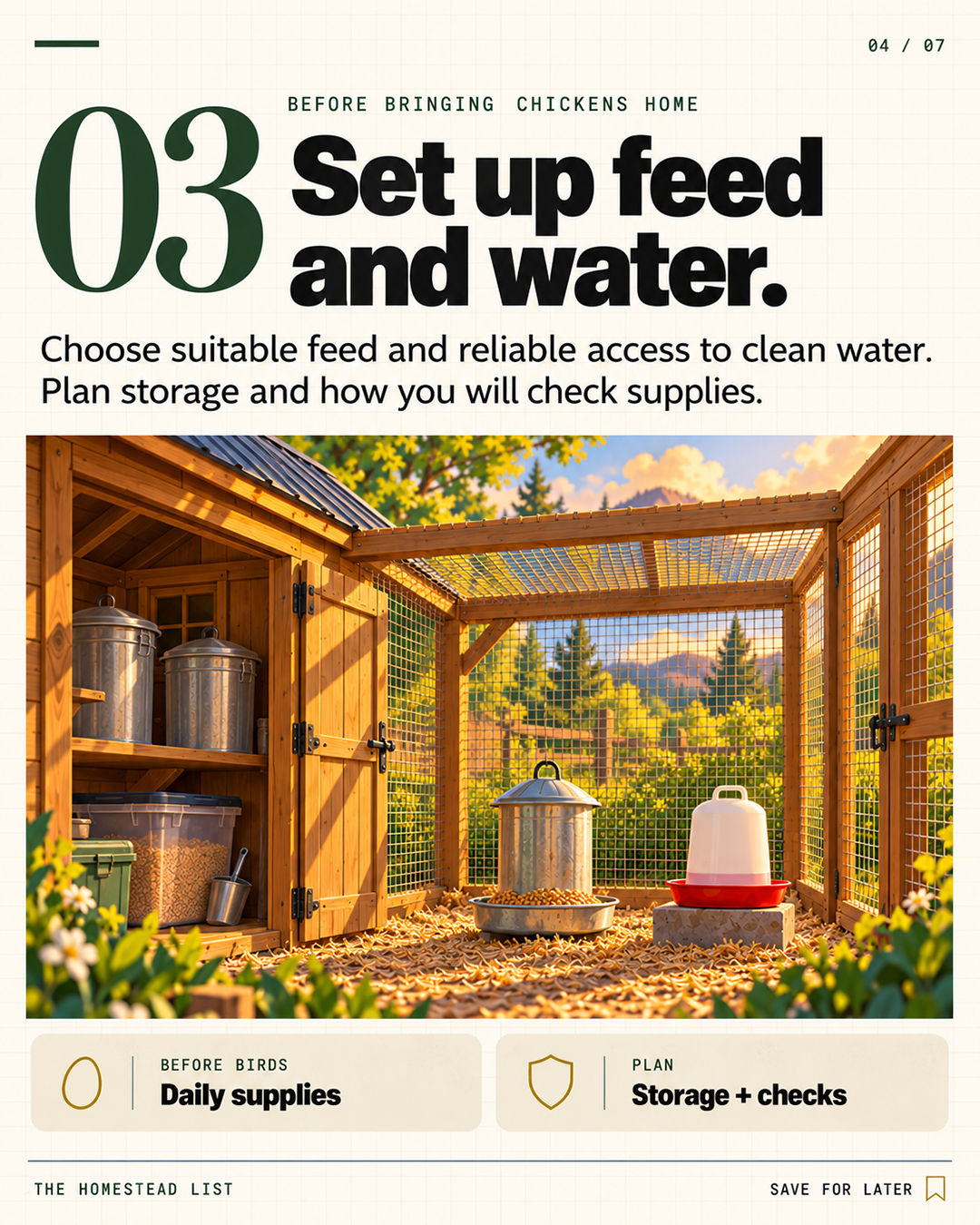
3. Set up feed and water.
Confirm which feed is suitable for the birds you are getting, then organize the equipment and storage around that choice. Minnesota Extension's chick and pullet guidance covers feeding at different stages; do not assume an adult laying-hen ration suits every bird. Plan how you will provide clean water, inspect the equipment and notice a supply running low. Walk the route from storage to the enclosure and decide who handles restocking. Keep product information available so a helper does not have to guess which supply you intended.
Try this: List the confirmed feed, water equipment, storage location and person responsible for supply checks.
4. Prepare the daily routine.
Write the routine using care guidance appropriate to your birds. Include feeding, water checks, observation, cleaning and what to do when something looks different. Assign work only after the people involved agree to it, and leave time for preparation and cleanup. Add hygiene to the notes: CDC recommends washing hands with soap and running water after contact with poultry or their environment, and cleaning poultry equipment outdoors. Keep the care record easy to update so the household can distinguish current instructions from an older plan.
Try this: Walk through a care round on paper and note each task, its timing, the agreed person and any question still open.
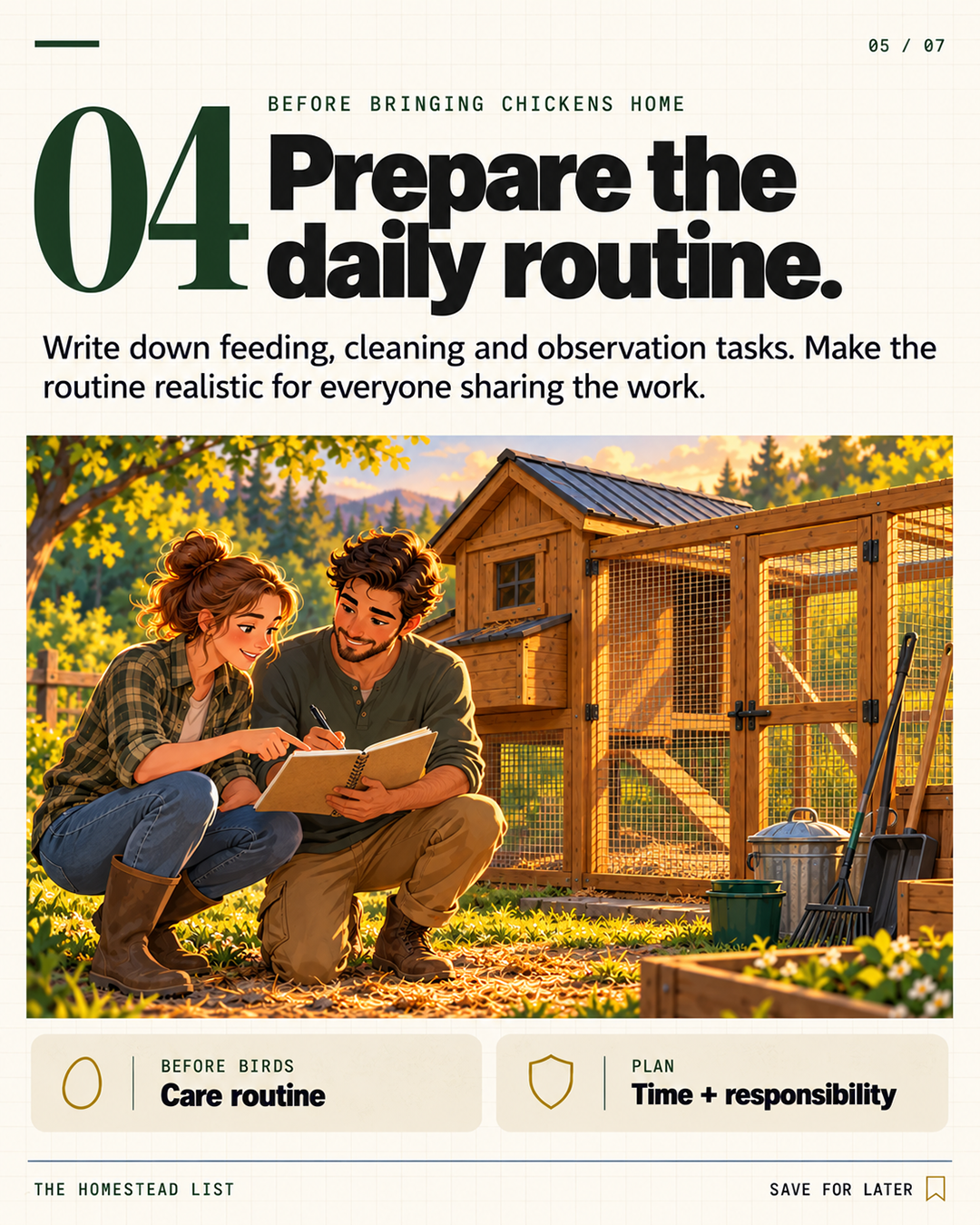
5. Arrange help before you need it.
Ask a willing helper what they can cover, then plan a walkthrough of the actual setup. Show where supplies and instructions live, and agree on how they should raise a concern. Identify a veterinarian who treats poultry and a local Extension contact for management questions before you need advice. CDC recommends finding poultry-experienced veterinary help. Keep contact details with the private care notes, along with the helper's agreed responsibilities. A familiar name is not a backup plan until the person understands the work and has agreed to it.
Try this: Confirm one helper, one walkthrough date and the poultry-care contacts you still need to establish.
Your next step
Use the readiness sheet to separate completed tasks from questions still needing an answer. Finish the housing, supplies, routine and support arrangements appropriate to your birds before choosing the arrival date. Keep learning as the flock's needs change. What is on your chicken setup checklist?
Before-the-birds readiness sheet
Record what is ready and what still needs an answer before arranging arrival. Use age-appropriate poultry guidance and keep personal contacts private.
Open and print the planning worksheet
Optional planning resources
Affiliate links: we may earn a commission if you buy. As an Amazon Associate I earn from qualifying purchases. These are optional editorial resources, not hands-on product reviews. Plain paper or an existing notebook works too.
Oxford composition notebooks · 12-pack
Optional for setup questions, dated care instructions and supply checks. This is a bulk pack; a notebook you already own works too. See the free Extension guides below for poultry-specific preparation.
View on Amazon