 Hearth & Homesteader
The Homestead List
5 Questions Before Planting Your First Fruit Trees
The dream starts with a basket of fruit. The planning can start with a notebook. Before buying your first fruit trees, give the project a page and work through the questions below. You do not need every answer today. You do need a way to tell a checked fact from a hopeful guess. Choose a fruit you would actually use, record what still needs research and bring those questions to your local Extension office or a knowledgeable nursery. These prompts help organize that conversation.
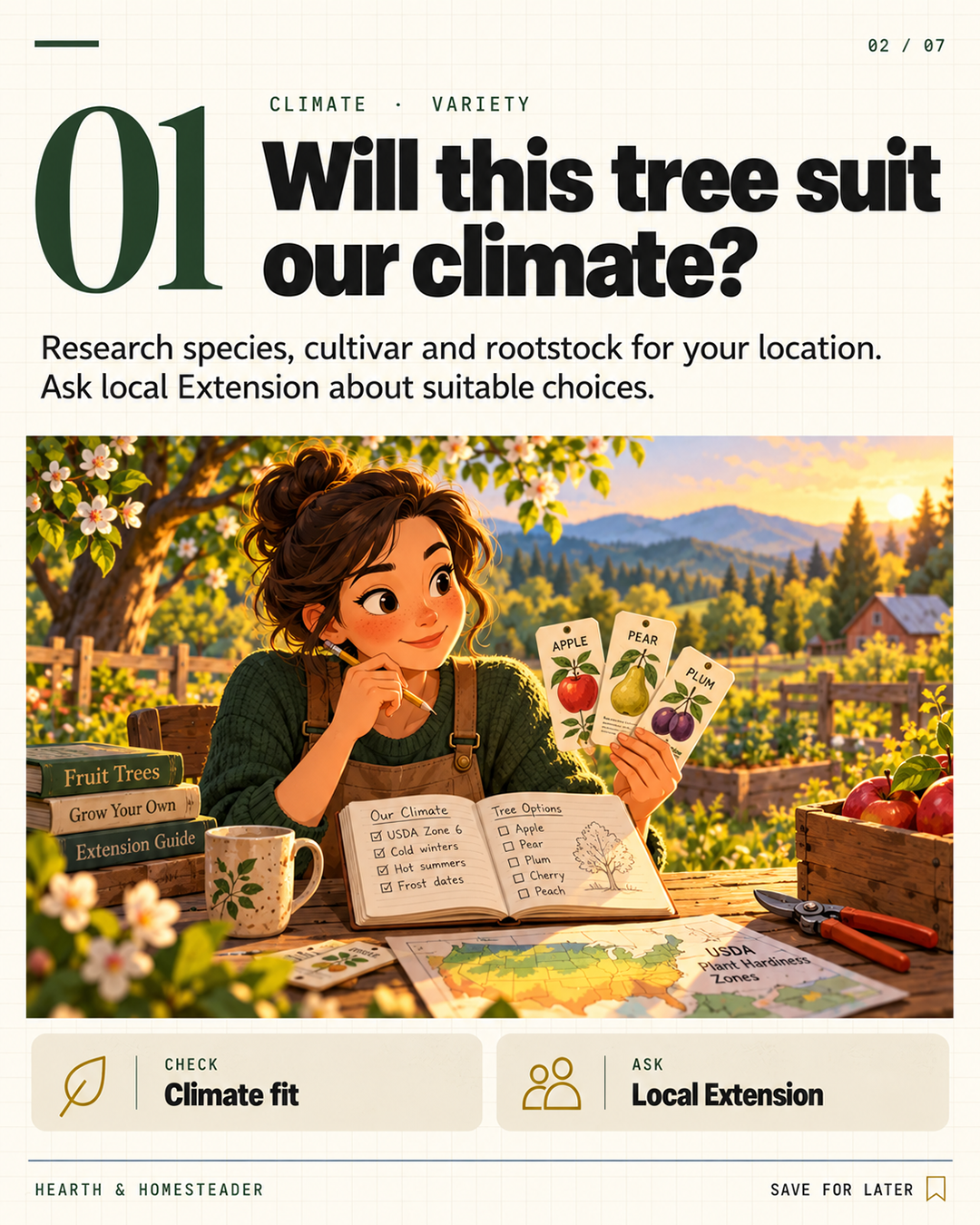
1. Will this tree suit our climate?
Write down the exact tree you are considering, including the species, cultivar and rootstock when available. Keep the nursery label or product page with your notes so you can return to the same candidate. Ask local Extension which choices fit your area and what local growing challenges deserve attention. University of Minnesota Extension emphasizes matching an apple variety to climate and its rootstock to the site. Its Minnesota recommendations are a regional reference, so use guidance for your own location before making a choice.
Try this: Make one candidate entry: tree name, source, local adviser to ask and one unanswered climate question.
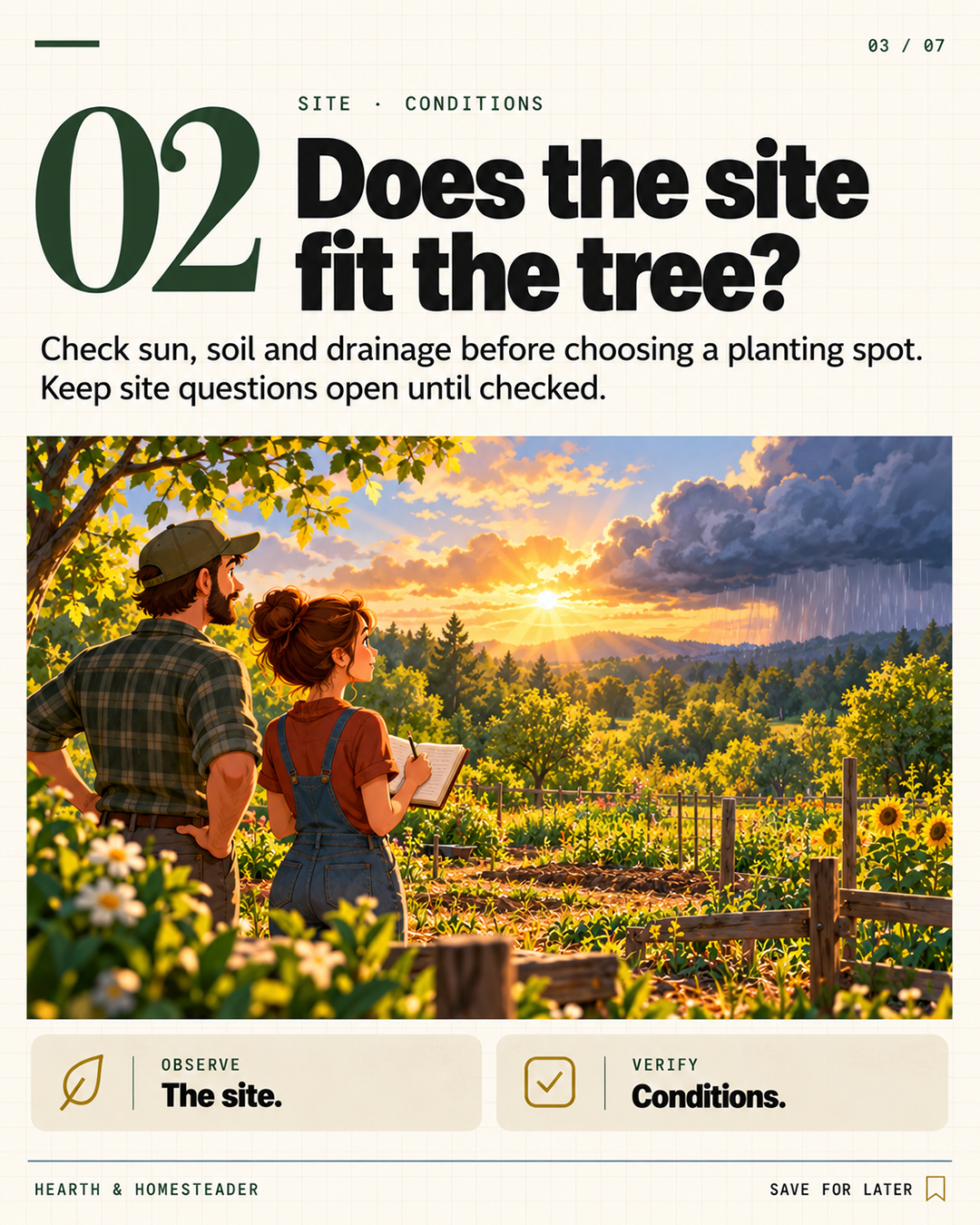
2. Does the site fit the tree?
Choose a possible planting area and record what you have actually observed there. Add dated notes about sunlight and what happens after rain, then list the soil information you still need. Maryland Extension includes sun, soil and drainage in fruit-site planning. Compare your observations with requirements for the tree under consideration. A pleasant-looking corner can stay a candidate while you investigate. Keep your sketch simple and label the location clearly enough that another household member can find the same spot.
Try this: Draw the candidate spot and separate observations, missing information and the next person or source to consult.
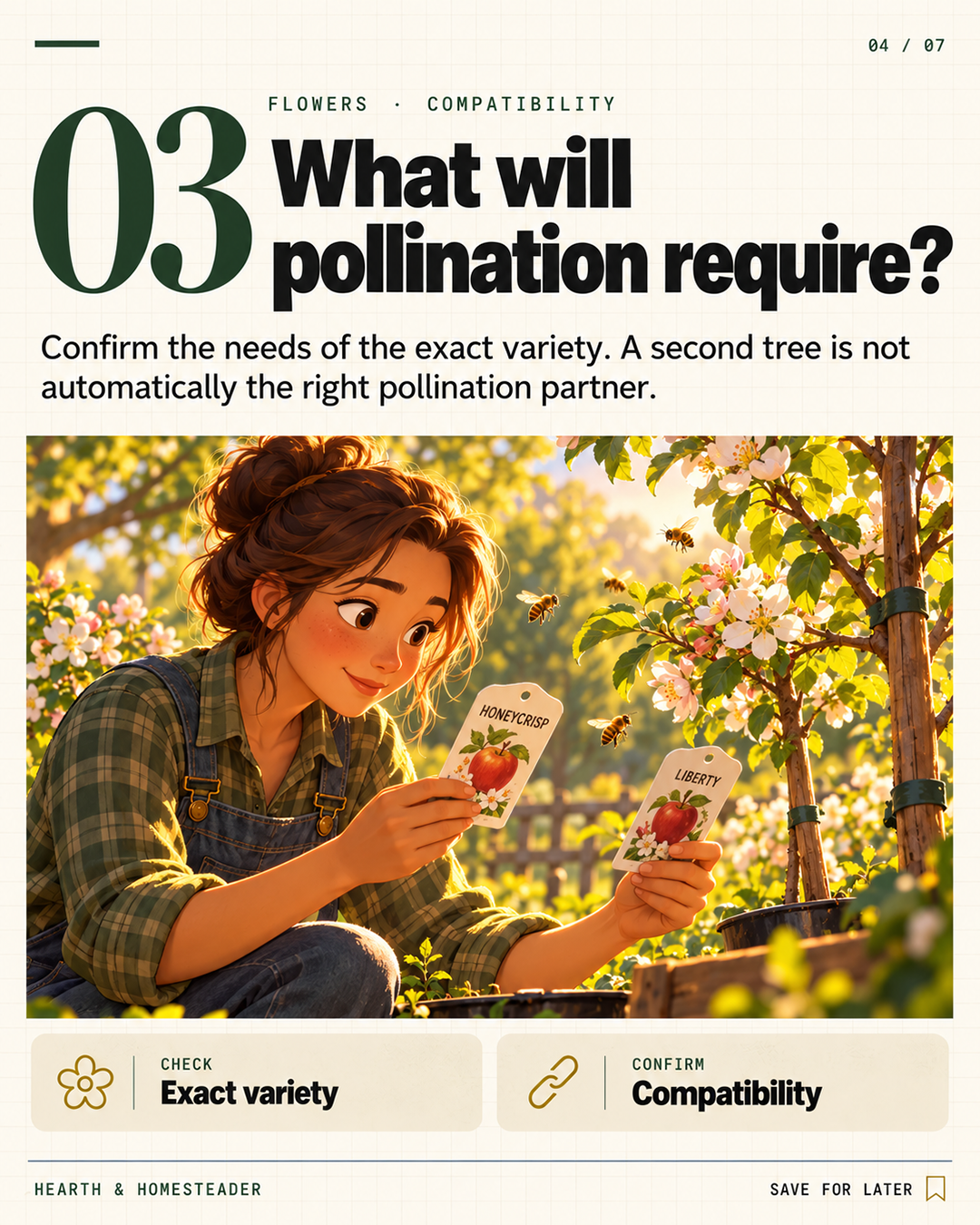
3. What will pollination require?
Check the pollination requirements of the exact cultivar before deciding how many trees to buy. Maryland Extension advises checking cultivar compatibility and overlapping bloom times. Put the source of that information beside your notes so you can confirm it again. If another tree is needed, give that candidate its own entry rather than treating any second tree as a match. Ask the nursery to explain the proposed pairing. Keep a shopping decision open until you can explain why those particular choices belong together.
Try this: Record the cultivar, its pollination guidance, any proposed partner and the source confirming that pairing.
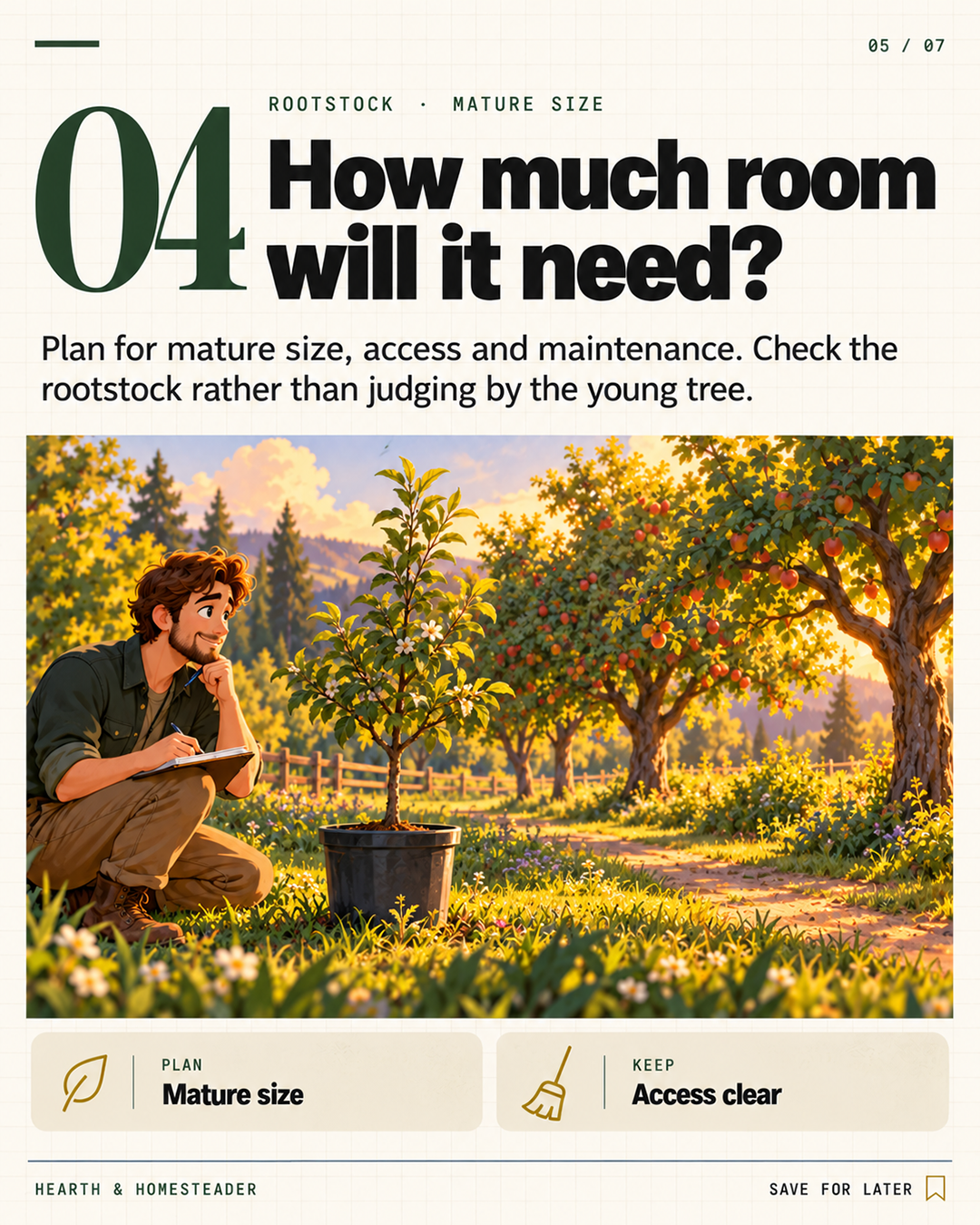
4. How much room will it need?
Think about the eventual tree and the work around it. For apples, Minnesota Extension explains that rootstock plays a major role in mature size. Obtain the details for your candidate instead of estimating from its nursery size. On your planning page, mark nearby uses of the space, paths you rely on and questions about access for care. Bring the sketch and measurements to your adviser. Treat the first drawing as a working draft that can change when the tree details become clearer.
Try this: Add the stated mature size, its source, surrounding uses and one access question to your site sketch.
5. Who will handle the ongoing care?
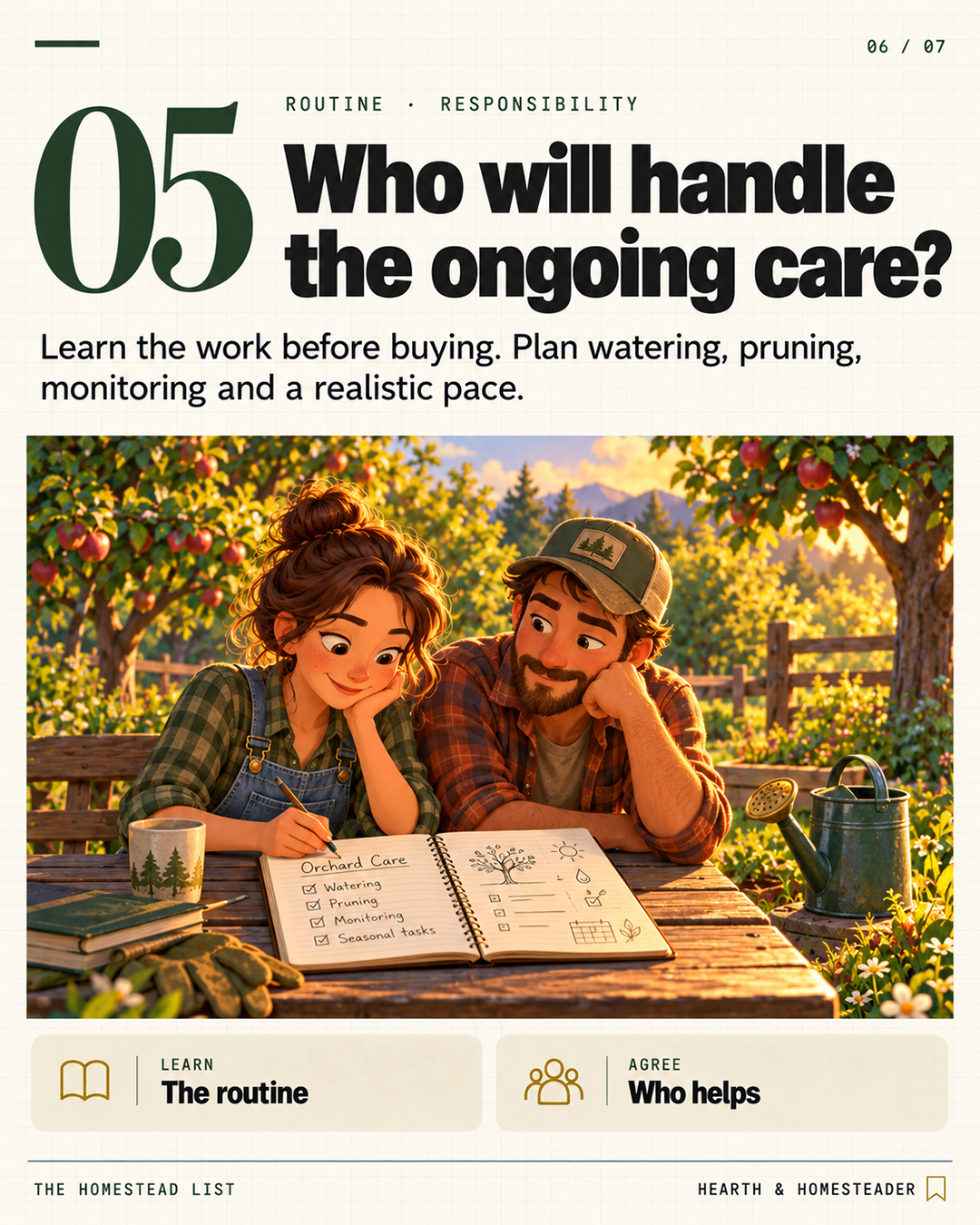
Ask what the selected trees will need through the year before agreeing to the project. Learn about watering, pruning and monitoring from locally suitable guidance, then discuss who is willing to learn and carry out the work. Make a page for questions rather than inventing a care schedule from memory. Ask how the routine would work during a busy week or an absence. Keep the first project small enough for the household to understand its responsibilities and return to the plan as you learn.
Try this: Name one willing learner, one guidance source and the care question you need answered before buying.
Your next step
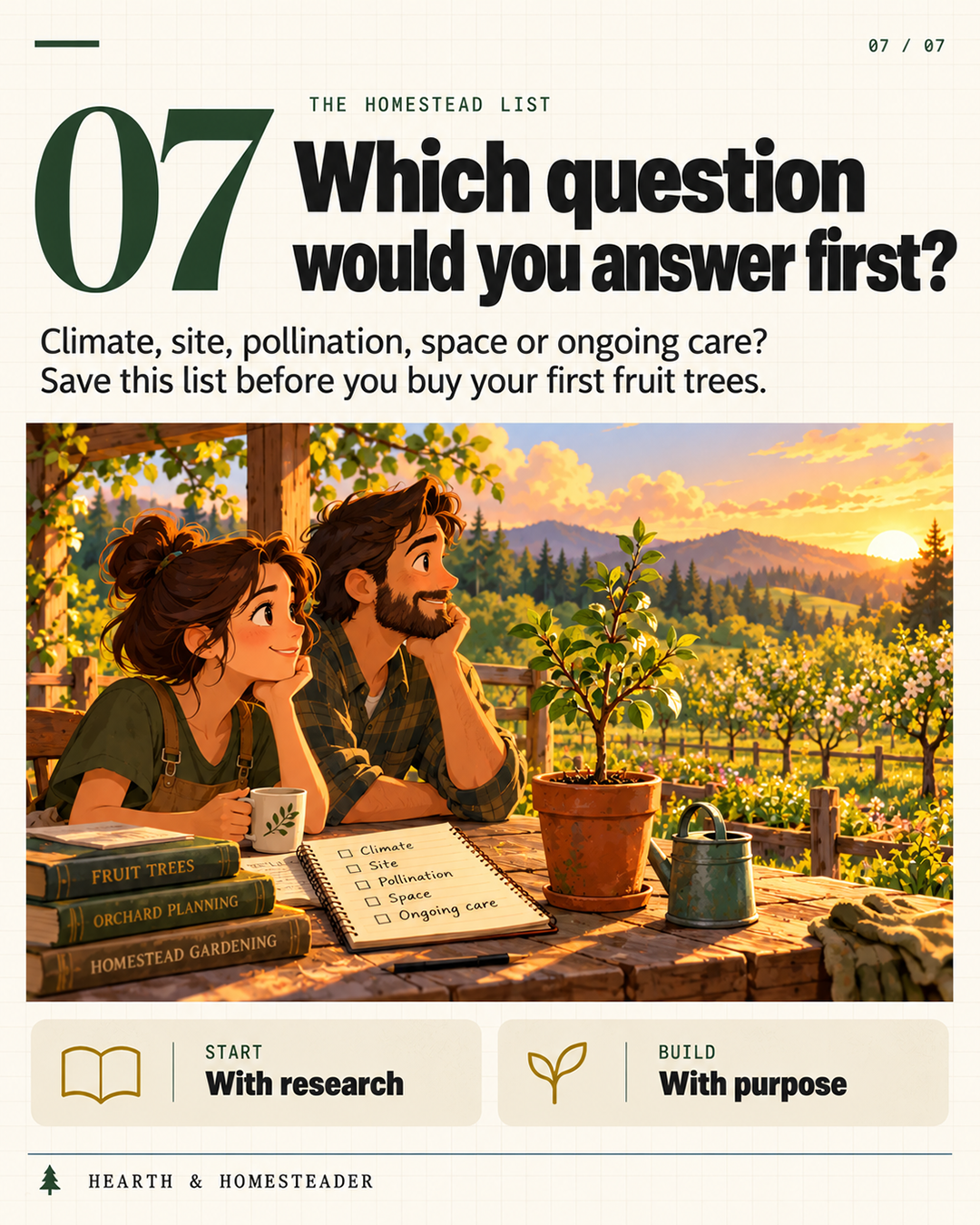
Choose the question that feels least clear and take one step toward answering it. Save a label, observe a site or contact a local adviser. Keep the remaining questions visible on your planning page. A useful first-tree plan can include unknowns, provided you know what you will check next. Which question would you answer first?
First fruit tree planning sheet
Use one sheet per candidate. Mark unknowns and confirm choices with guidance suited to your location.
Open and print the planning worksheet
Optional planning resources
Affiliate links: we may earn a commission if you buy. As an Amazon Associate I earn from qualifying purchases. These are optional editorial resources, not hands-on product reviews. Plain paper or an existing notebook works too.
Oxford composition notebooks · 12-pack
Optional for keeping tree labels, local advice and dated site observations together. This is a bulk pack; paper or a notebook you already own works too.
View on Amazon