 Hearth & Homesteader
The Homestead List
5 Ways to Begin Homesteading Where You Live
Your first homesteading step can fit your current address. You can begin learning about food, household routines and practical work while living in an apartment, renting a home or waiting for a future property. Choose one project that suits the space, time and permission you have now. These five ideas are starting points for practice, with room to learn what you enjoy before taking on a bigger commitment. You do not need to attempt them all in the same week.

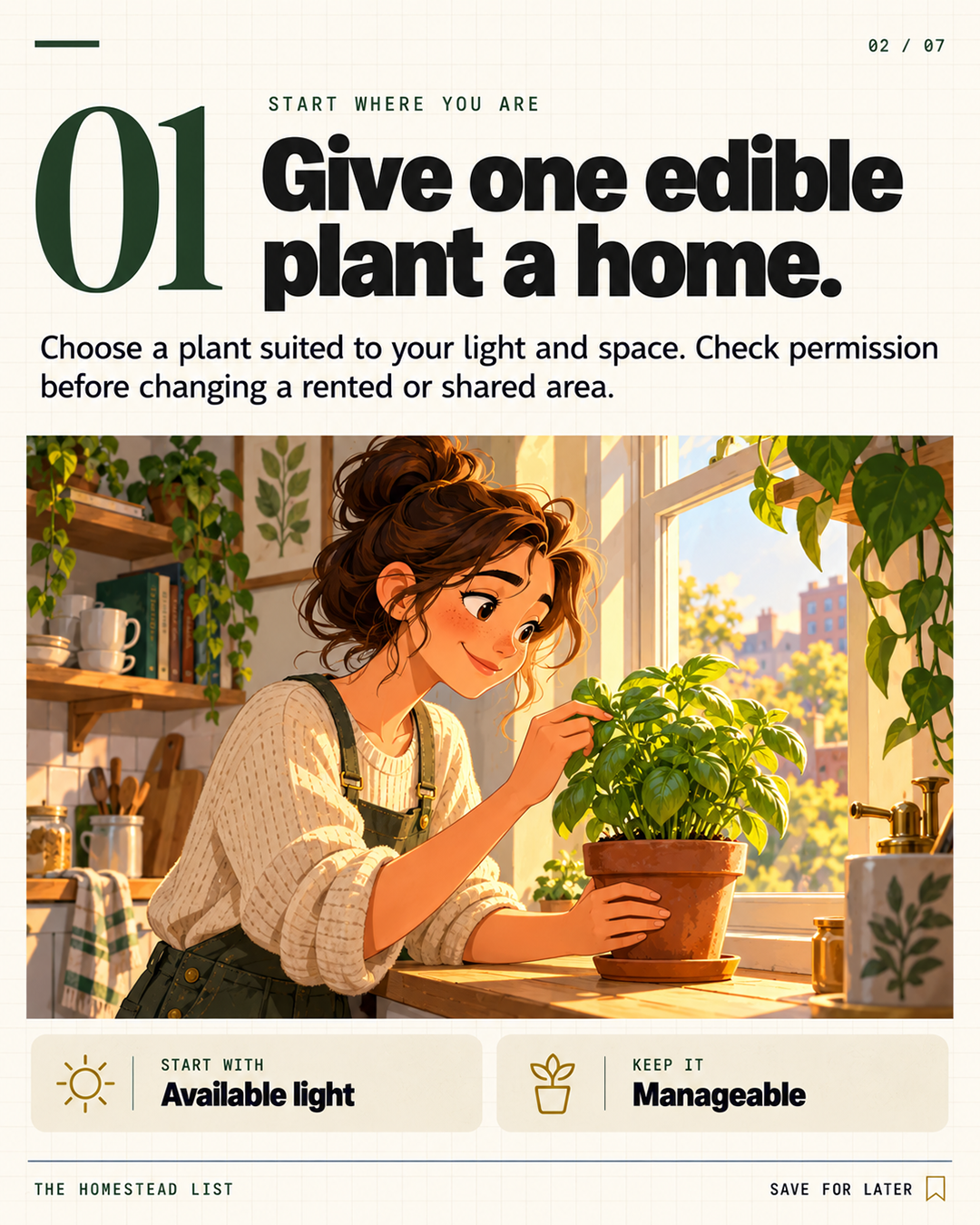
1. Give one edible plant a home.
Start by looking at the place you could actually use. Notice the light, the available room and how you would care for a plant there. Choose a suitable edible plant after checking its growing requirements, rather than buying one because it looks good in a photograph. If the area is rented or shared, check permission before changing it. Keep notes about the plant you choose and the questions you still have. One manageable pot can give you a specific project to research and revisit.
Try this: Choose a possible growing spot and list the conditions you need to check.
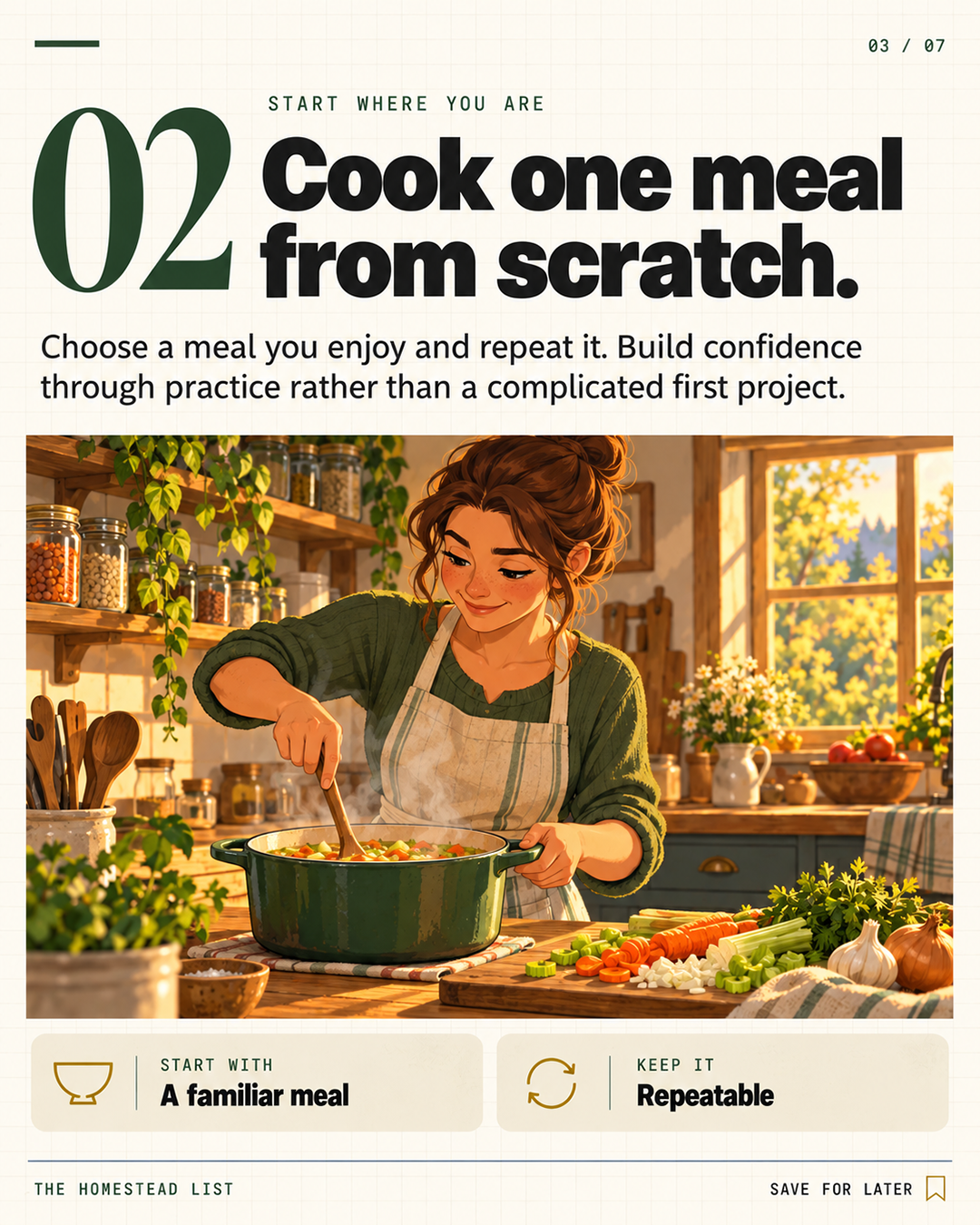
2. Cook one meal from scratch.
Pick a meal you already enjoy eating. Find a reliable recipe that fits your equipment, budget and available time, then make it again before adding another project. Write down what you would change next time and which parts felt awkward. Follow the recipe's food-safety instructions and use appropriate guidance for handling ingredients and leftovers. The useful outcome is a meal you can repeat in an ordinary week. You can develop the habit with store-bought ingredients while learning about growing food separately.
Try this: Choose one recipe and a realistic evening to make it, then record one thing you learned.
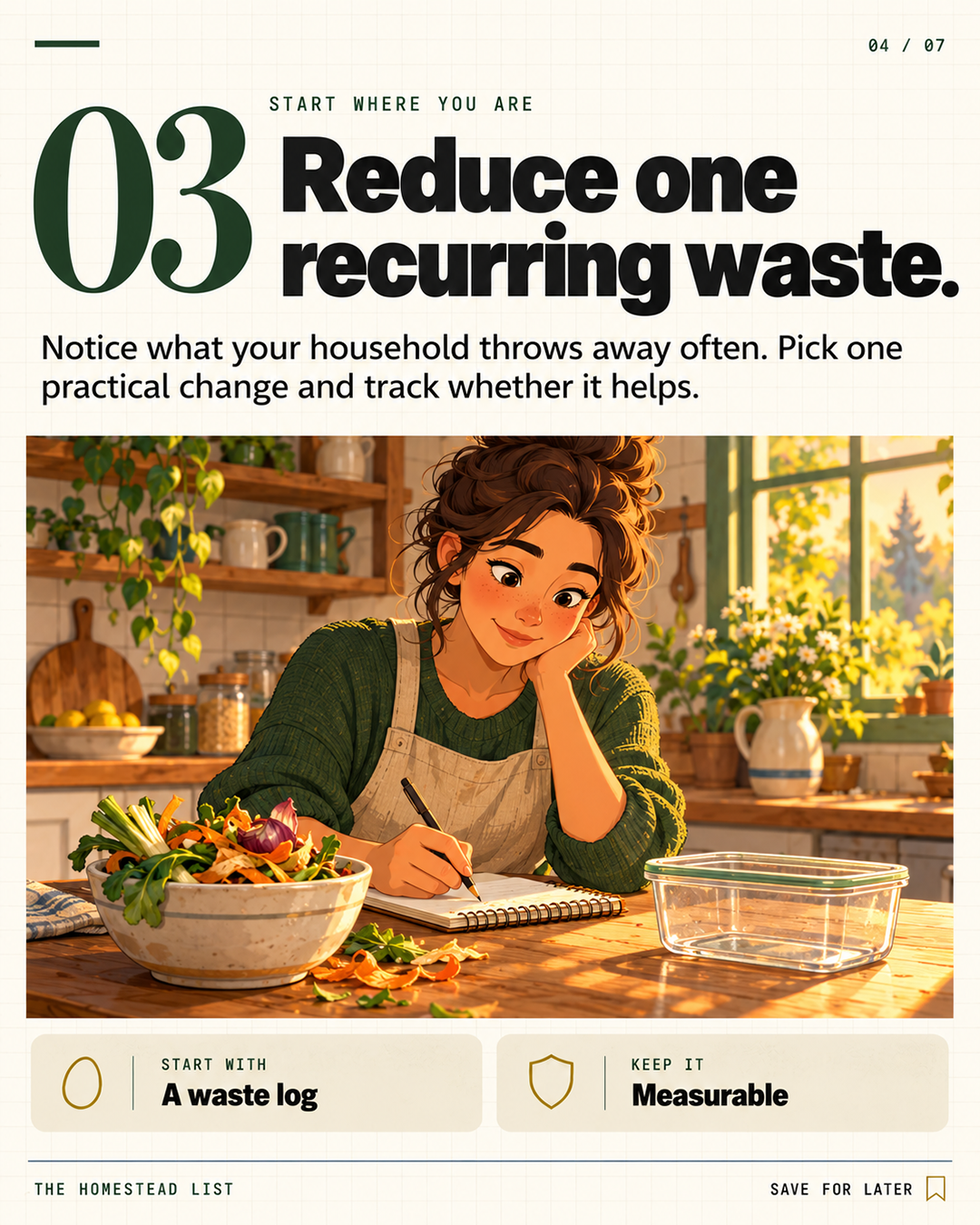
3. Reduce one recurring waste.
Notice what your household discards repeatedly instead of guessing where the biggest opportunity lies. Keep a short record, then choose one change you can check against it. If food often goes uneaten, look at your meal plans, shopping and storage. EPA guidance on preventing wasted food offers a useful starting point. Try a change that fits the people eating in your home, and record whether it helped. Leave dramatic savings claims out of the experiment until your own notes support a conclusion.
Try this: Record one recurring discarded item and choose a change to test next week.
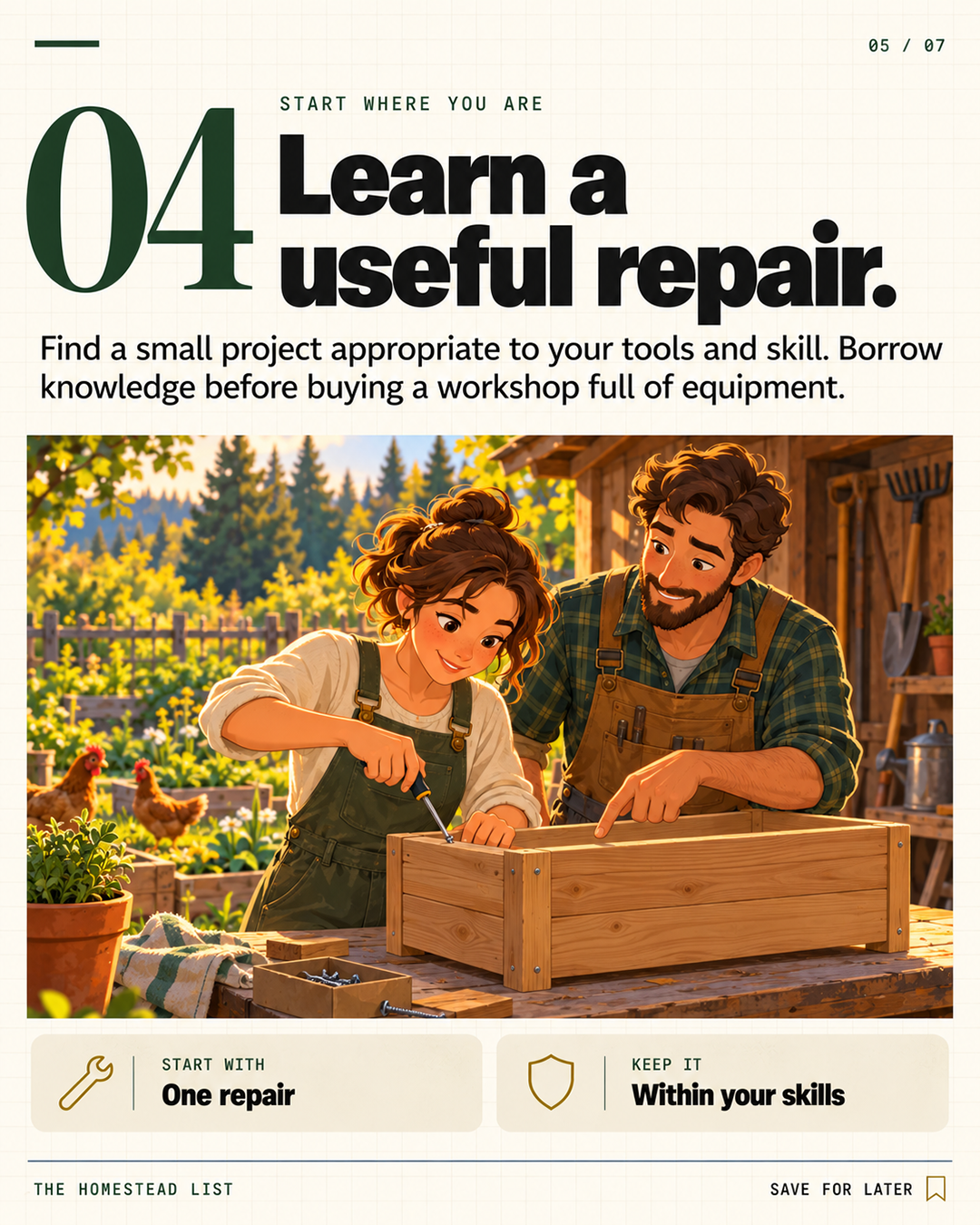
4. Learn a useful repair.
Choose a small item you understand well enough to assess, such as a simple empty wooden planter with a loose fitting. Find credible instructions or ask someone with relevant experience to help you decide whether the repair is suitable. Match the task to your tools and skill, and follow equipment instructions. You do not need to begin with a large workshop or a project that feels beyond you. Write down what you already own before buying supplies, then record what you would do differently next time.
Try this: Identify one suitable repair and one person or instruction source to consult before starting.
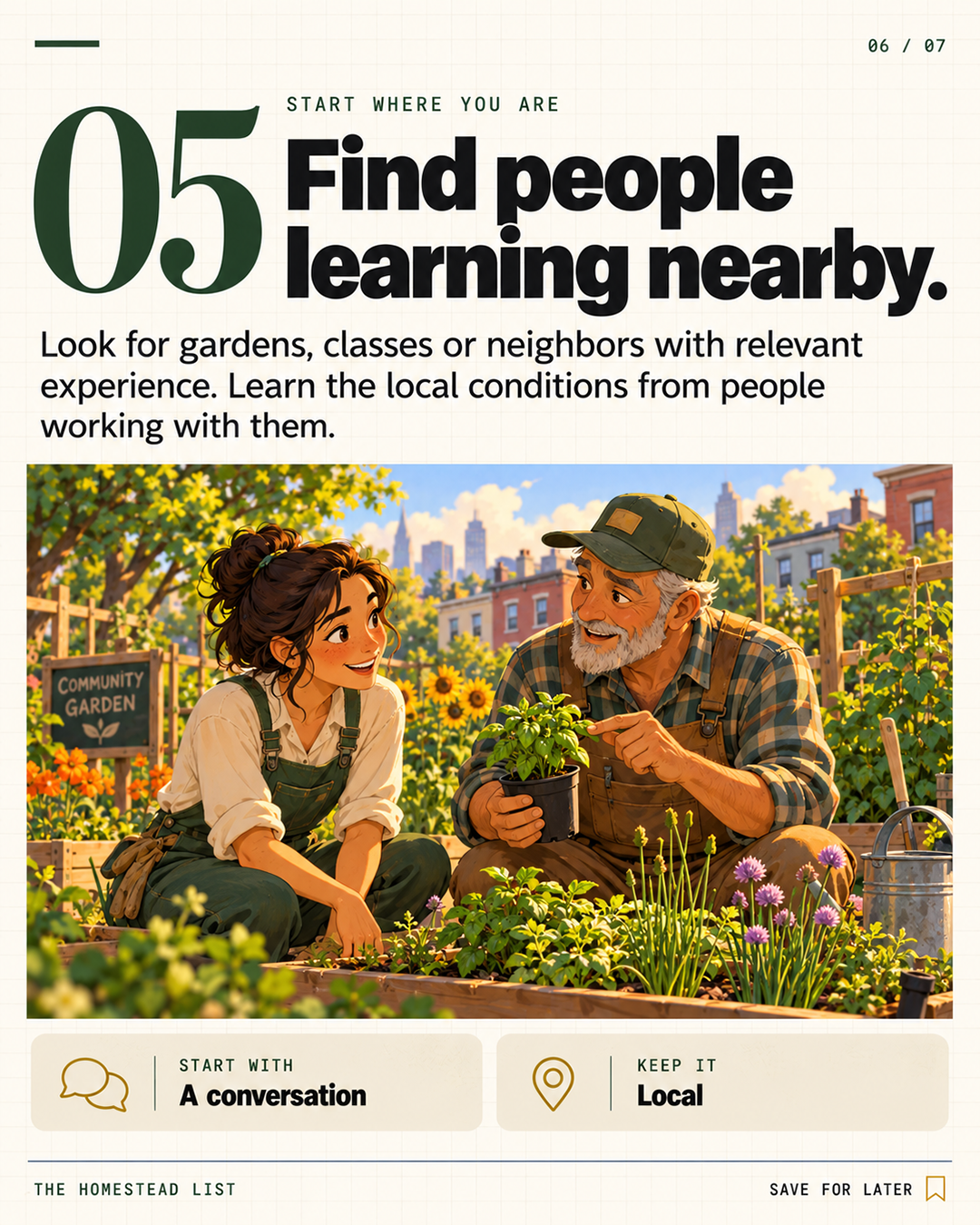
5. Find people learning nearby.
Look for a local garden, class or Extension resource that connects with the project you want to try. Begin with one clear question and respect the person's time and the group's rules. Ask how local conditions affect their work, what they would research first and where they recommend learning more. You can listen and take notes without committing to a new project immediately. Keep experience and location in context: something that works for another household may need adaptation for your space and routine.
Try this: Find one local learning opportunity and write the question you would bring.
Your next step
Choose the idea that fits your current week, then write down your first action and what you need to learn. Keep the result small enough to review: one plant researched, one meal practiced, one waste pattern observed, one repair assessed or one useful conversation. The notes you make now can inform later choices about land, equipment and the work you want to take on. What could you start at your current address?

Start-where-you-are planning sheet
Choose one project that fits your current home and routine. Use what you already have before deciding what to buy.
Open and print the planning worksheet
Optional planning resources
Affiliate links: we may earn a commission if you buy. As an Amazon Associate I earn from qualifying purchases. These are optional editorial resources, not hands-on product reviews. Plain paper or an existing notebook works too.
Oxford composition notebooks · 12-pack
Optional for project notes, a food-waste log and questions to research. This is a bulk pack; use a notebook you already own if it serves the task.
View on Amazon