 Hearth & Homesteader
The Homestead List
5 Boundaries to Discuss Before Sharing Land
Being close does not mean sharing everything. A family compound can include separate homes, shared work and very different ideas about an ordinary day. Before choosing matching porch chairs, compare those expectations. These five conversations give each household room to say what works, what does not and what still needs a decision. Use them to start a practical discussion, then record what everyone actually agrees to. The illustrations show imagined arrangements, not a plan for a particular property.

1. Private means private.
Start with the everyday moments: an evening on the porch, a work call or a morning when nobody wants company. Ask each household which areas it wants to treat as private and how someone should request a visit. Include gardens, storage and outdoor seating rather than discussing only the front door. Sketch the proposed arrangement together and mark any space people understand differently. A nearby home should not become a shortcut or gathering place simply because the people living there are relatives.
Try this: Have each household mark one private area and explain how it would like visitors to ask before entering.

2. Guests affect everyone.
Talk through an ordinary dinner guest and a longer visit. Where would people park? Who lets the other households know? What would change if a visitor brought additional people or stayed overnight? Write down the questions before choosing an answer. Make room for different work schedules and comfort levels, including a household that needs a quiet evening. These are expectations to discuss together; do not assume that an invitation to one home gives guests access to every shared space or someone else's garden.
Try this: Walk through a weekend visit and record the questions each household wants answered before agreeing.

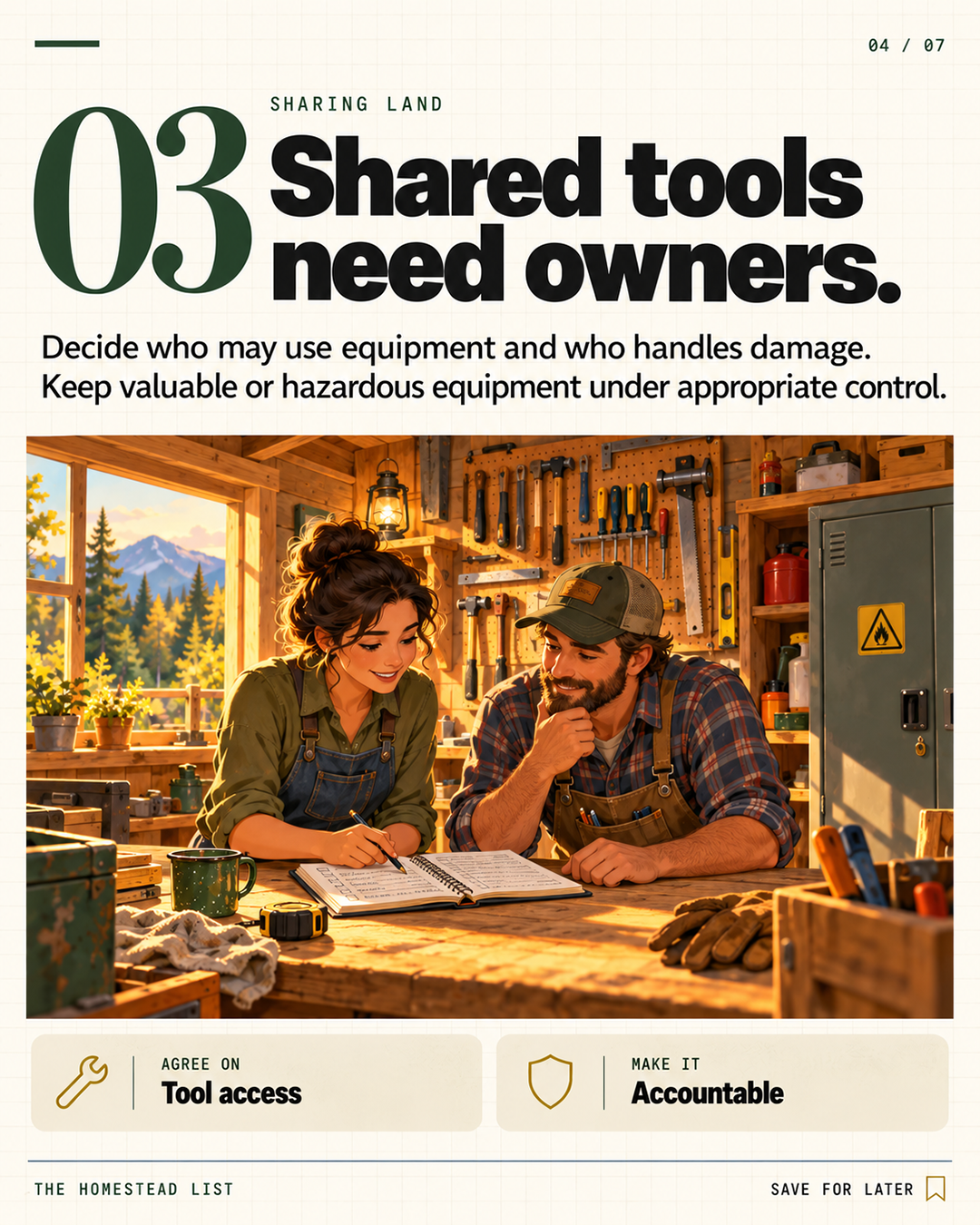
3. Shared tools need owners.
List what is actually shared and what remains personal. A tool in a common workshop can still belong to one person. Ask who may borrow it, where it should be returned and how a problem gets reported. Discuss maintenance and damage before a broken item interrupts a project. Keep equipment under control appropriate to its hazards and the people using the space. A simple checkout note can record the item, borrower and expected return without turning every favor into an argument.
Try this: Pick one tool and record its owner, agreed users, return location and the person to contact about a problem.
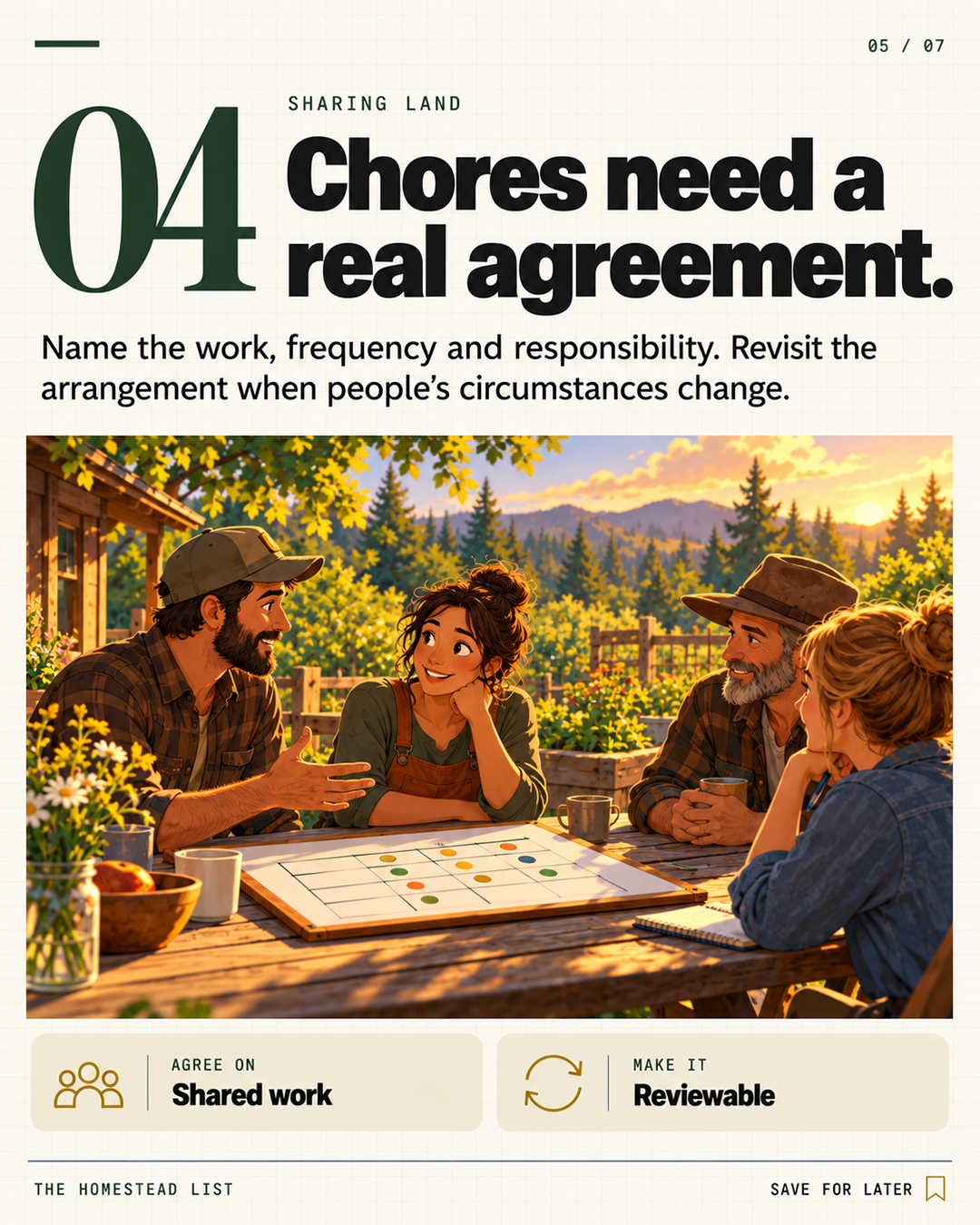
4. Chores need a real agreement.
Replace general promises to help with a conversation about specific work. Name the task, when it needs attention and who has willingly agreed to do it. Ask what happens during travel, illness or a change in work hours. Include the coordination work too: noticing a missing supply, arranging a repair or checking whether a job is finished. Keep unresolved responsibilities visible instead of quietly assigning them to the person who notices first. Choose a date to revisit the arrangement as availability changes.
Try this: Write one shared task with its timing, agreed person, backup question and next review date.
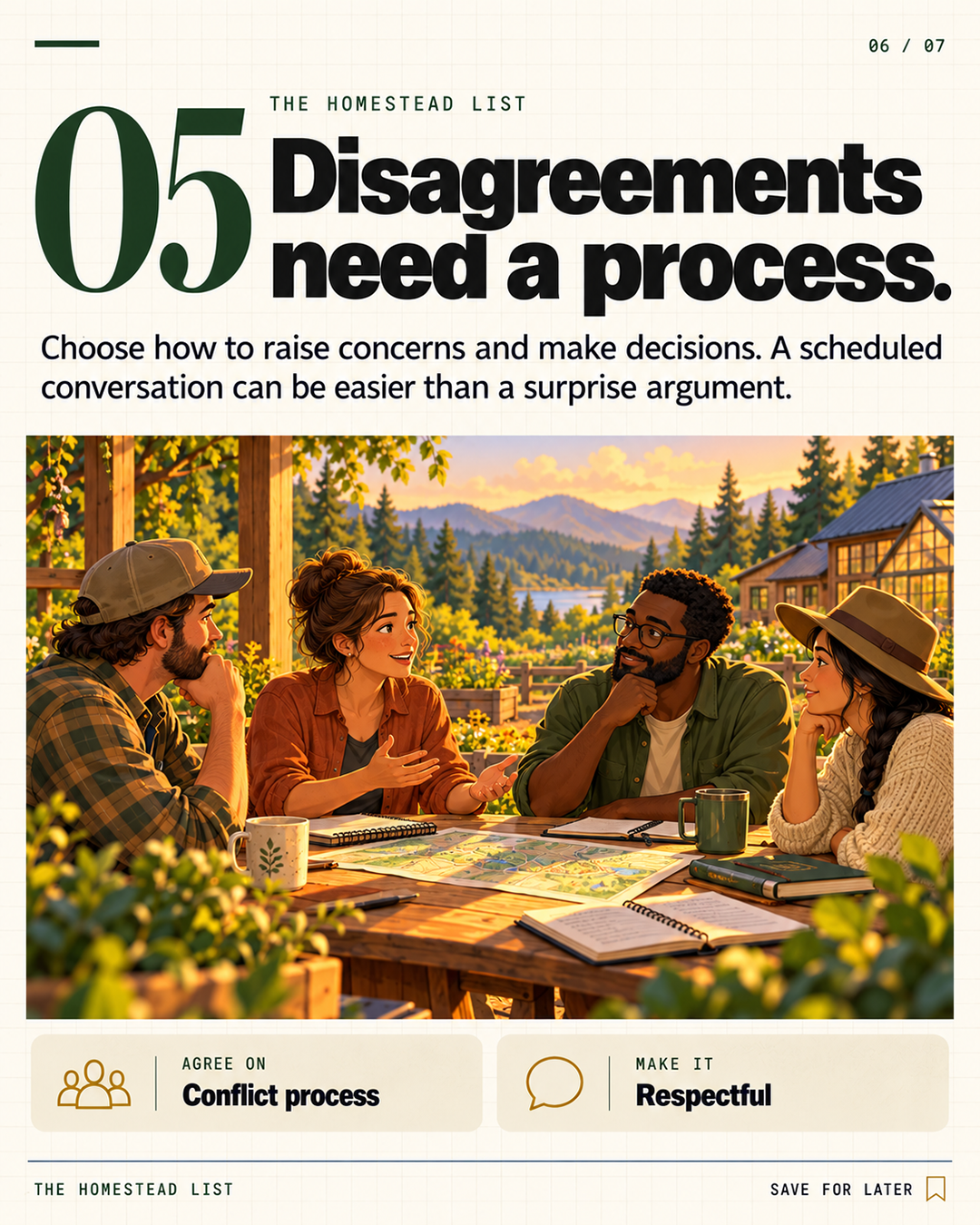
5. Disagreements need a process.
Choose how a concern gets raised before a tense moment arrives. Discuss a regular check-in, a way to suggest an agenda item and how to record decisions or questions still open. Give each person time to explain what matters to them. University of Maryland Extension describes reflective listening as restating what you heard and checking your understanding. Try that before responding with your own position. A meeting process cannot promise agreement, but it gives the family a place to keep working through differences.
Try this: Practice with a small issue: summarize the other person's concern, ask whether you understood it and record the next agreed step.
Your next step
Choose one boundary to discuss this week. Let each household write its preference separately, compare the answers and record both agreement and uncertainty. Keep the next conversation on the calendar. This worksheet records a discussion; it does not establish property rights or replace the professional work needed for ownership arrangements. Which boundary would you want understood before moving closer together?

Shared-land boundaries discussion sheet
Each household can fill in its own preferences first. Compare answers together, then record what everyone agrees to and what remains open. This is a discussion record, not a property agreement.
Open and print the planning worksheet
Optional planning resources
Affiliate links: we may earn a commission if you buy. As an Amazon Associate I earn from qualifying purchases. These are optional editorial resources, not hands-on product reviews. Plain paper or an existing notebook works too.
Oxford composition notebooks · 12-pack
Optional for each household to write preferences and keep dated discussion notes. This is a bulk pack; use a notebook you already have if it fits the job.
View on Amazon