 Hearth & Homesteader
The Homestead List
5 Checks Before Buying Used Garden Tools
A secondhand shovel or rake can catch your eye before you have decided what work it needs to do. Give the find a closer look before making it part of your homestead. These five checks focus on non-powered garden hand tools. They help you organize a buying decision and identify questions for someone qualified to assess damage. An attractive price does not establish that a tool is ready to use. Start with your actual task, and keep the option to borrow, choose another tool or walk away.
1. Does it fit the job?
Name the task first: moving loose material, digging a planting hole or gathering leaves. Virginia Cooperative Extension emphasizes selecting the right tool for the job. Compare the candidate with the kind of tool the task requires, then consider its grip, length and weight for you. Ask permission before handling a seller's tool and keep it supported rather than swinging it to test it. Write down the job you expect it to do. If you cannot name one, leave the decision open.
Try this: Describe one real task and the tool features you need before looking at another listing.

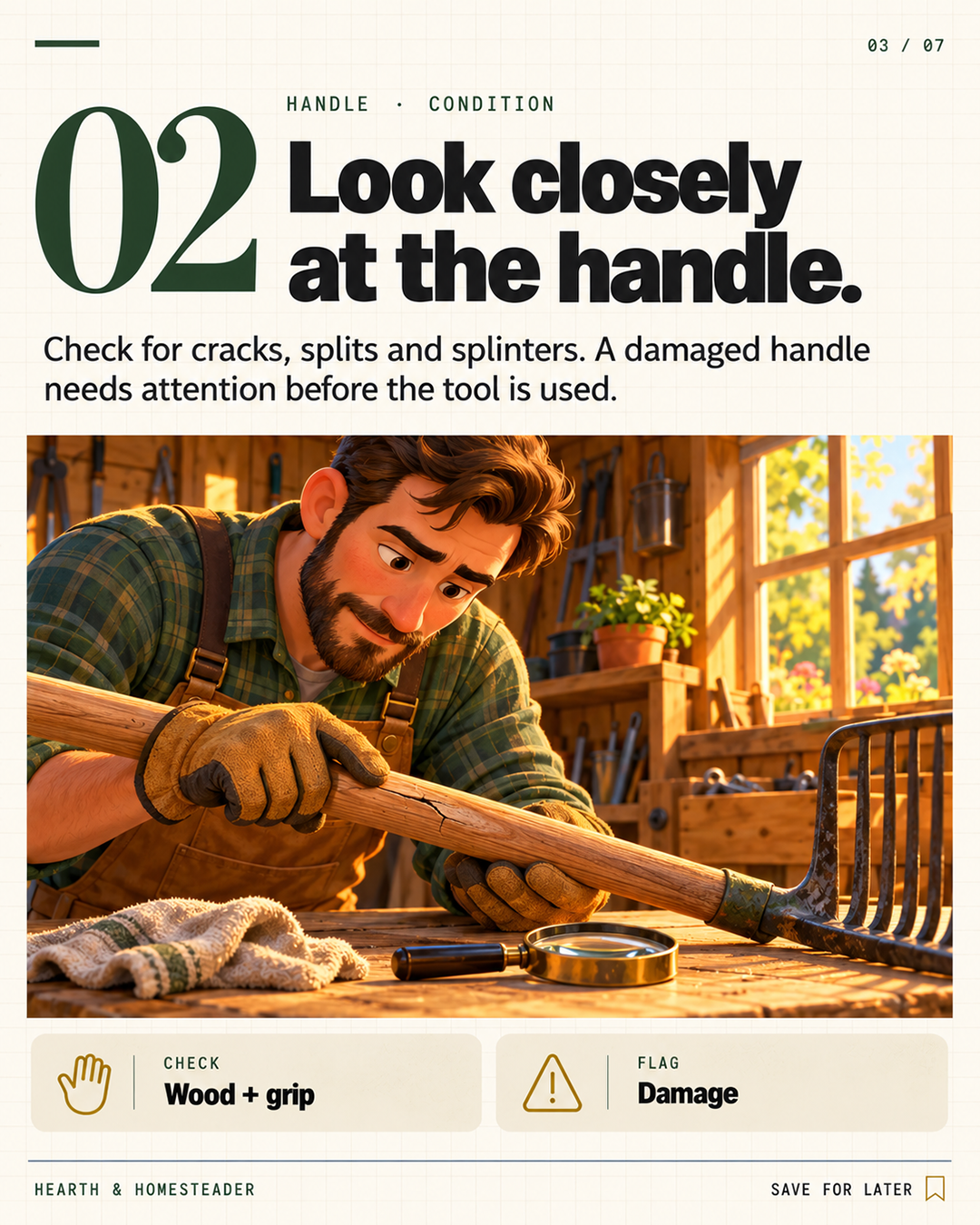
2. Look closely at the handle.
Look along the handle for visible damage, including splits, cracks and splinters. Maine Extension includes the handle in a whole-tool inspection. Ask about repairs already made and record anything you cannot see clearly in the listing photos. A replacement handle is a separate project, so confirm that the right part and suitable help are available before treating it as an easy fix. Keep a damaged tool out of use while its condition is unresolved. You can ask for more information without promising to buy.
Try this: Record visible handle issues, the seller's repair history and the photo or explanation still needed.
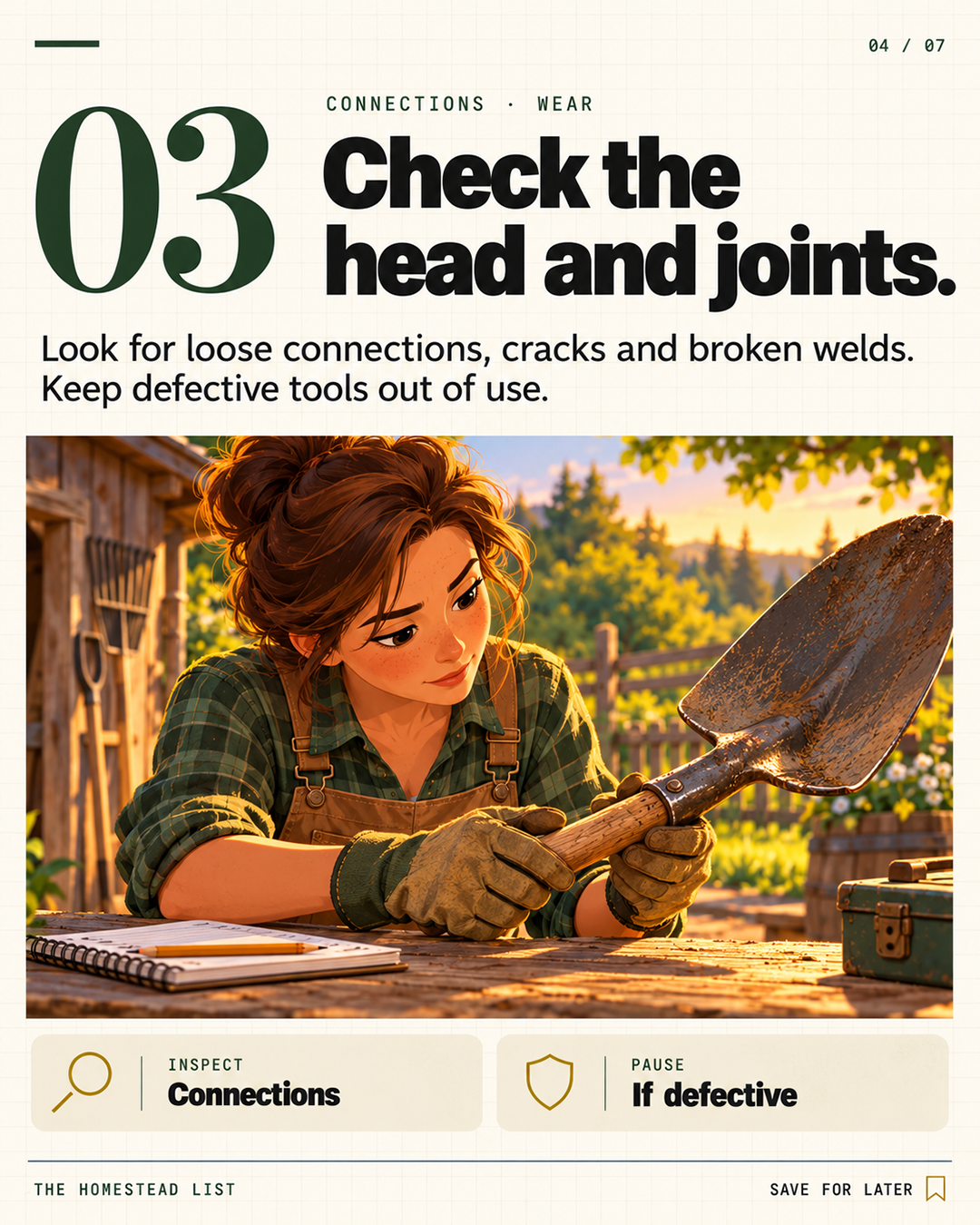
3. Check the head and joints.
Inspect where the working head meets the handle and look for loose connections, cracks or broken welds. Maine Extension specifically includes welds, rivets and connecting joints in its inspection guidance. Keep your notes specific: identify the location of a concern rather than labeling the whole tool good or bad from a distance. Virginia Cooperative Extension advises removing defective hand tools from service. Do not use a forceful trial to settle a question about a damaged connection. Ask for an appropriate assessment or choose another candidate.
Try this: Make a note for each connection you can inspect and mark anything that still needs assessment.
4. Look beyond the surface rust.
A cleanup and a sound tool are different questions. Look at the metal and working edge for visible damage, with hands kept away from sharp or ragged edges. Maine Extension recommends examining the working edge as part of deciding whether to sharpen, repair or replace a tool. Record what you can actually see and ask about wear that photographs may hide. If you cannot judge the condition, seek knowledgeable help before buying. Avoid turning the shopping visit into an improvised sharpening or repair session.
Try this: Separate cosmetic concerns from damage questions, and write down who could help assess the latter.

5. Know the repair before the price.
Make the repair question concrete before comparing prices. Identify the tool when possible, locate its instructions, ask about compatible parts and find out what qualified repair help would involve. Add those items to the asking price in your own comparison; leave unknown costs labeled unknown. Consider whether borrowing a suitable tool would meet the immediate need. A purchase can wait while you investigate. If you buy a tool needing work, label it clearly and keep it out of use until the defects are resolved.
Try this: List asking price, known repair needs, unresolved costs and one borrowing or replacement alternative.

Your next step
Choose one candidate and complete the printable check sheet before deciding. Save the listing and your questions together so a low price does not erase what still needs attention. The aim is a useful tool for a real job, with condition and repair needs understood. Would you buy it, fix it or pass?
Used garden tool check sheet
For non-powered garden hand tools. Record observations and unknowns; keep defective tools out of use and seek qualified help for unresolved damage.
Open and print the planning worksheet
Optional planning resources
Affiliate links: we may earn a commission if you buy. As an Amazon Associate I earn from qualifying purchases. This is an optional editorial reading resource, not a hands-on product review. Start with the free Extension guides below or check your library.
The Tool Book — DK
Optional reference on hand tools, their purposes and care, by Phil Davy, Jo Behari, Matthew Jackson and Luke Edwardes-Evans. Check your library first. A general reference does not replace the tool's instructions or an assessment of damage.
View on Amazon