 Hearth & Homesteader
The Homestead List
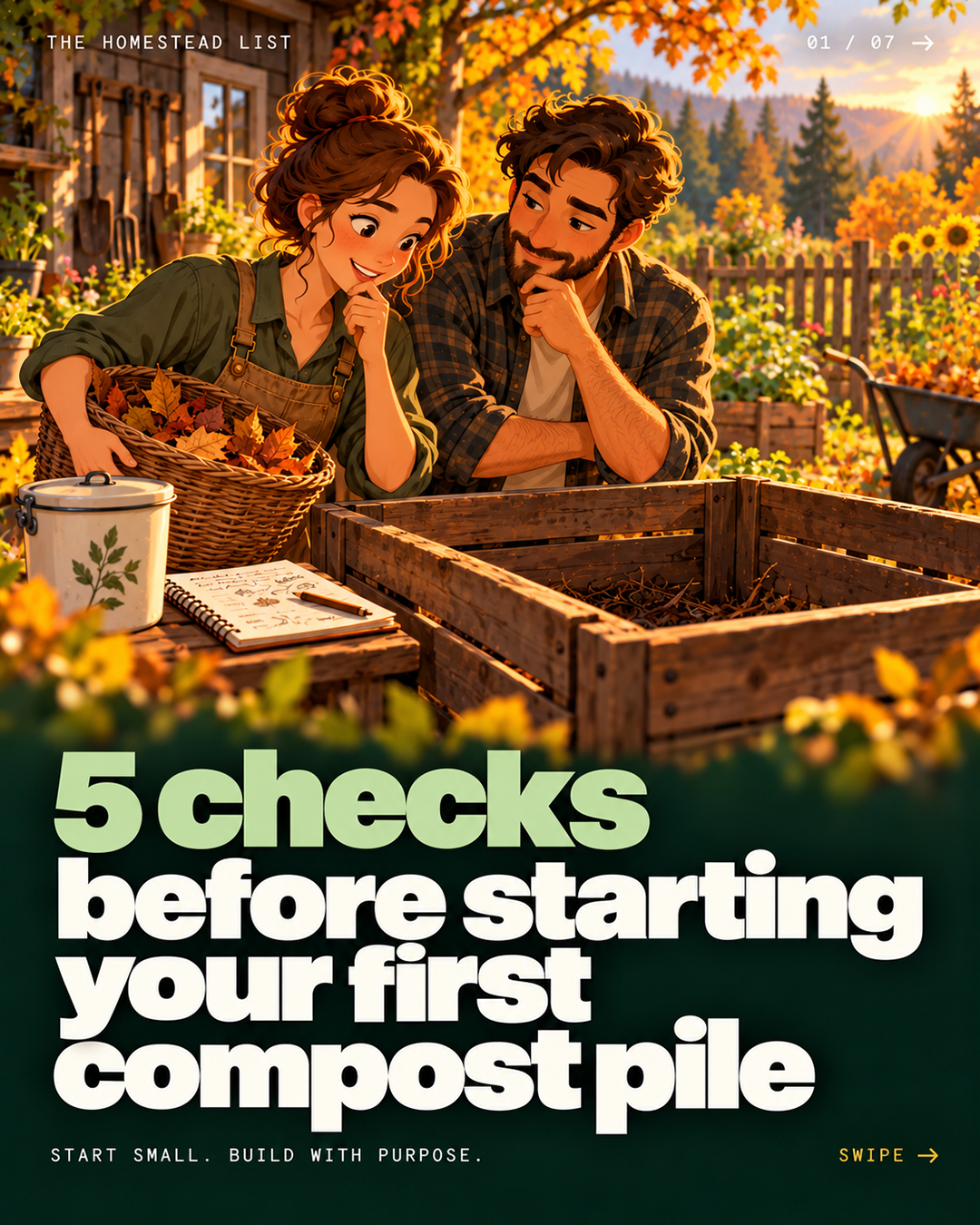
5 Checks Before Starting Your First Compost Pile
The compost bin can wait until you have a plan for what goes into it and who will look after it. Start with the materials your household actually produces and the space you can use. These five checks are a planning guide for an ordinary backyard pile or bin. They give you a first conversation and a place to record questions before choosing equipment. Keep the instructions for your chosen method with the plan, and check local or property requirements before setting up.
1. Can you reach it year-round?
Walk the route from your kitchen to the proposed spot before deciding where a bin belongs. EPA recommends an accessible location with good drainage and a nearby water source. Consider how you would carry materials there in wet weather and where you could stand to work. Sketch the spot with enough surrounding room to use the system. If you share the property, discuss the location before treating it as settled. Write down any rules or permissions you still need to check.
Try this: Sketch one candidate location, the access route, the water source and one question to resolve.

2. Where will your browns come from?
A steady flow of vegetable peelings is only part of the materials plan. Dry leaves and suitable plain cardboard are examples of browns; fruit and vegetable scraps are greens. EPA provides an ingredient list to help you sort them. Make two columns in your notebook using materials you can actually identify. Record where the browns would be stored and how you would replenish them. The useful question is what you can manage consistently, rather than how impressive the first pile might look.
Try this: List two available browns, one likely source of greens and a place to keep the browns.

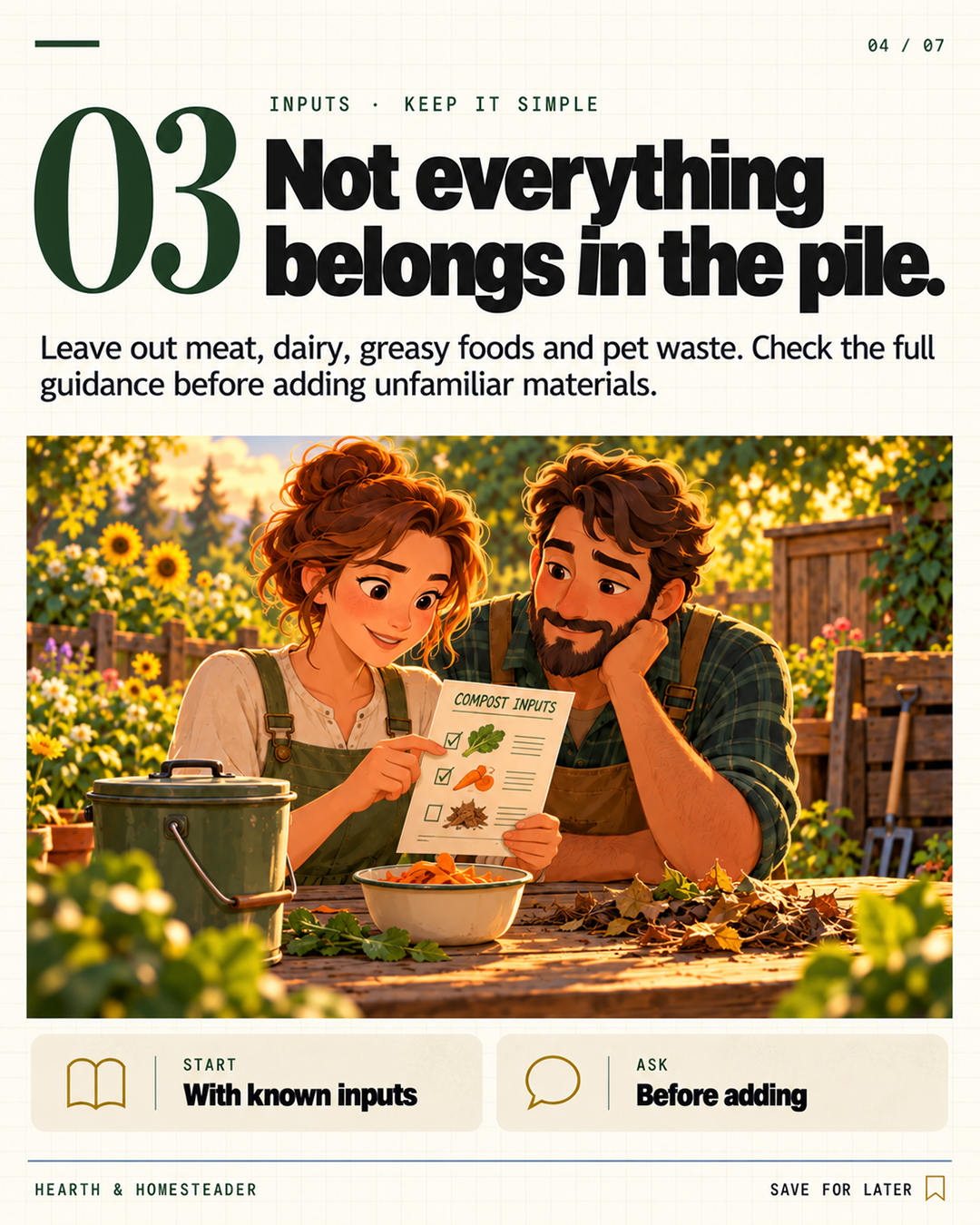
3. Not everything belongs in the pile.
Keep meat, dairy, greasy foods and pet waste out of an ordinary backyard pile. EPA also excludes items such as produce stickers and compostable foodservice ware. A compostable label does not establish that something belongs in your backyard setup. Save the full ingredient guidance where the household can find it, and make your own short reminder from that source. When an unfamiliar item appears, leave the decision open until you have checked it. Nobody needs to memorize every material on the first day.
Try this: Write a short household input reminder and choose where to keep the complete guidance link.
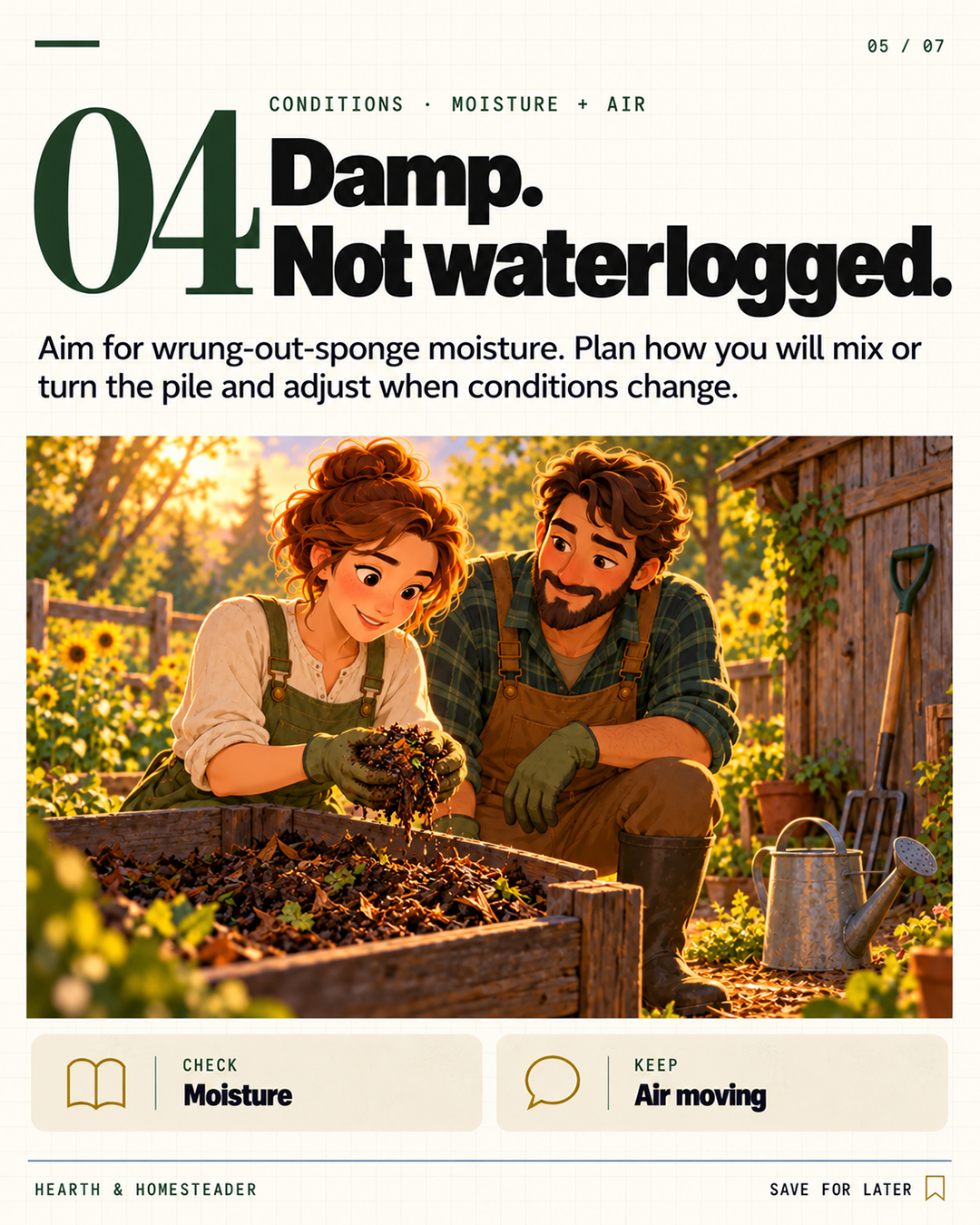
4. Damp, not waterlogged.
University of Maryland Extension describes useful compost moisture as similar to a wrung-out sponge and explains that excess moisture can interfere with air movement. Plan how you will observe the pile and mix or turn it according to the method you choose. Think about where equipment would be stored and whether the task suits the person doing it. Keep the guide nearby so you can investigate changes instead of repeating the same action automatically. Add observations to your notes before deciding what adjustment is needed.
Try this: Record the method guide, how you will check conditions and the equipment or help still needed.
5. Who will keep an eye on it?
Maryland Extension distinguishes slower passive composting from active methods that need more attention and labor. Choose a method that fits your time and willingness to maintain it. Agree on who wants to handle the checks and where notes will live. A reminder can prompt an observation without prescribing the same treatment every time. Keep fresh additions and finished material clear in your plan, and follow the chosen guide for determining readiness. Let the learning process set the pace before you expand the setup.
Try this: Name a willing person, a realistic check-in and one observation to record before changing the setup.

Your next step
Complete one page before shopping for a bin. Keep the site, ingredient plan, exclusions, method and shared routine together so the next decision has a reason behind it. If a backyard setup does not fit your space, investigate a local collection option and its accepted materials. Which would you check first: the spot, the materials or the routine?
First compost pile planning sheet
Plan one ordinary backyard compost setup. Keep the complete ingredient guidance and chosen method handy; check local and property requirements before setting up.
Open and print the planning worksheet
Optional planning resources
Affiliate links: we may earn a commission if you buy. As an Amazon Associate I earn from qualifying purchases. This is an optional editorial reading resource, not a hands-on product review. Start with the free guides below or check your library.
Let It Rot! — Stu Campbell
Optional further reading on composting methods and maintaining a compost setup. Check your library first. Follow locally suitable guidance and your chosen system's instructions; this book listing is an editorial reading suggestion, not a hands-on review.
View on Amazon