 Hearth & Homesteader
The Homestead List
5 Chores Behind the Homestead Photos
The beautiful homestead photo captures a moment. The work continues before and after it. If you are imagining your first animals or a shared family property, make room in the plan for the ordinary jobs as well as the projects you are excited to build. These five chores are useful conversation starters for a household planning its routine. The examples use a small chicken setup; they are not a complete care schedule for every animal, season or property.

1. Feed does not carry itself.
Picture the route from delivery or collection to storage, then from storage to the animals. Where will supplies go? Who can comfortably move them? What changes when the path is wet or someone is unavailable? Write down the routine before deciding how much equipment you need. Follow feed-storage and handling instructions for the supplies you choose. A good planning exercise is to walk the proposed route together and note the awkward parts, rather than assuming everyone can carry the same load.
Try this: Draw the supply route and list one obstacle you would want to resolve.

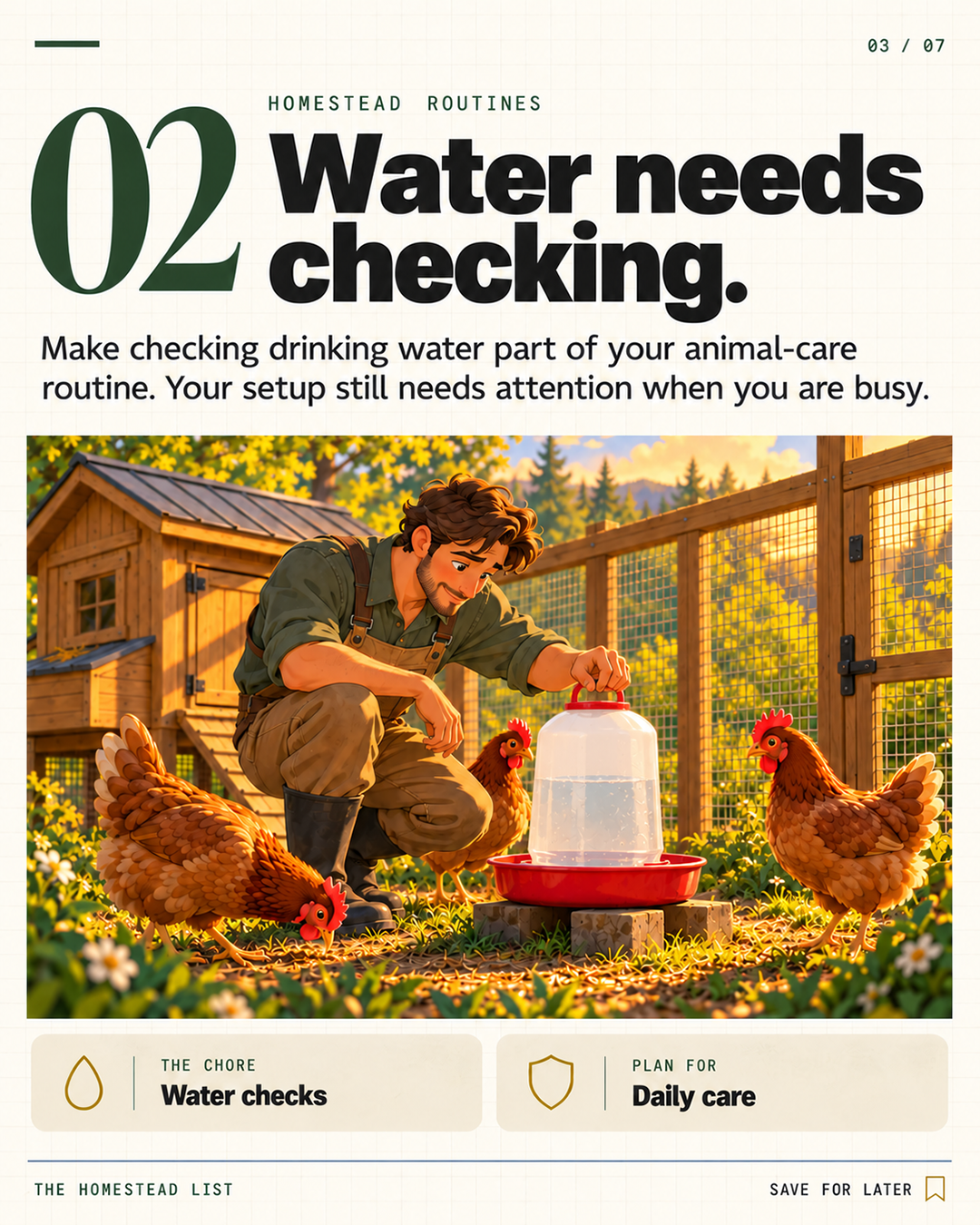
2. Water needs checking.
Put water checks on the care list with a named person responsible. University of Minnesota Extension emphasizes continuous access to clean, fresh water for chickens and includes changing water in daily care. The practical planning question is how your household will keep that responsibility covered. Discuss normal days, busy days and days away. Research the actual animals and equipment before setting the routine, and leave clear instructions for the person helping. Keep the instructions beside the supplies so a helper can find them.
Try this: Name the person who checks water and the person who covers an absence.
3. Bedding gets dirty.
Cleaning belongs in the time and supply budget. Plan where fresh material will be kept, which tools are needed and where used material will go under an appropriate management plan. Minnesota Extension includes housing sanitation in chicken care and notes precautions for dust during cleaning. Use species-specific guidance to decide suitable bedding, cleaning methods and protective equipment. For your household discussion, separate researching those requirements from agreeing who will do the job. Make sure the chosen person has the information and supplies to do it properly.
Try this: List the cleaning questions you still need answered before bringing animals home.

4. Fences need attention.
Add inspection to the plan alongside the initial fence purchase. Walk the intended route and look at how people, gates and animal areas connect. Discuss who will notice a loose latch or damaged section and how the household will respond. Choose fencing and inspection routines for the actual species, site and conditions with appropriate guidance. Record questions about weak points or access that need expert advice. Keep an unresolved repair visible on the household task list rather than assuming the next person will remember it.
Try this: Write who reports a problem, who follows up and where the repair is recorded.

5. Someone covers your days away.
Ask a willing, capable helper before a trip becomes a fixed plan. Walk through the routine together and invite them to explain it back in their own words. Give them current instructions, supply locations and the contacts they may need, including the appropriate veterinary contact. Agree how they should reach you and what to do if you cannot answer. Sharing a page of notes is only one part of preparation; the helper also needs to be comfortable with the actual animals and tasks.
Try this: Choose a possible helper to ask, then list what a practice walkthrough should cover.

Your next step
Use the checklist to turn a general chore into a clear responsibility: what happens, who does it, who covers it and what remains unknown. Start with the animals or project you are actually considering. Learn the care requirements before committing, then compare the routine with the time and help your household can realistically provide. Which part would you enjoy—and which would you want to understand better first?

The homestead chore and backup checklist
Use one row per actual task. Research species-specific care before filling in timing or instructions. This is a planning worksheet, not a complete animal-care protocol.
Open and print the planning worksheet
Optional planning resources
Affiliate links: we may earn a commission if you buy. As an Amazon Associate I earn from qualifying purchases. These are optional editorial resources, not hands-on product reviews. An existing notebook or plain paper works too.
Oxford composition notebooks · 12-pack
Optional for a chore log, supply notes and questions to research. This is a bulk pack; use a notebook you already own if it serves the job.
View on Amazon