 Hearth & Homesteader
The Homestead List
5 Garden Plans for People Who Work Full Time
Gardening while working full time starts with a plan for an ordinary week—including the evenings when you are tired. You do not need a large plot to begin learning how to grow food. Start with a project you can return to consistently, then use what you learn to decide what comes next. These five planning ideas are designed to help you choose a manageable first step. The illustrations show possibilities; your planting choices still need to fit your space, climate and season.
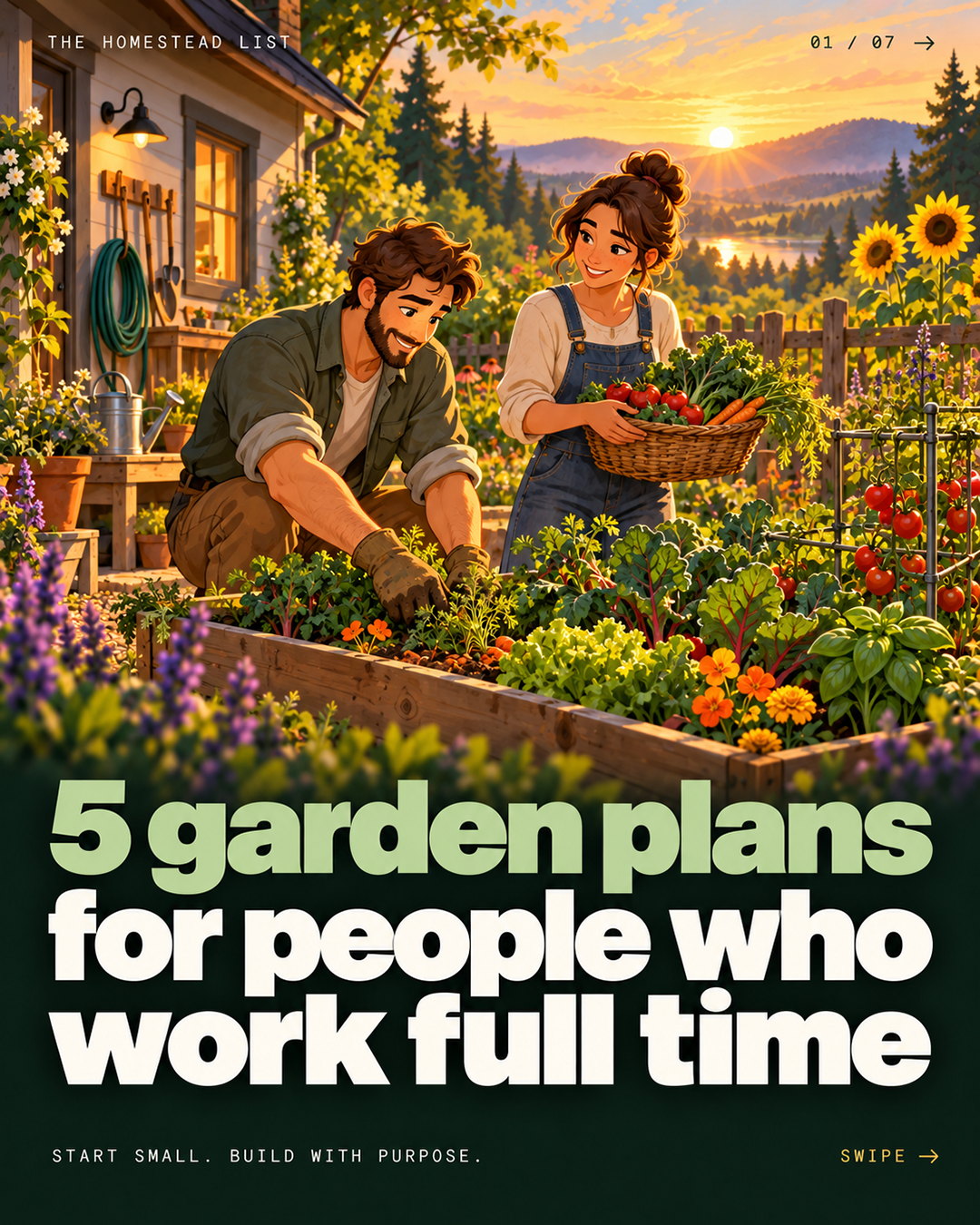
1. Start smaller than the dream.
Choose the first growing area before choosing everything you want to plant. University of Maryland Extension recommends beginning small and expanding when you are ready. For your own plan, write down who wants to participate and which parts of the week are already full. Keep a separate wish list for future additions so you can enjoy the bigger dream without committing to all of it now. One useful question is: would we still want to care for this during a difficult workweek?
Try this: Sketch one starting area and write what you will leave for a later season.

2. Grow what you actually cook.
Look back at a few meals your household already makes. Which vegetables or herbs appear often? Use that list as a starting point, then check whether the plants suit your available light, space and local growing season. The Maryland guide also recommends choosing vegetables you enjoy eating. A meal list is a practical filter for an overwhelming seed catalog. It does not mean every ingredient must come from your garden, or that a first harvest needs to replace the grocery shop.
Try this: Choose three foods you enjoy, then research one suitable crop for your site.

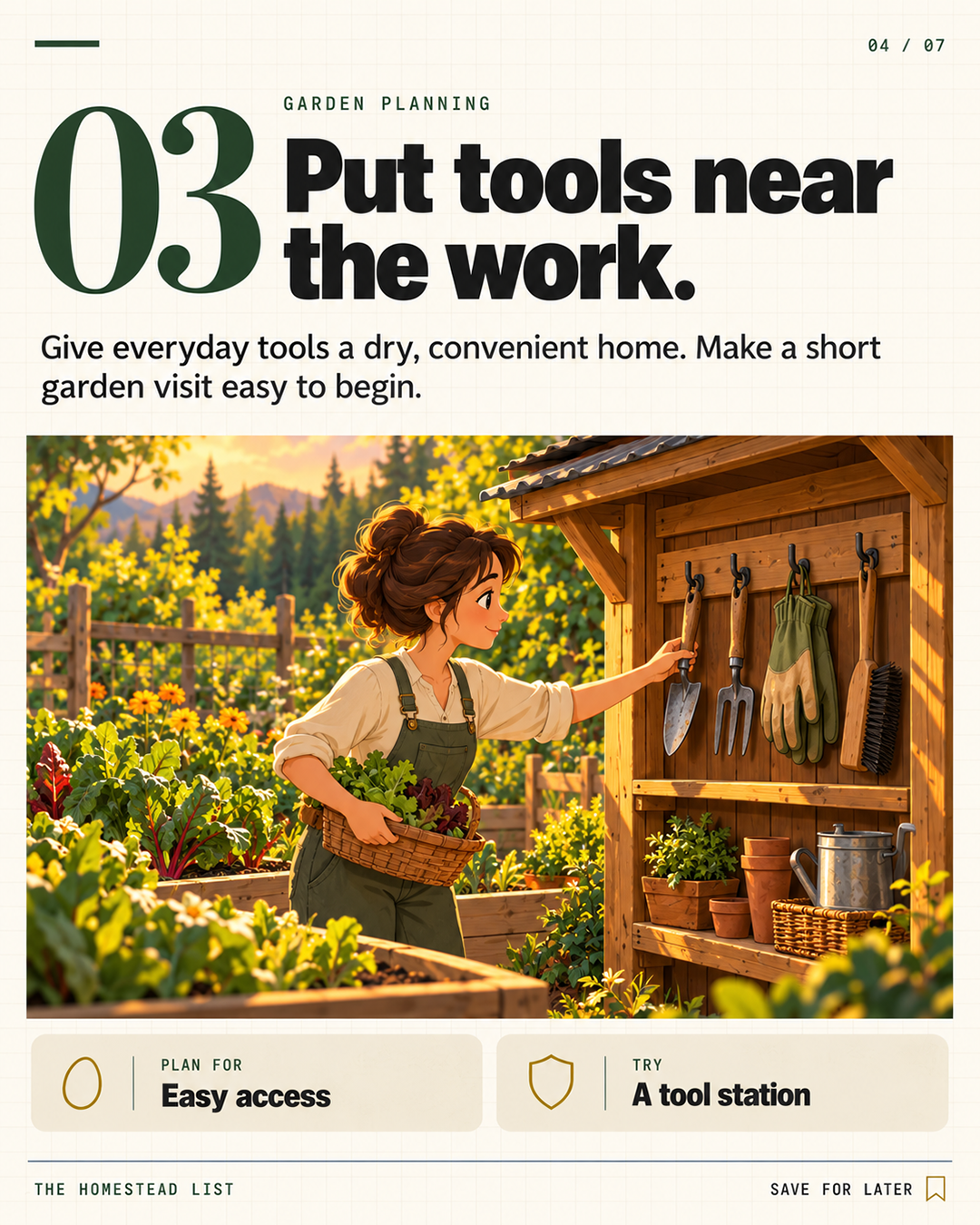
3. Put tools near the work.
Walk the route you would take from the house to the garden. Where would you collect gloves, find a hand tool and put everything away? Give the items you use a dry, understandable home that follows their storage instructions. Use suitable storage you already own before buying an organizer. Keep hazardous or sharp items secured appropriately. The aim is to make an ordinary garden visit easier to begin and finish, especially when someone else in the household is helping.
Try this: Choose a storage spot and list the items that actually belong there.
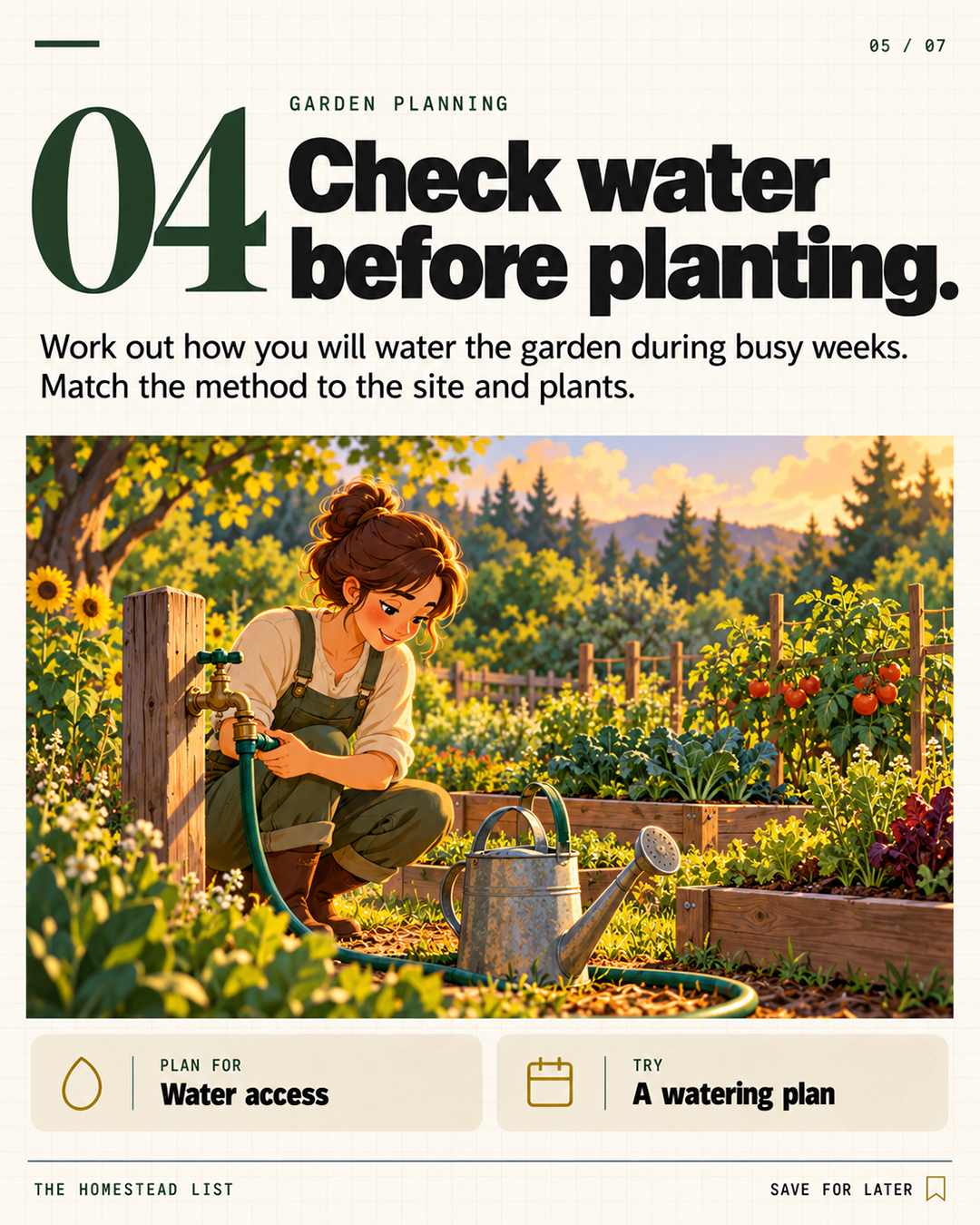
4. Check water before planting.
Find out how you will reach the growing area with water before filling it with plants. Consider the source, the route and who could help when you are away. Oregon State University Extension explains that watering needs vary with soil, plants and weather, and that the method should fit the garden and your routine. A reminder or timer is only part of the plan: someone still needs to check conditions. Use local Extension guidance for the crops and growing method you choose.
Try this: Trace your water route and name a backup person to discuss the plan with.
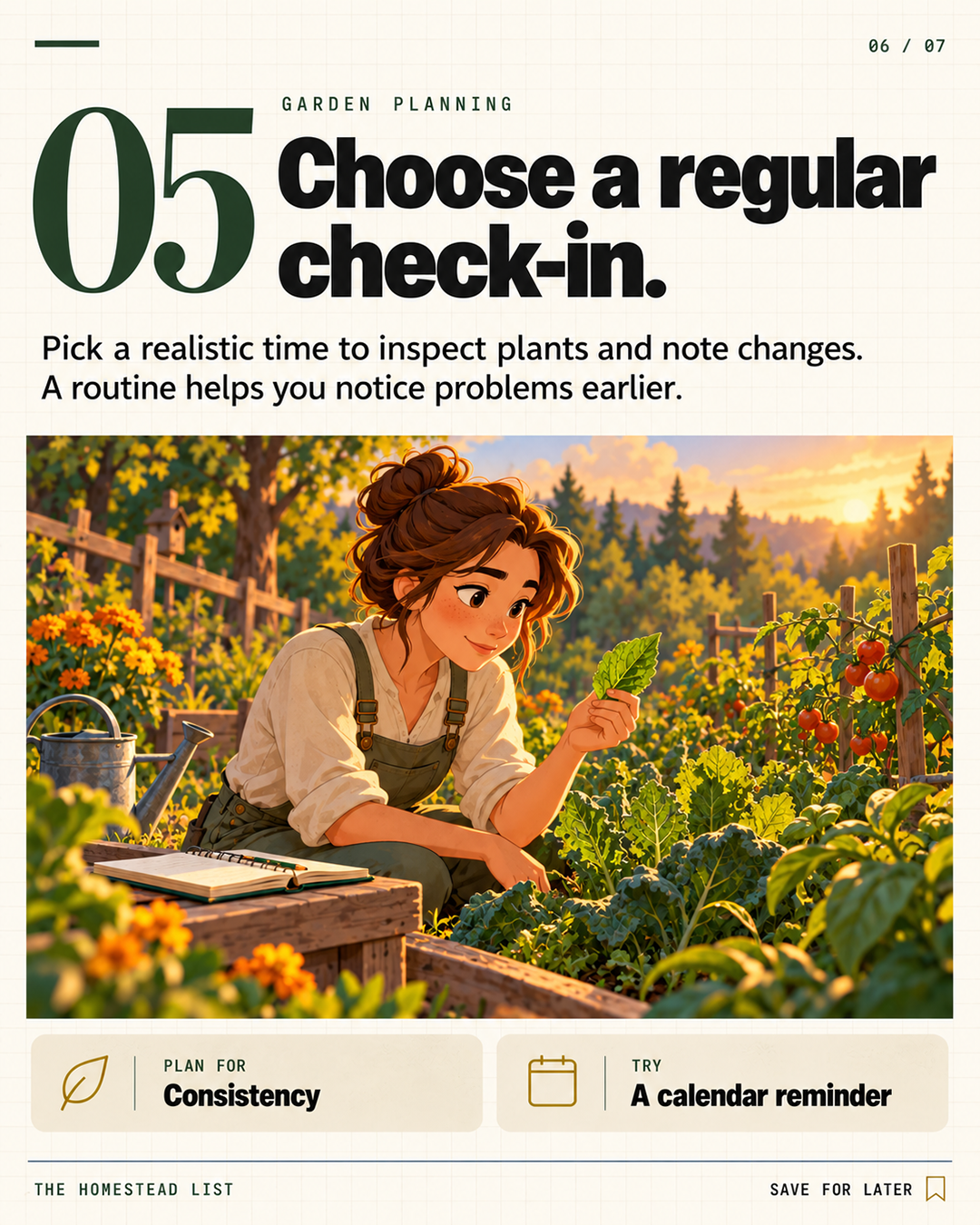
5. Choose a regular check-in.
Choose a realistic cue for looking at the garden, such as arriving home or finishing breakfast. During a check-in, observe the plants and note what has changed. Maryland Extension recommends regular monitoring for problems. Use your notes to decide what needs research or attention instead of assuming every visit must become a large project. This habit complements plant-specific care; a fixed calendar reminder does not determine when a plant needs water or other attention.
Try this: Write a check-in cue and leave space for one observation at each visit.
Your next step
Make the first plan small enough to discuss in one sitting: your starting area, a short crop list, tool storage, water access and a check-in cue. Keep one question open for research before buying supplies. After you have tried the routine, decide together what to change. A garden that fits your actual household gives you something useful to learn from.

The busy-week garden planning sheet
Fill this in before choosing supplies. Adapt the plan to your site, season and household.
Open and print the planning worksheet
Optional planning resources
Affiliate links: we may earn a commission if you buy. As an Amazon Associate I earn from qualifying purchases. These are optional editorial resources, not hands-on product reviews. An existing notebook or plain paper works too.
Oxford composition notebooks · 12-pack
Optional for crop research, a simple garden sketch and observations. This is a bulk pack; use an existing notebook if you already have one.
View on Amazon