 Hearth & Homesteader
The Homestead List
5 Habits That Make Shared Homestead Tools Work
Sharing a tool can be simple until two people need it at once, nobody knows where it went or its owner finds a problem after it comes back. A family homestead can start with a few clear habits before building a bigger shared collection. These five conversation prompts are a practical framework to adapt together. Begin with ordinary hand tools and one routine everyone understands. The aim is to make asking, using and returning easier for the people involved.

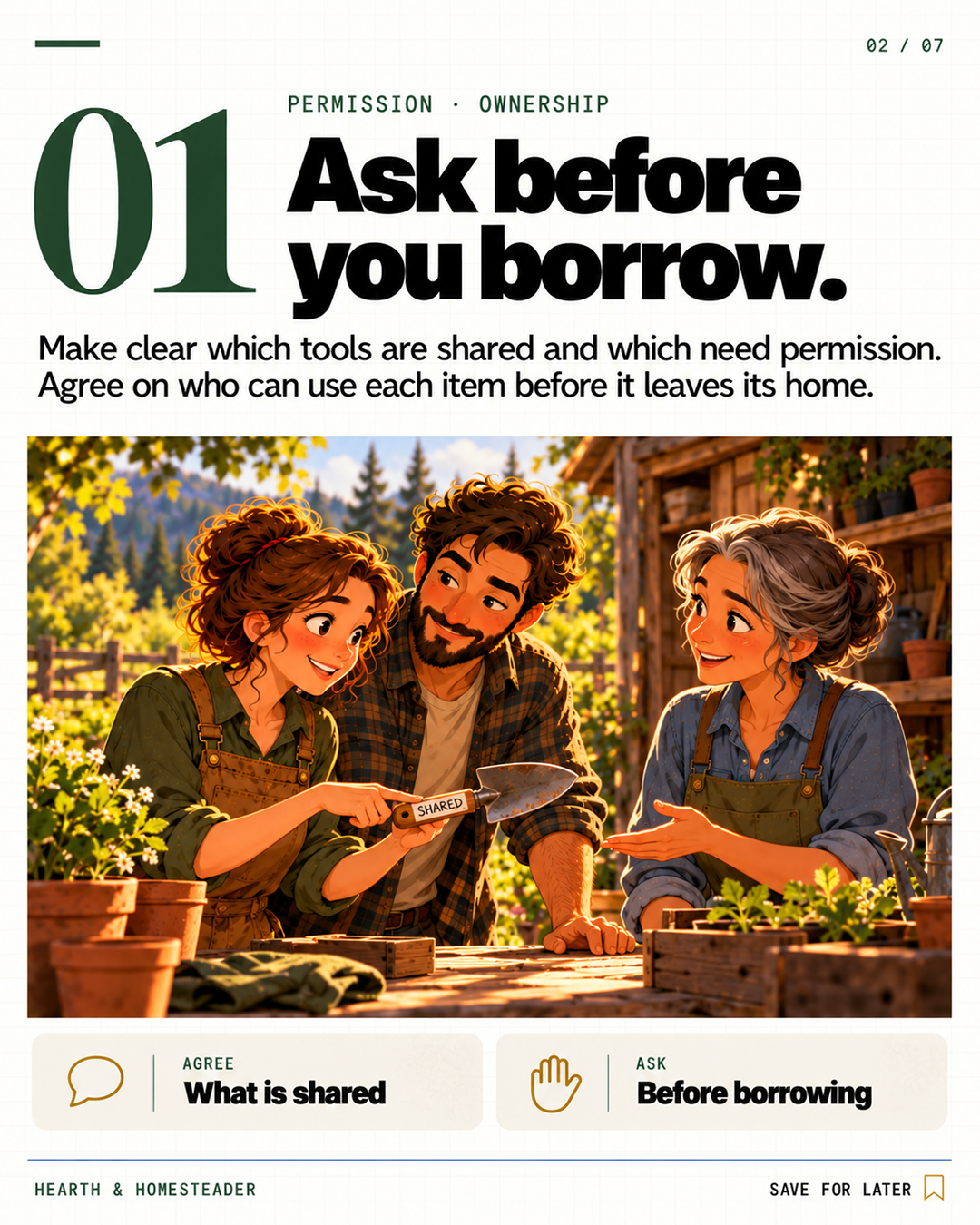
1. Ask before you borrow.
Walk through the tools with their owners and ask which items they are comfortable sharing. Make the distinction visible: available by agreement, ask first or kept for the owner. Do not assume that being in the same shed makes everything communal. Discuss who can use an item and any limits on taking it elsewhere. If several people contributed to a collection, record what was actually agreed. Leave undecided items out of the shared list until the people involved have had the conversation.
Try this: Choose three tools. Record the owner, sharing status and person to ask before borrowing each one.
2. Leave a simple borrowing note.
Choose a note format people will use, whether that is a notebook beside the storage area or a shared digital list. Record the item, who has it and the agreed return. A plain description can help distinguish two similar tools. Ask when another person needs it before taking it for a longer task. If your plans change, update the note and contact the owner. Keep the system small enough to maintain. You can try it with a few frequently borrowed items before expanding it to the whole shed.
Try this: Try one borrowing entry: item, borrower, agreed return and where to find the updated plan.

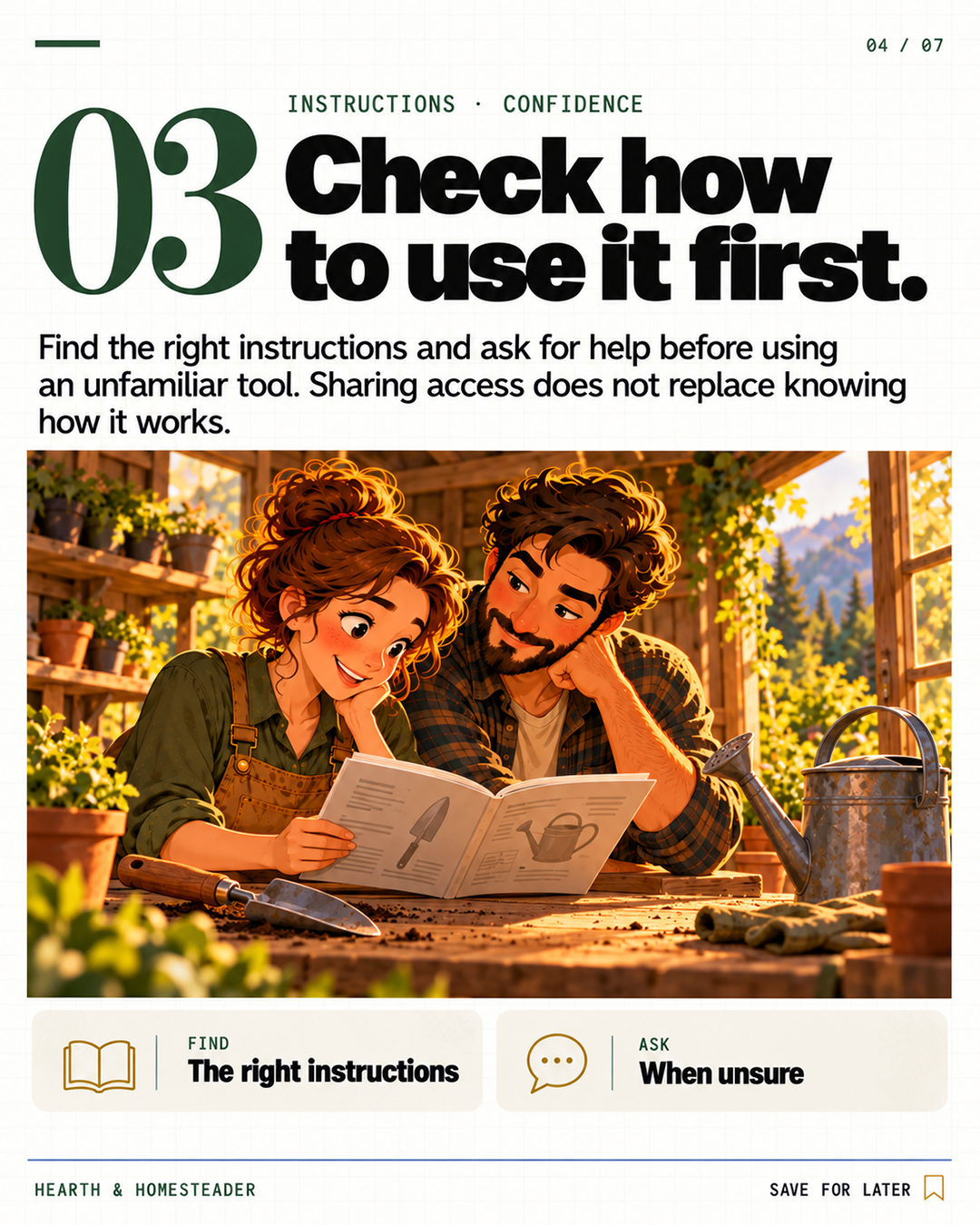
3. Check how to use it first.
Permission to borrow does not answer every question about using a tool. Virginia Cooperative Extension advises reading the operator's manual and understanding tool operation and safe practices. Give the correct instructions a known home and ask for suitable help with an unfamiliar item. The owner may know where the instructions are without being the right person to teach its use. Make room to say that you are unsure. A useful shared collection includes a way to find guidance, alongside a way to find the equipment.
Try this: Pick one shared item. Record its identity, instructions location and who can help answer an unfamiliar-use question.
4. Return it ready for the next person.
Agree on the return location and follow the care guidance for the particular tool. Virginia Cooperative Extension recommends cleaning after use and storing tools in a dry, sheltered place. Discuss what that means for your collection before someone borrows from it. Keep the return step part of the task instead of leaving equipment somewhere convenient to remember later. If something prevents the agreed return, tell the owner and revise the plan together. Ask the next user whether the arrangement makes the tools easier to locate.
Try this: Choose one tool and write its return location, care-instruction source and the communication needed if plans change.

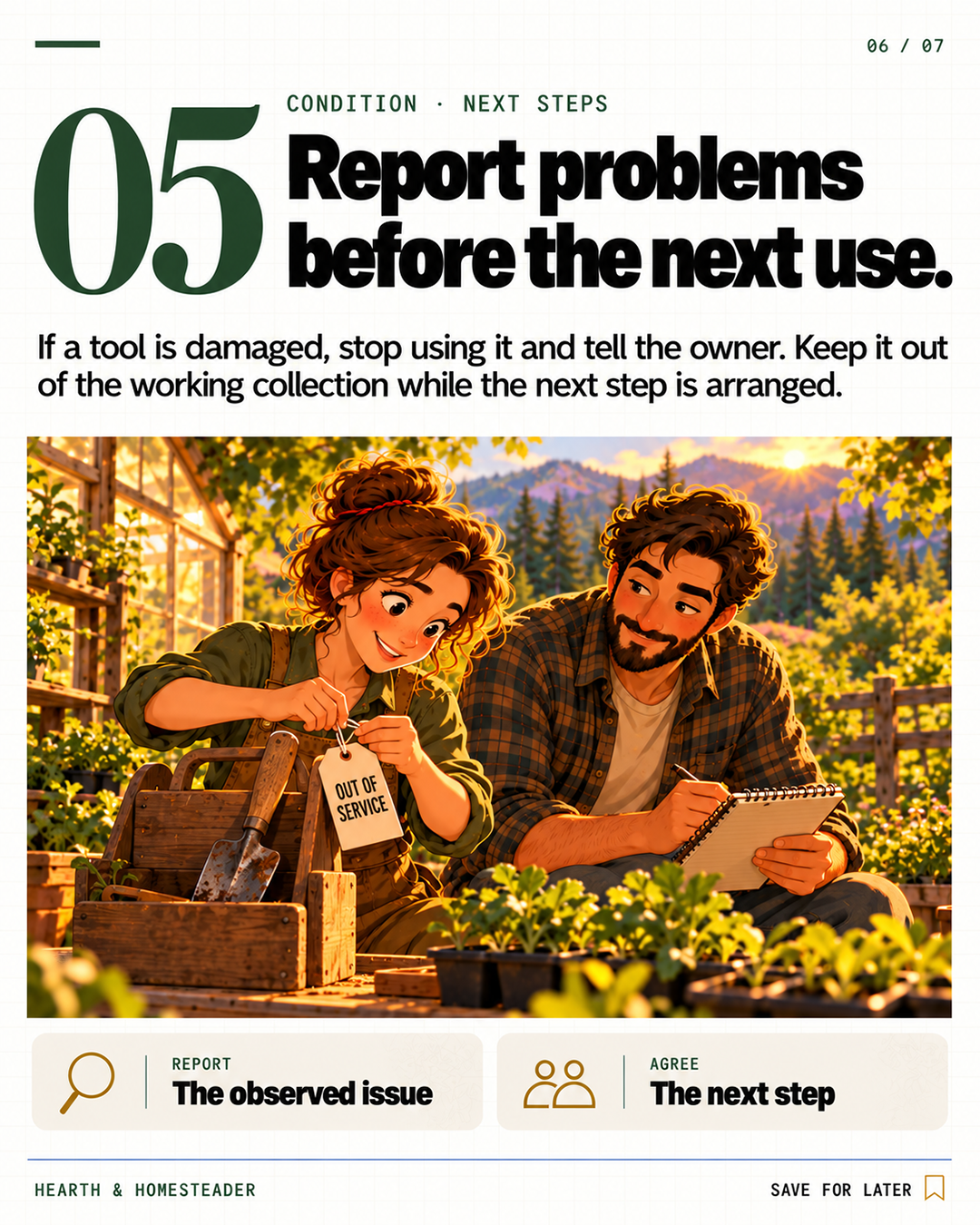
5. Report problems before the next use.
If you notice damage, stop using the tool and tell its owner. Virginia Cooperative Extension recommends identifying defective tools and removing them from service. Keep the item separate from the working collection in a suitable designated place, with a clear note about what was observed. Then agree on who will arrange assessment or repair. Describe the issue without guessing its cause or promising a fix. Discuss repair decisions and costs with the owner before acting, and confirm the appropriate next step before returning the item to use.
Try this: Agree on a reporting note: item, observed issue, date, owner informed and person arranging the next action.
Your next step
Choose the habit that would solve the most common confusion in your household. Try it with one task or a few tools, then ask the people involved what helped and what felt cumbersome. Revise the arrangement together. Which would you start with: permission, a borrowing note, instructions, a return routine or reporting problems?
Shared tool habits worksheet
Agree on one manageable routine with the people who own and use the tools. Keep tool-specific instructions available.
Open and print the planning worksheet
Optional planning resources
Affiliate links: we may earn a commission if you buy. As an Amazon Associate I earn from qualifying purchases. This is an optional editorial reading resource, not a hands-on product review. Begin with the free guides below or check your library.
Creating a Life Together — Diana Leafe Christian
Optional broader reading about intentional communities, communication, decision-making and shared vision. Check your library first. It is not a tool-operation manual or a substitute for advice specific to your household arrangements.
View on Amazon