 Hearth & Homesteader
The Homestead List
5 Herbs to Try Growing Indoors
You can begin a growing project before you have a garden plot. A single indoor herb gives you something to observe and care for close to the kitchen. Iowa State Extension includes basil, chives, mint, parsley and thyme among herbs suited to indoor growing. That makes them candidates, not a promise that every windowsill will work. Check the available light first, choose a container with drainage and learn the needs of the plant you select. Start with an herb your household actually enjoys using.
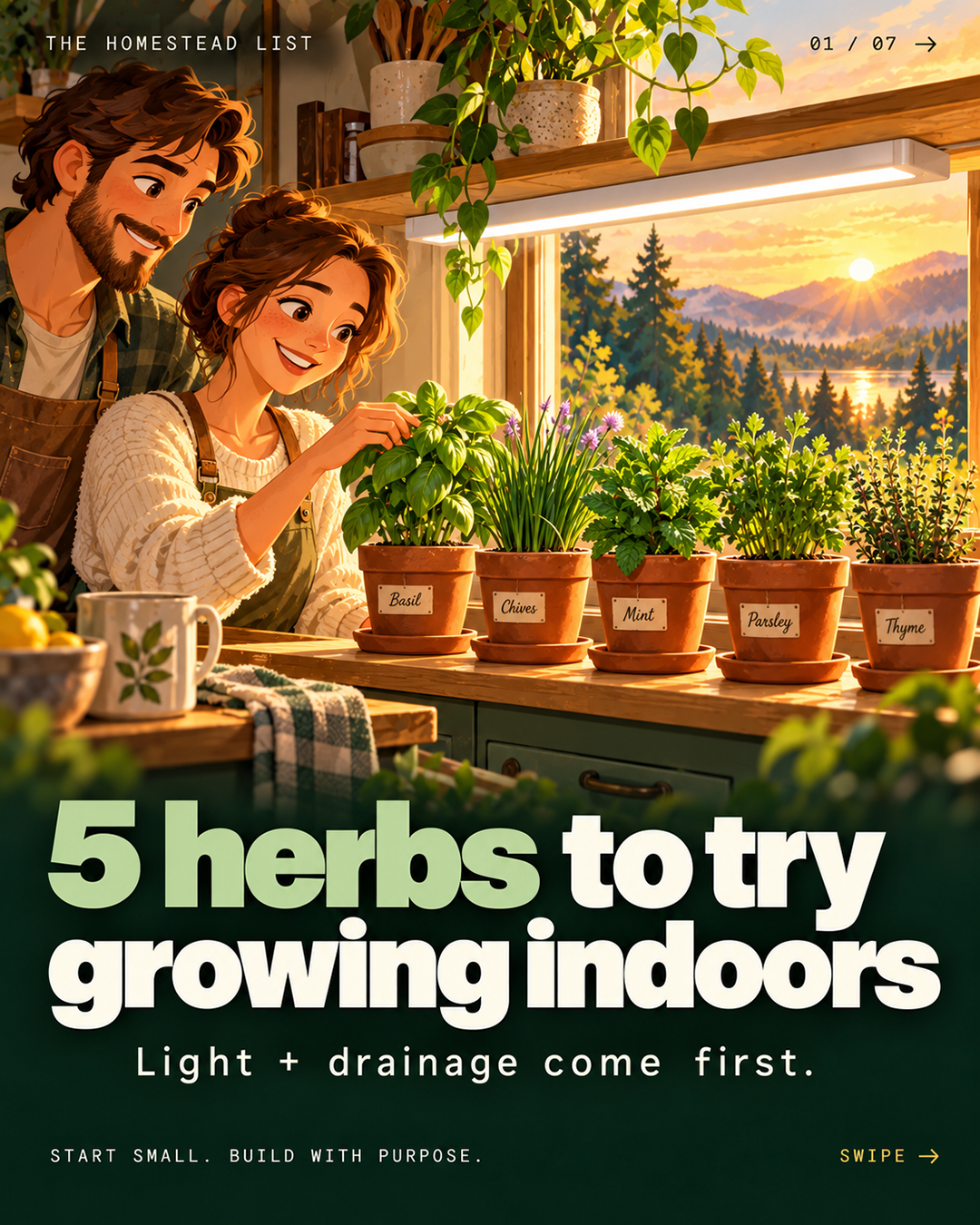
1. Basil for the meals you cook.
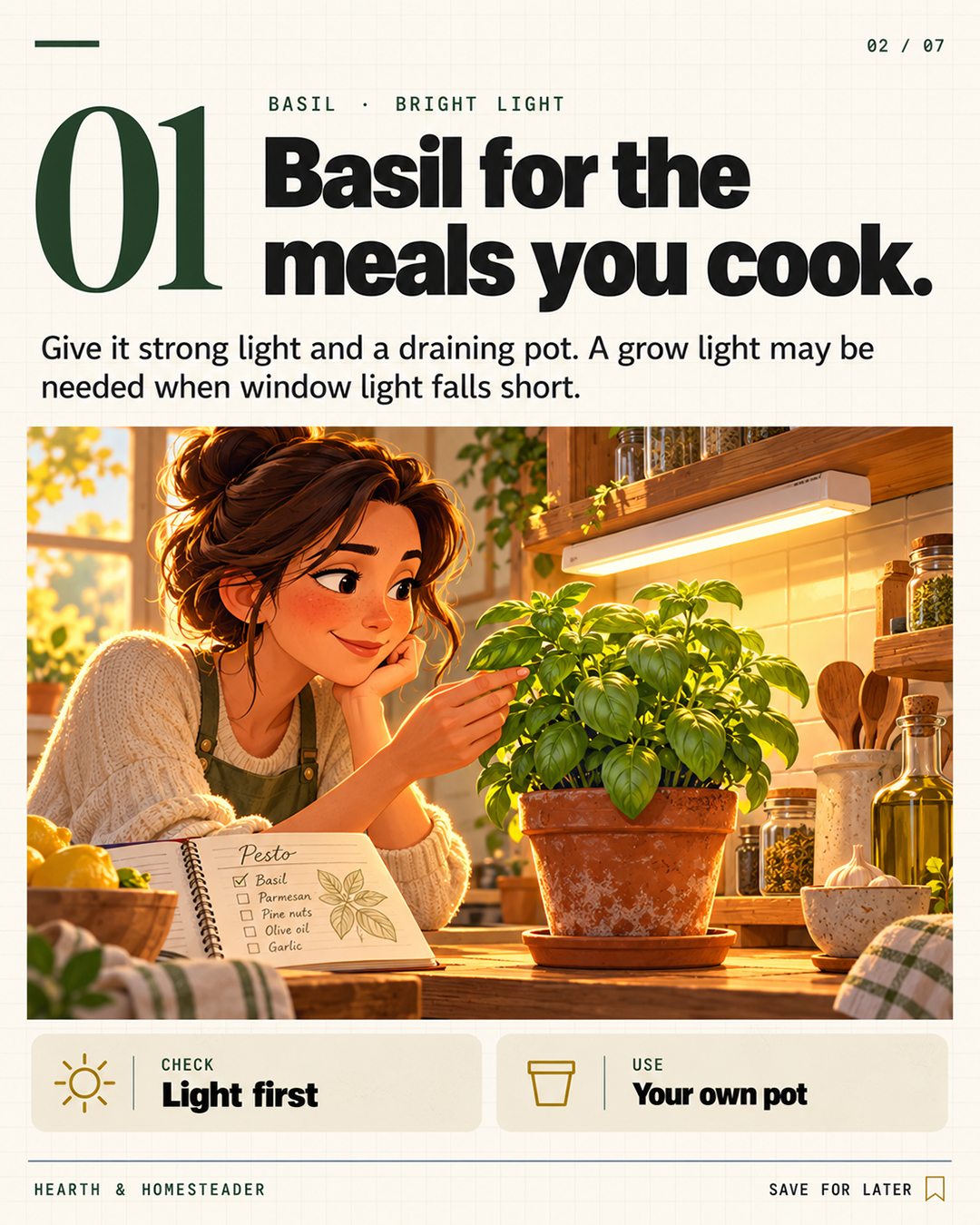
Think of a meal you already make where basil would be welcome, then give the plant a place in that routine. Good indoor light matters: University of Minnesota Extension lists culinary herbs such as basil among plants with high light needs. A bright-looking room may still need supplemental growing light. Before choosing a spot, observe the window and read guidance for the light fixture if you use one. Keep the plant label with your notes so you know which basil you brought home.
Try this: Name one meal you would use basil in and one question about the light at your proposed growing spot.
2. A small pot of chives.
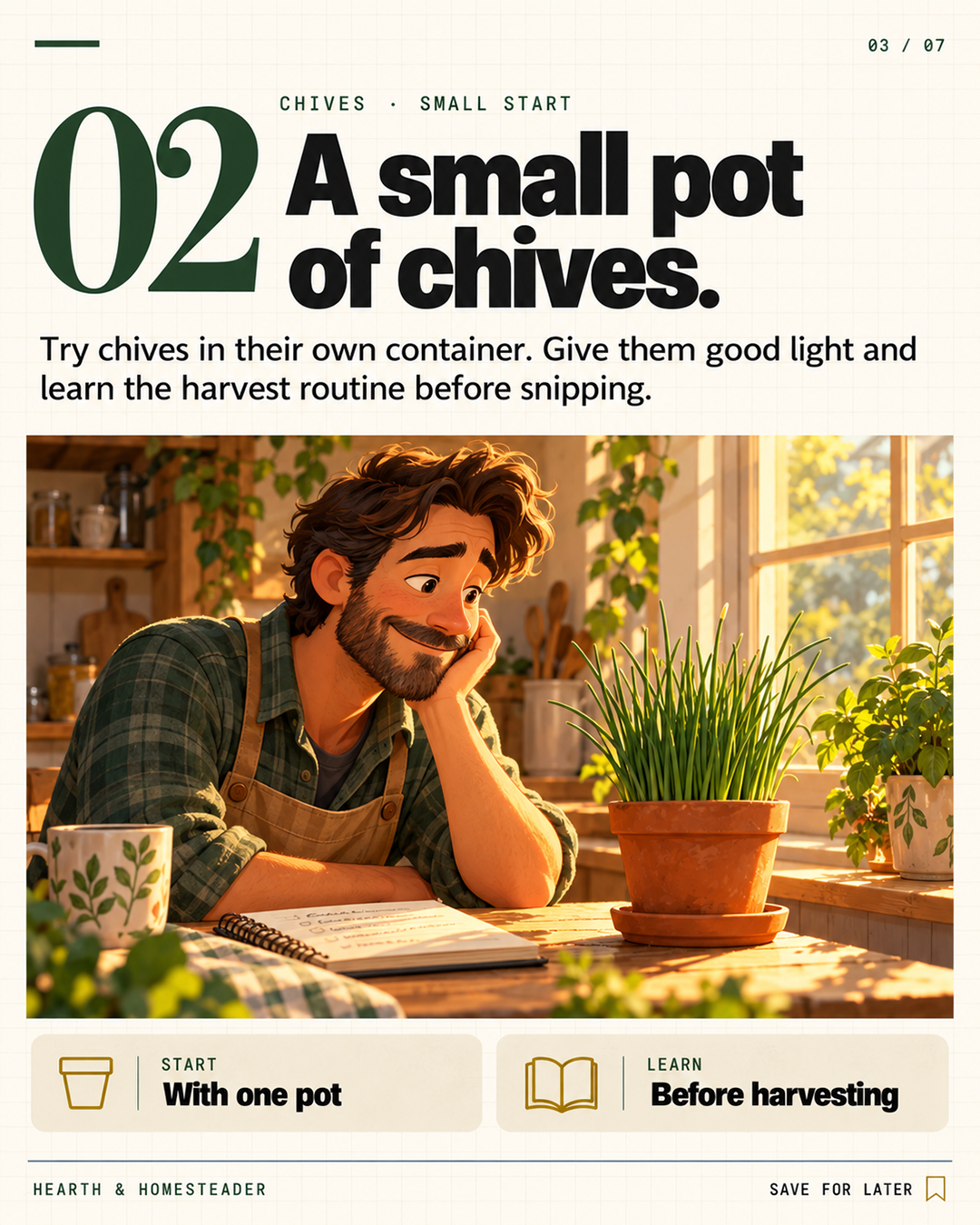
Chives can be a candidate for a small first project. Give the plant its own container and put its care information somewhere easy to find. Before taking the first harvest, learn the appropriate method and amount for your plant; a small pot does not provide an unlimited supply. Add a dated note when you harvest so you can observe what happens afterward. The first useful habit is returning to the same plant and noticing changes, rather than expanding to a shelf of pots at once.
Try this: Choose where the chive pot would stand and record the guidance you will follow before harvesting.
3. Mint deserves its own pot.
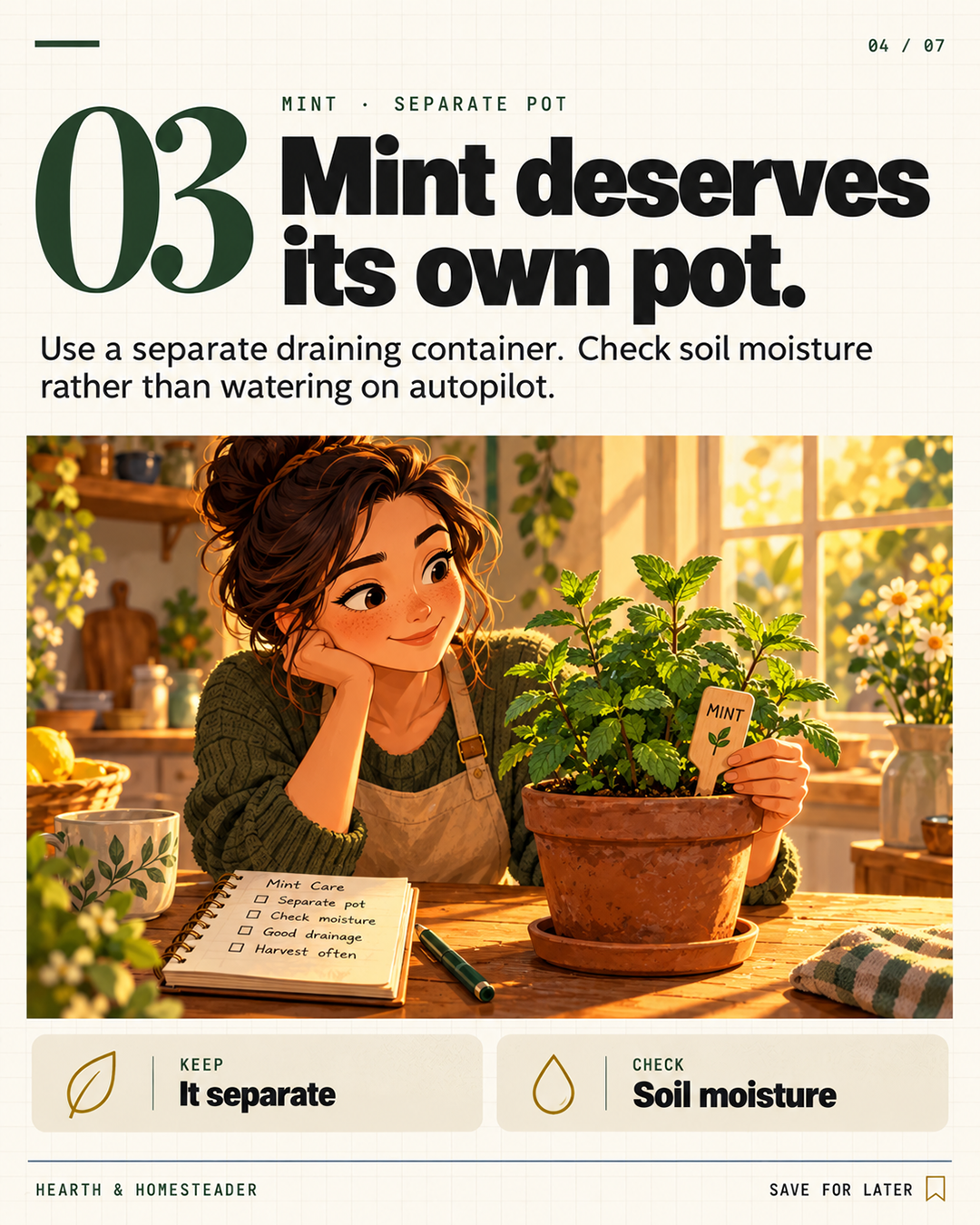
Choose a mint you recognize and want to use, keeping its label attached to the project. Iowa State recommends separate containers for different herb species because their growing conditions can be difficult to balance in one pot. Check the soil before deciding to water, and make sure the container drains. A recurring reminder can prompt you to look at the plant without automatically adding water. Record an observation in your own words: what changed, when you checked and what you need to learn next.
Try this: Set up a separate pot plan and write a reminder that says check the plant, rather than water the plant.
4. Make room for parsley.
Choose the parsley type your household likes and plan the container around the plant rather than a decorative shelf opening. Keep a draining pot and suitable potting mix on the setup list, along with an actual light plan. Place the pot where you can reach it for checks and move it without spilling onto a cooking surface. Keep your first notes simple: plant identity, date, location and the care source you used. Add a question when something changes instead of guessing at a diagnosis from one leaf.
Try this: Write down your preferred parsley type, the proposed pot location and the light question you still need to answer.
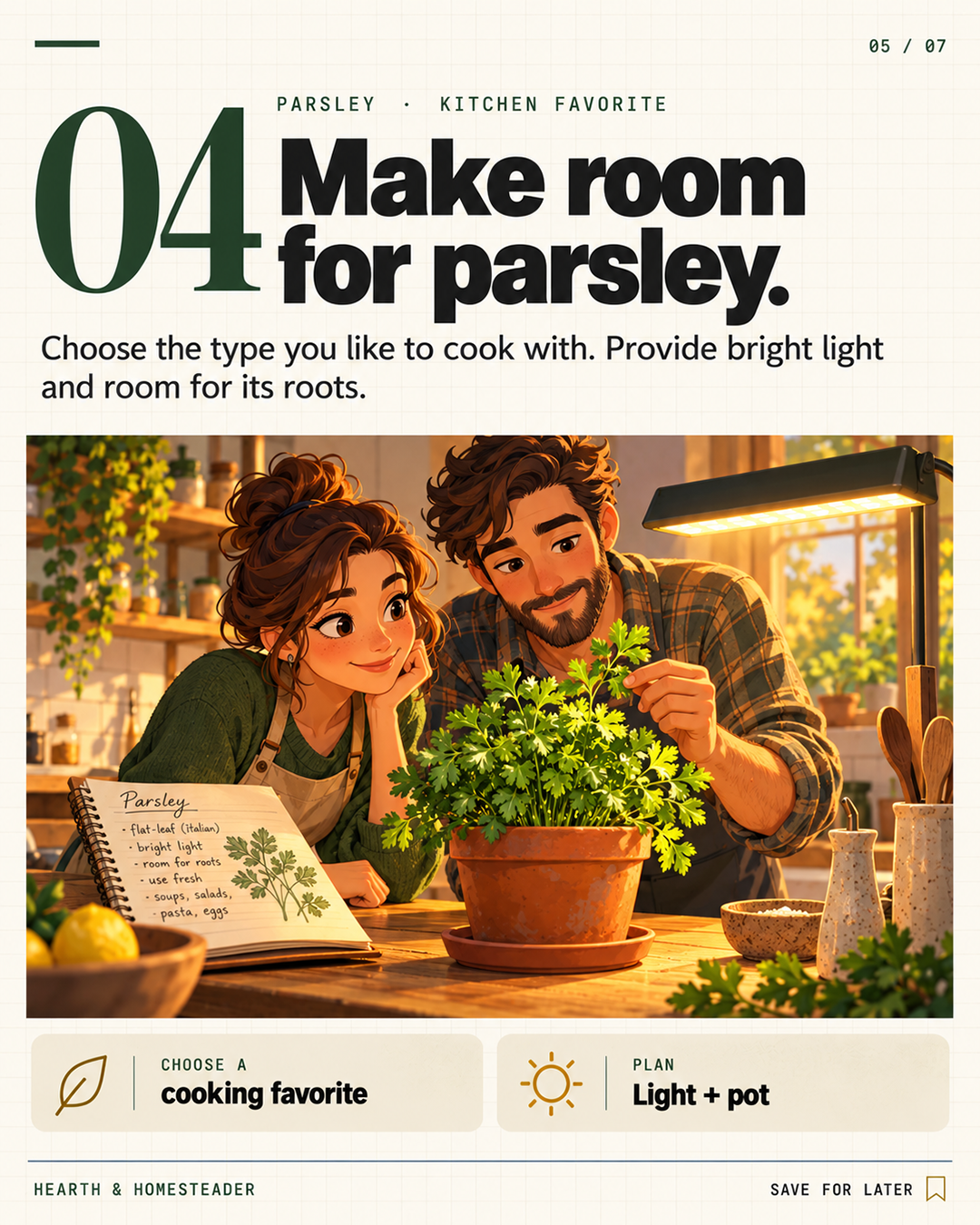
5. Try thyme in a bright spot.
Thyme is another option to compare with your indoor conditions. Minnesota Extension includes thyme among culinary herbs needing high light. Good drainage also belongs in the plan; avoid keeping the potting mix soggy. Look at the plant and check the soil before deciding it needs water. Keep any grow-light setup consistent with its instructions, then note what you observe over time. If this is your first indoor herb, leave the rest of the wish list for later and learn one pot's routine first.
Try this: Choose one observation to record for the thyme pot and decide where you will keep its care instructions.
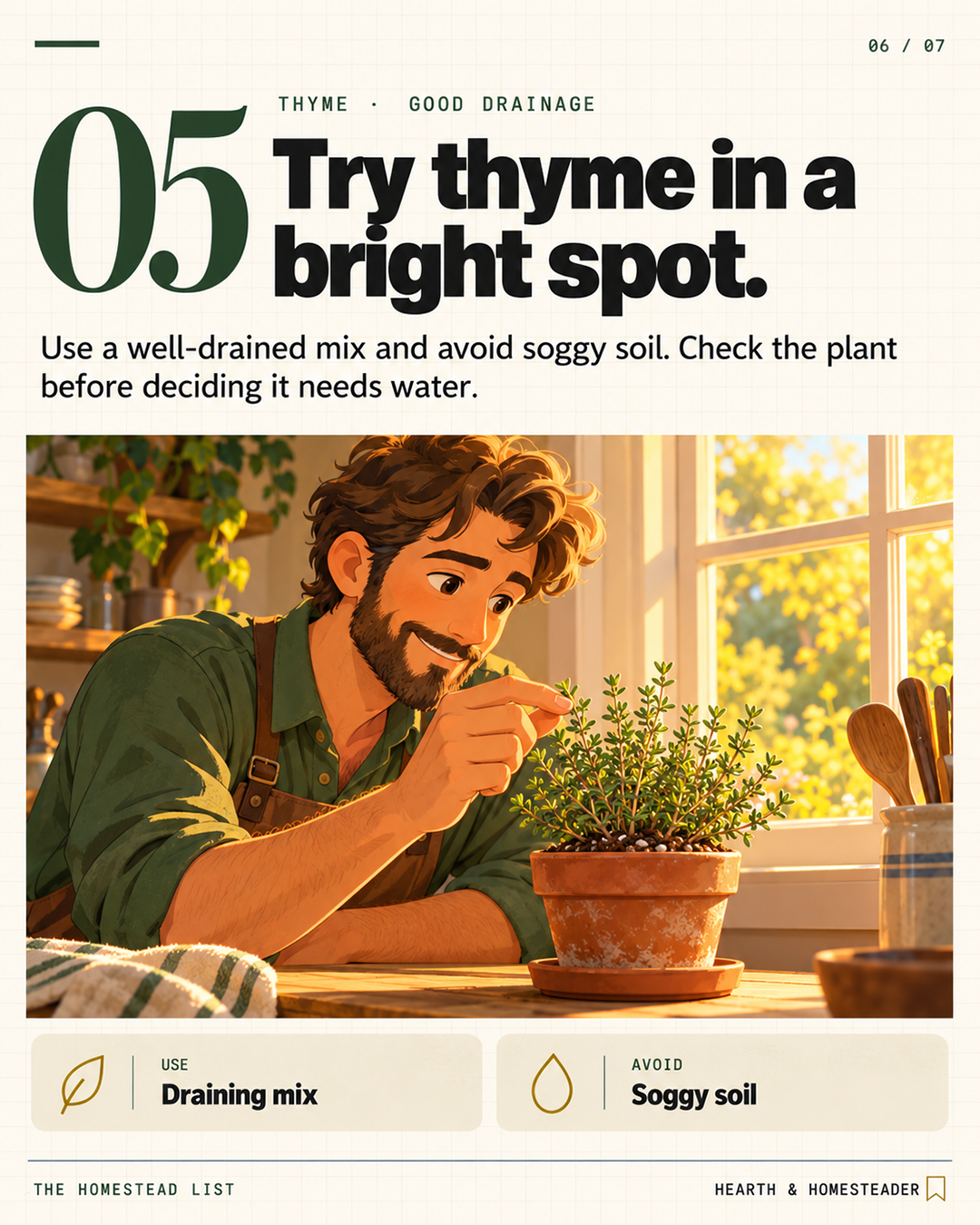
Your next step
Pick one herb from the list and complete the planning sheet before buying the whole collection. Keep its identity, light plan, container details and guidance together. A manageable indoor growing project starts with a place you can care for and a plant you want to learn about. Which herb would you start with?
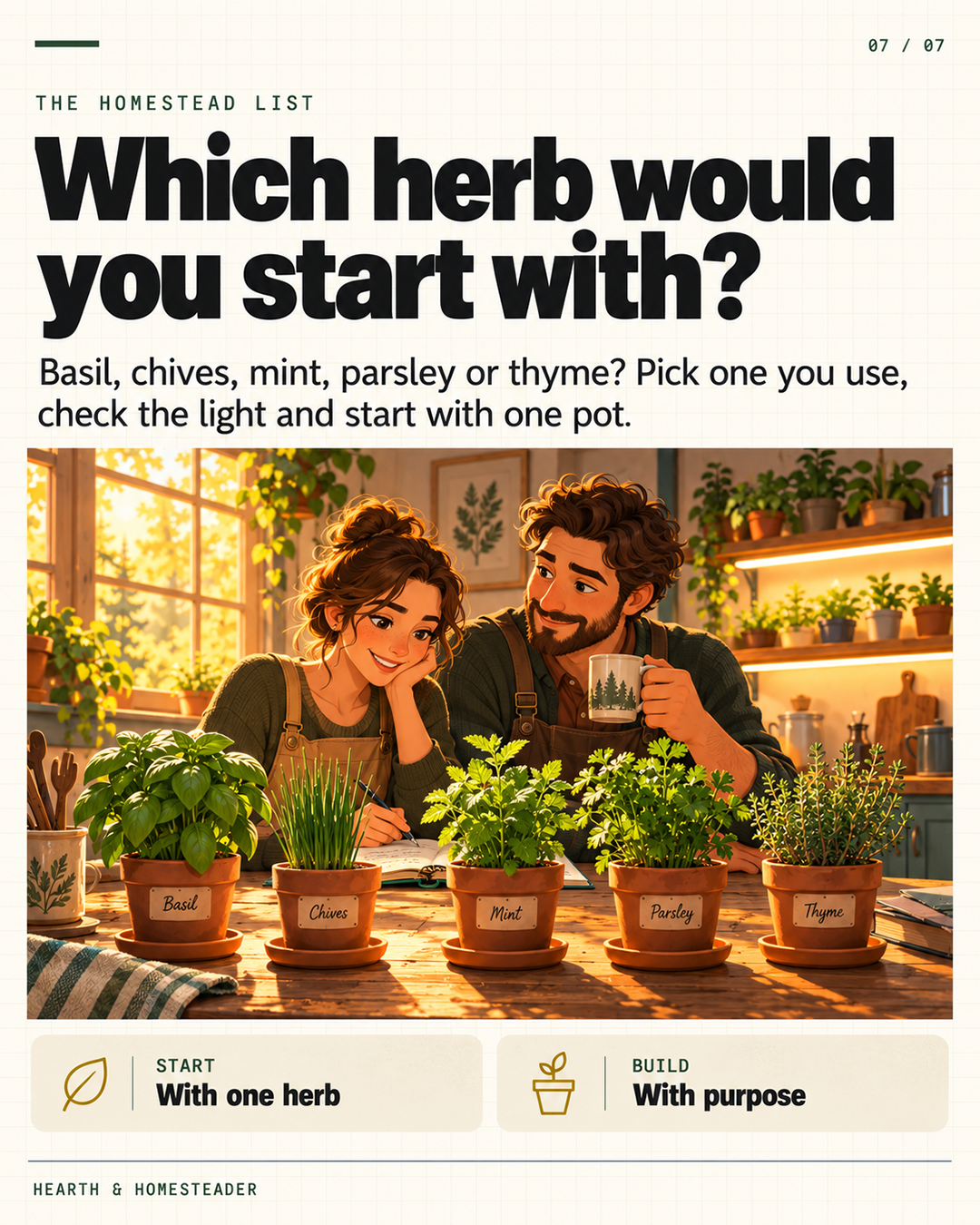
Indoor herb first-pot planning sheet
Choose one herb. Plan the light and drainage before expanding the collection; match care to the exact plant and equipment.
Open and print the planning worksheet
Optional planning resources
Affiliate links: we may earn a commission if you buy. As an Amazon Associate I earn from qualifying purchases. This is an optional editorial reading resource, not a hands-on product review. Start with the free Extension guides below or check your library.
Indoor Kitchen Gardening Handbook — Elizabeth Millard
Optional further reading on indoor growing spaces, containers and lighting. Check your library first, and use the free Extension guides below for your first setup. This is an editorial resource, not a hands-on product review.
View on Amazon