 Hearth & Homesteader
The Homestead List · Skills
5 Homestead Skills You Can Learn Before Buying Land
You do not need a property closing date to begin learning how to homestead. A small container, an ordinary kitchen and a project notebook can give you useful experience before you take on land or animals. The goal is not to recreate an entire farm inside your current home. It is to practice manageable routines, learn where you need help and discover which parts of a more independent life you actually enjoy.

1. Grow one thing you already eat
Start with a plant that fits your available light, space and season. If you regularly cook with herbs, one suitable herb can be a useful first experiment. A container still needs a thoughtful setup: drainage, an appropriate growing medium and a watering routine that fits the plant. University of Maryland Extension offers guidance on herbs in containers and indoors. Check those requirements before assuming a sunny-looking windowsill is enough. Choose a permitted location if you rent or share outdoor space. Watch one plant through ordinary busy weeks before expanding.
Try this: Write down the plant, available light and care routine before buying.

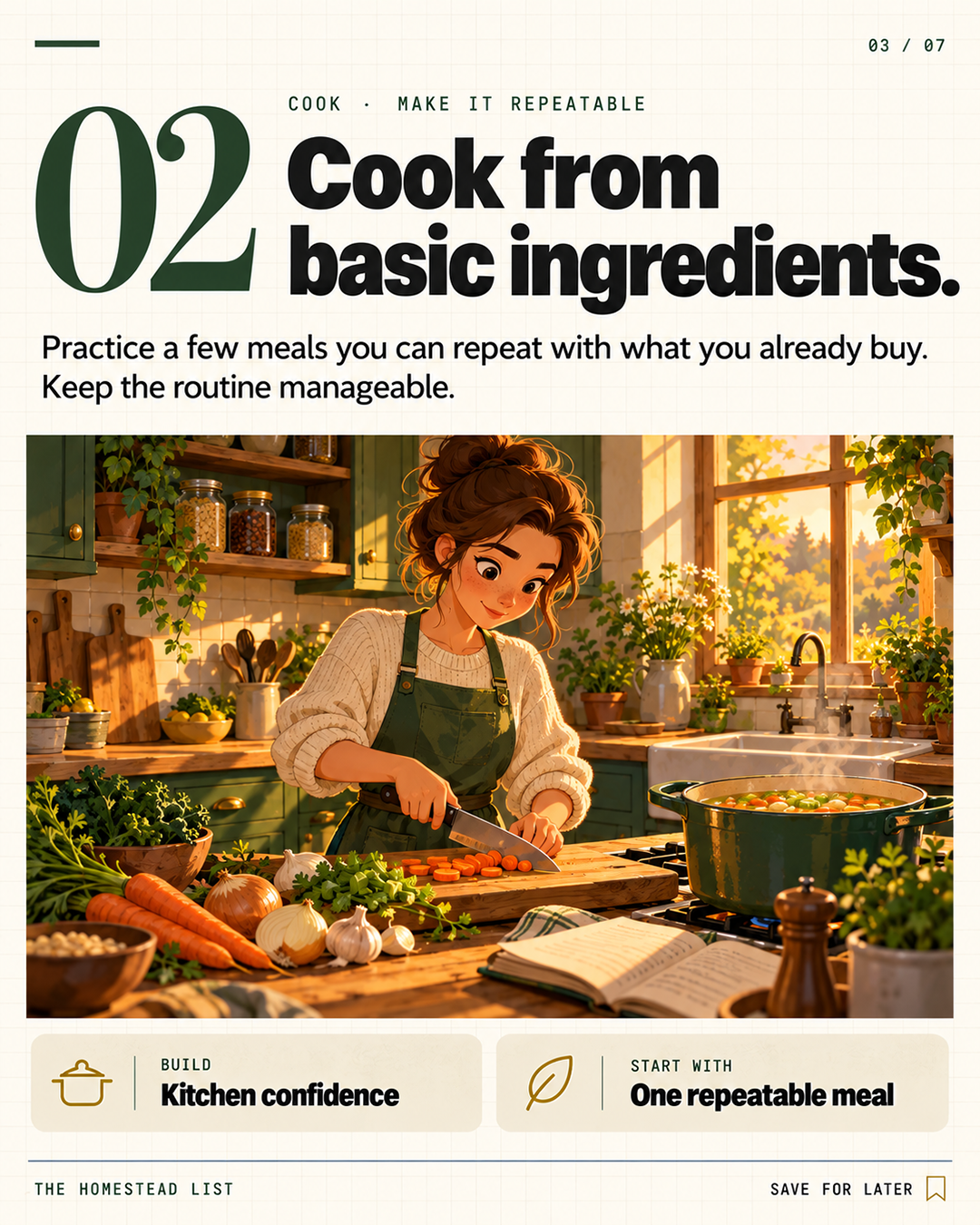
2. Cook a meal you can repeat
Choose a familiar meal with a short ingredient list and practice making it consistently. Look at what you already have before shopping, and keep notes on what your household actually eats. USDA MyPlate's meal-planning guidance is a useful place to begin organizing meals around available ingredients and a shopping list. This skill is about building a dependable kitchen routine, not achieving a perfect pantry or claiming every homemade meal costs less. Make the first recipe simple enough that you would still cook it after a long day.
Try this: Pick one meal, make it twice and note what you would change.
3. Finish a small, appropriate repair
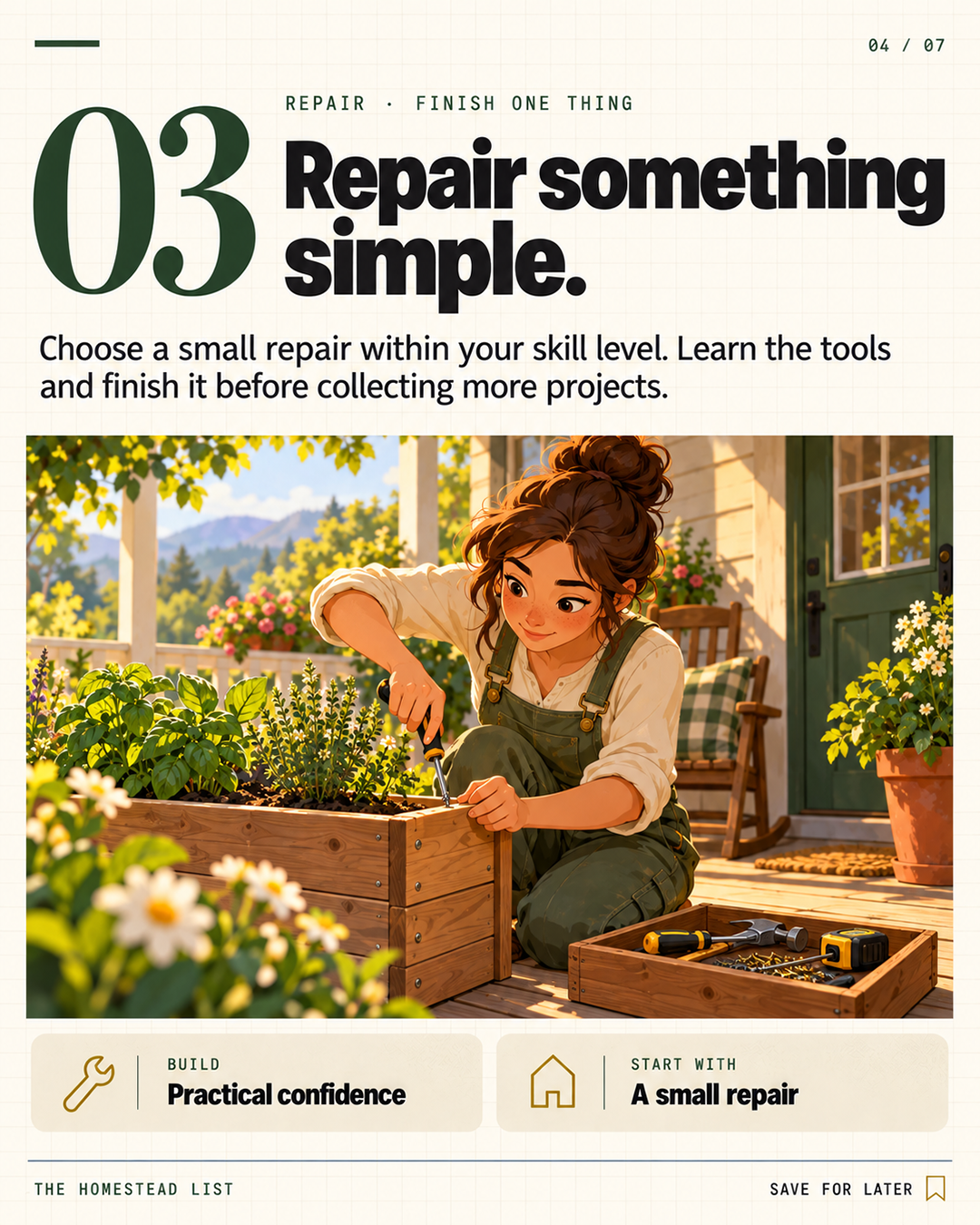
Choose a minor project that suits your current tools and experience. A simple wooden planter or a loose furniture fitting may provide an opportunity to learn, depending on the problem. Inspect the item, consult appropriate instructions and decide whether the work is within your ability before starting. Leave electrical, structural and other specialist work to people qualified to handle it. Finishing one modest task is more useful than buying equipment for a pile of unfinished projects. Keep the tool purchase separate from the question of whether the repair is worthwhile.
Try this: Name the problem, needed instructions and the point where you would ask for help.
4. Observe what your household uses
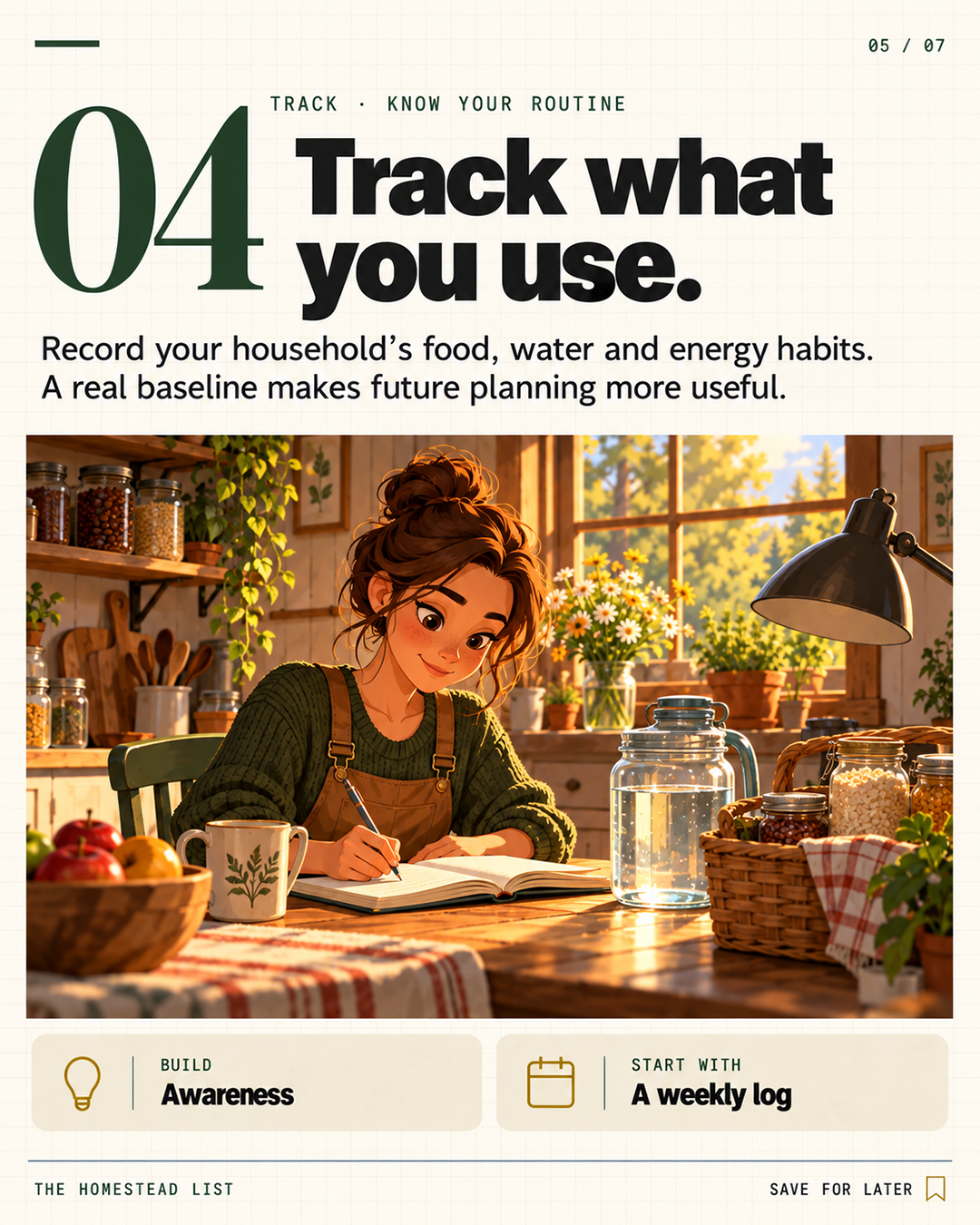
Keep a short record of food purchases, discarded food and ordinary water or energy habits. Use information you can actually observe, such as groceries used during the week or figures already shown on a bill. Mark estimates as estimates and compare similar periods before drawing conclusions. The exercise is not a promise of savings or a technical resource audit. It is a way to replace guesses with a baseline. Later, those notes can help you ask better questions about garden size, storage and the routines you want on a future property.
Try this: Record one category for a week without trying to change everything at once.
5. Keep a project record you will reuse
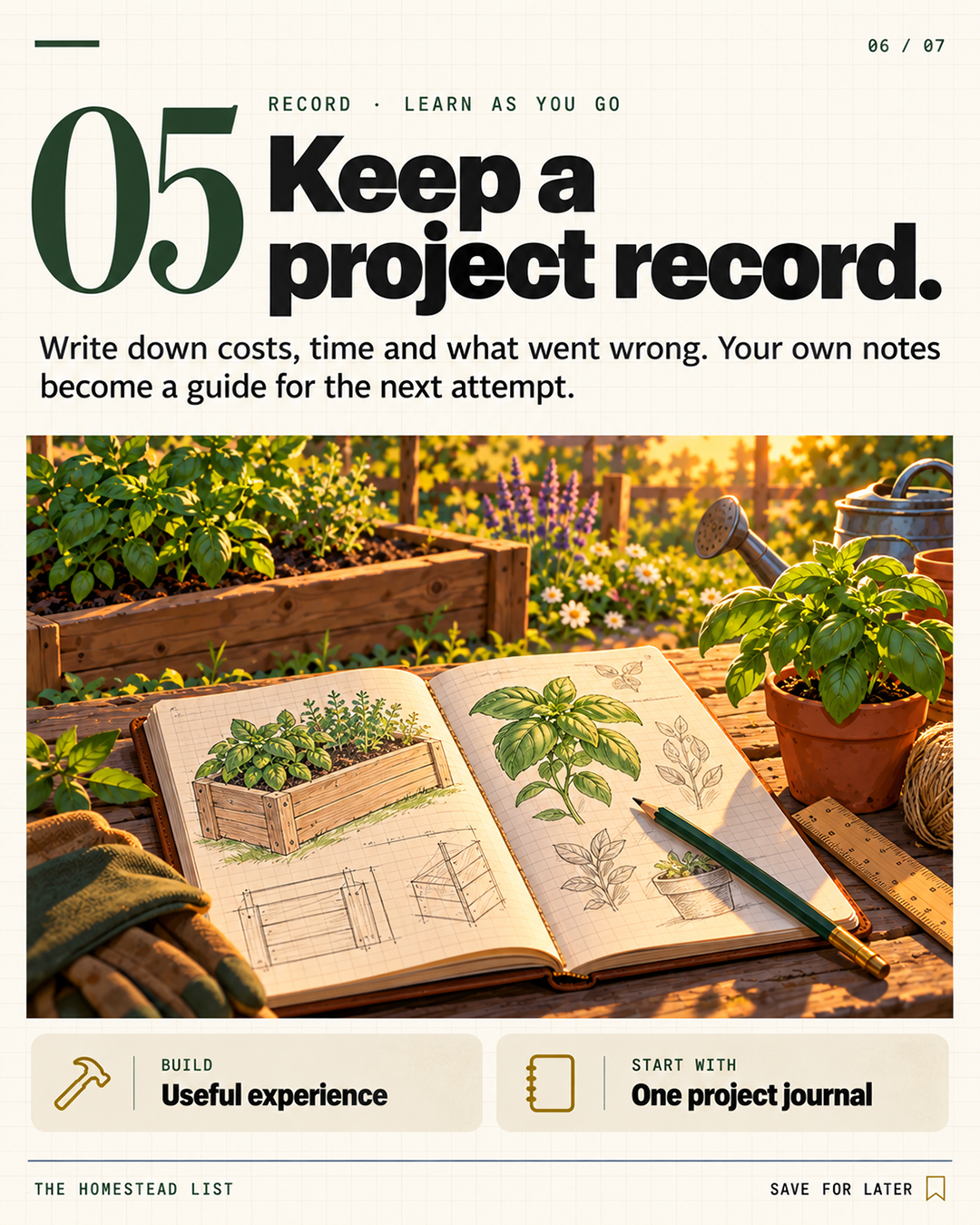
Give each project a small record: the goal, materials, actual spending, time, outcome and next change. A photo or sketch can capture something you would otherwise forget. Separate what you observed from what you think caused it. If a plant struggled, for example, record its conditions before declaring a single cause. These notes become useful when you repeat the project, ask someone for advice or decide whether to expand. An existing notebook works well; the value comes from clear observations rather than a particular stationery product.
Try this: Write a one-page record of your next small project.
Start with one skill
Choose one skill for the coming month. Keep the first attempt small enough to finish, and decide what you want to learn before adding another project. These habits travel with you when your address changes. Which skill would you practice first?

Optional planning resources
Affiliate links: we may earn a commission if you buy. As an Amazon Associate I earn from qualifying purchases. Editorial selections, not hands-on product reviews. Use supplies you already own when they fit the task.
Oxford composition notebooks · 12-pack
Optional for separate project records or several household members. This is a bulk pack; one existing notebook may be enough.
View on AmazonKAICN undated weekly planner · 5.7 × 8 inches
Optional for fitting a small practice session into the week. A calendar you already use can do the same job.
View on Amazon