 Hearth & Homesteader
The Homestead List
5 Things to Measure Before Expanding Your Homestead
More projects need more than more enthusiasm. Another garden bed, a larger flock or a new workshop can change the routine you already manage. Before adding one, record what life on your current homestead actually involves. These five planning exercises help you compare the next idea with your household's time, spending, space, use and available help. Start with observations from your own setup. Keep estimates separate from measured information, and leave questions visible when you do not yet have an answer.

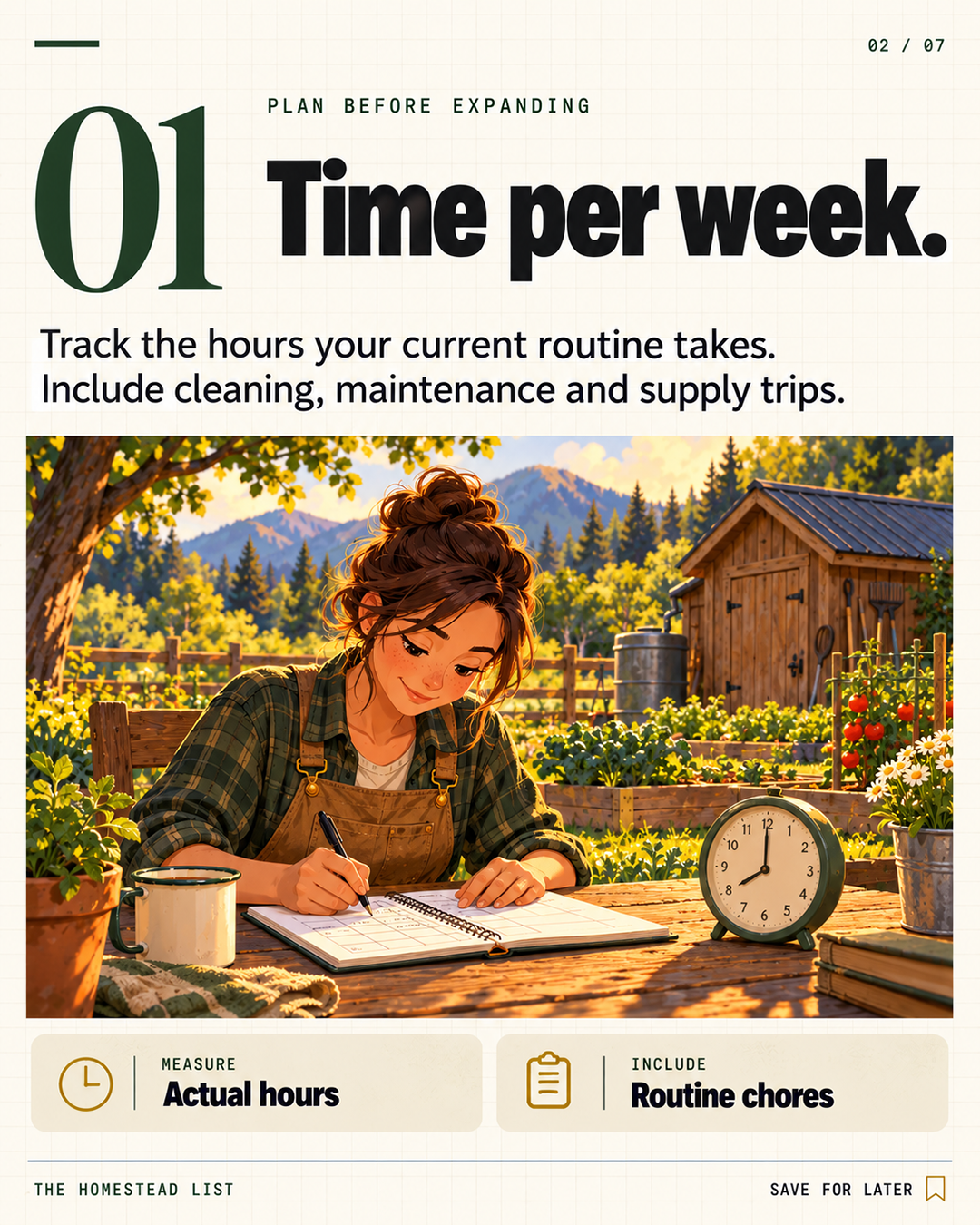
1. Time per week.
Choose a current routine and note when the work starts and ends. Include preparation, cleanup, maintenance and supply trips as well as the part you enjoy most. Record who did the work and whether the day was unusual. A busy harvest week and a quieter week can tell different stories, so keep the dates with your notes. Ask the people sharing the work whether you missed any coordination tasks. Use the record to identify questions about an expansion rather than assuming one observed week represents the whole year.
Try this: Log one routine for a week, then mark the seasonal or occasional jobs that your observation period did not capture.
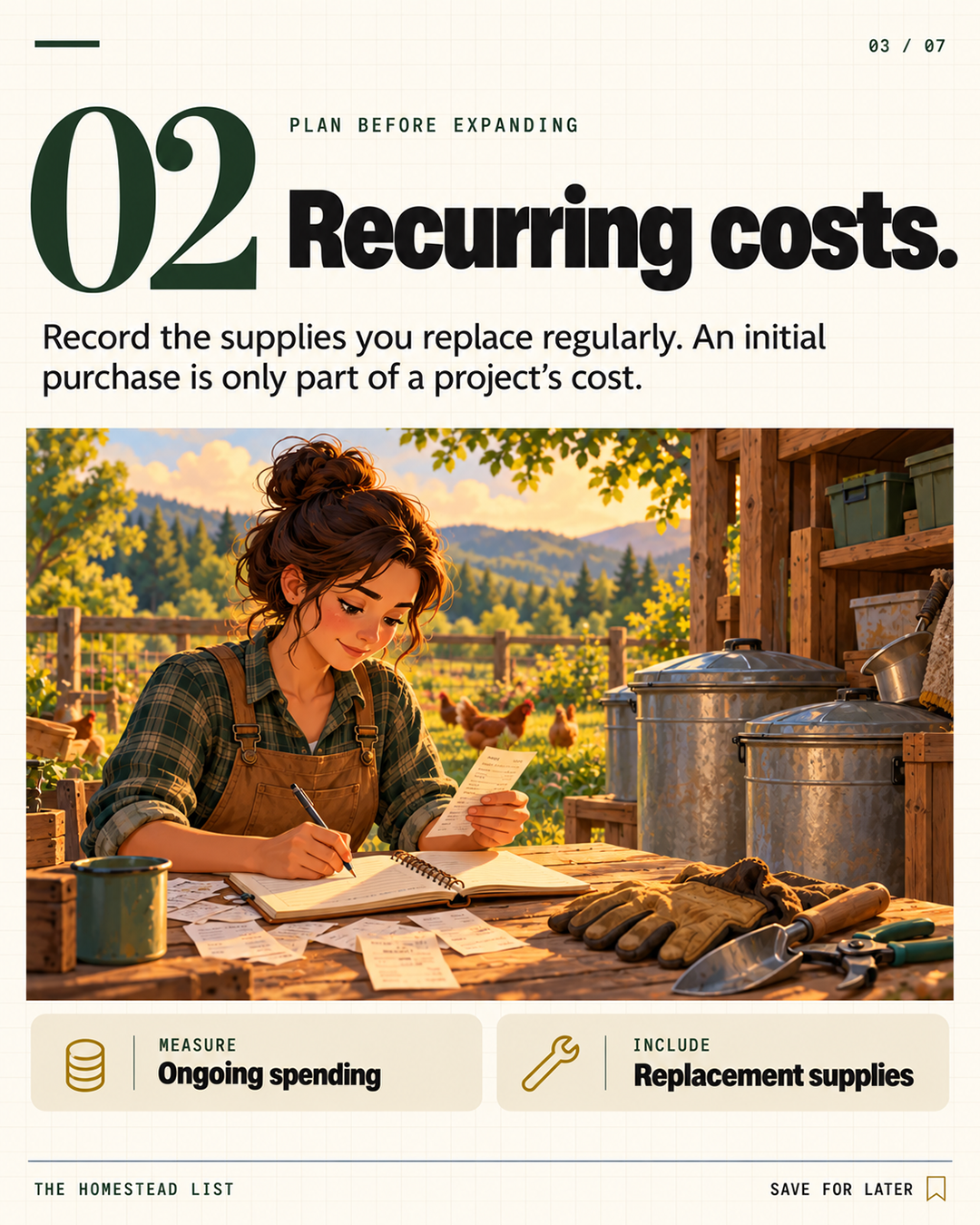
2. Recurring costs.
Gather the receipts and notes you already have. List supplies you replace, what each purchase covered and the date it was bought. Keep the first setup purchase separate from recurring spending so you can see both clearly. Penn State Extension's beginning-farmer planning guidance includes tracking income and expenses; for this household exercise, begin with a manageable record of actual purchases. Do not fill a gap with zero simply because you have not found the receipt. Mark it as unknown and choose how to investigate.
Try this: Record three recurring purchases, their dates and what each amount covered. Leave missing amounts labeled unknown.
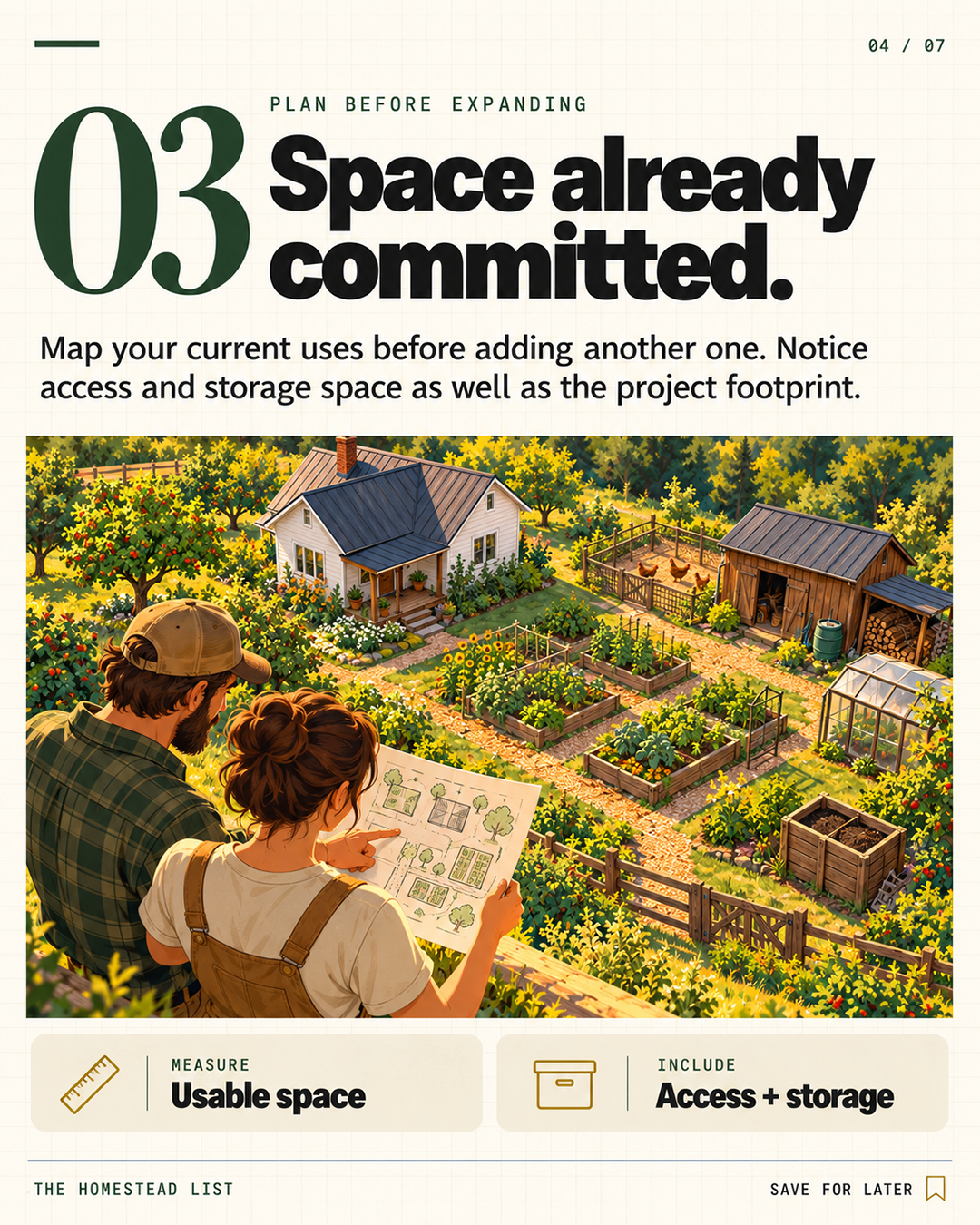
3. Space already committed.
Sketch your existing uses before drawing the next project into the empty part of the page. Include the routes people use, storage areas, work space and access for bringing supplies in or moving materials out. Walk the area and note places that serve more than one purpose. A patch that looks unused in a photograph may be part of an everyday route. Keep approximate measurements clearly labeled. This sketch helps you ask better layout questions; it does not replace the site-specific checks needed before building.
Try this: Mark one proposed addition and trace how you would reach it, store its supplies and move through the surrounding space.
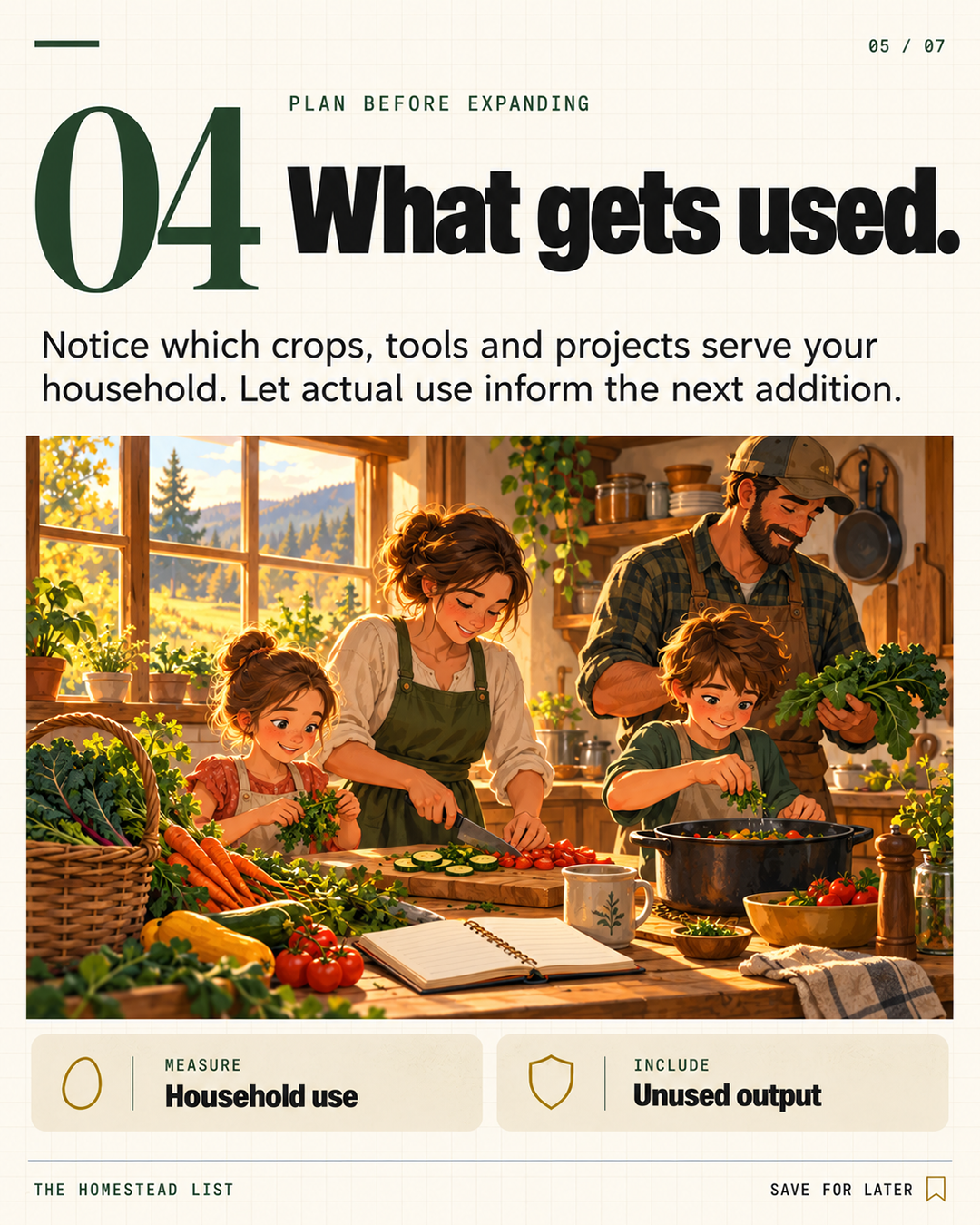
4. What gets used.
Notice where the output of a current project goes. For a garden, record what your household uses, shares or leaves unused. For tools, note the jobs that actually call for them. Ask whether a planned addition serves a recurring need or a new interest you still want to explore. Neither answer needs to be disguised. Keep the observation period visible and avoid treating a short log as a harvest forecast or a promise of savings. Let the record shape the next question you research.
Try this: Choose one crop, tool or project and note how it served your household during the period you observed.
5. Your margin for a hard week.
Walk through a week when work runs late, someone is away or the weather changes the routine. Which tasks still need attention, and who has agreed to help? Record what a willing helper can actually cover and which instructions they would need. Include your household's other commitments rather than planning around an empty calendar. Backup capacity is a practical discussion, not a universal score. If a task has no workable cover, keep that gap visible while you consider the pace and scope of the next addition.
Try this: Choose one disrupted-week scenario and list the essential tasks, agreed help and unresolved gaps.

Your next step
Put the five records beside the project you are considering. Name what you know, what you estimated and what you still need to learn. Choose one question to investigate before committing to more work or equipment. Keeping the current setup manageable is a useful planning outcome too. What would you measure before taking on another project?

Before-you-expand measurement sheet
Record observations from your current setup before comparing them with a proposed addition. Label estimates and unknowns, and keep the observation dates visible.
Open and print the planning worksheet
Optional planning resources
Affiliate links: we may earn a commission if you buy. As an Amazon Associate I earn from qualifying purchases. These are optional editorial resources, not hands-on product reviews. Plain paper or an existing notebook works too.
Oxford composition notebooks · 12-pack
Optional for dated time logs, supply purchases, household-use notes and expansion questions. This is a bulk pack; an existing notebook or spreadsheet can serve the same purpose.
View on Amazon