 Hearth & Homesteader
The Homestead List
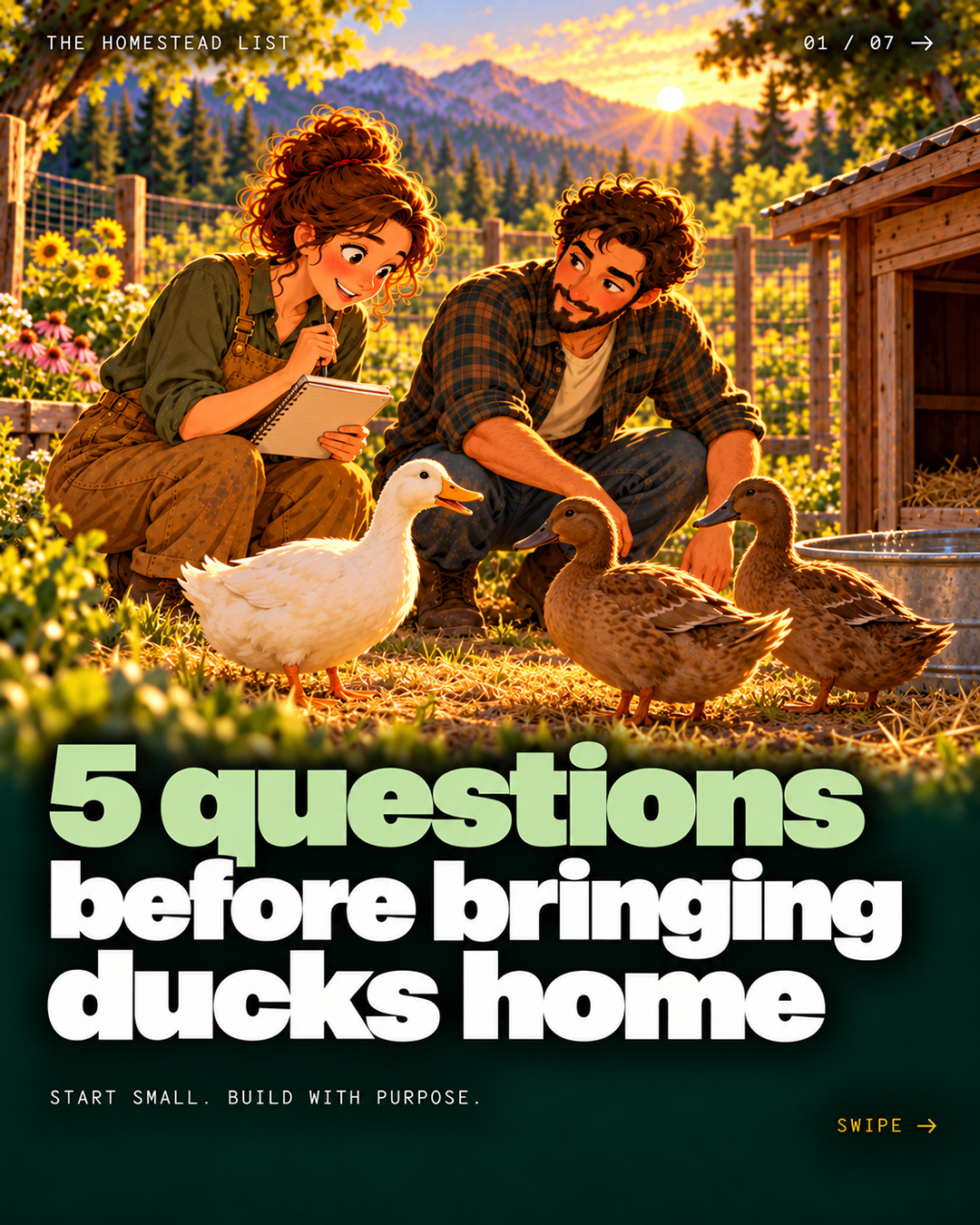
5 Questions Before Bringing Ducks Home
Ducks can be a memorable part of a homestead, and their care starts before arrival day. The useful first purchase may be a notebook: a place to work through space, shelter, water, feed and the daily routine. Begin with your household's goals and the birds you can support over time. Use these five questions to prepare for conversations with local poultry advisers, suppliers and a veterinarian who treats ducks. The illustrations show adult birds; if you plan to raise ducklings, arrange an age-appropriate brooding and care plan before ordering.
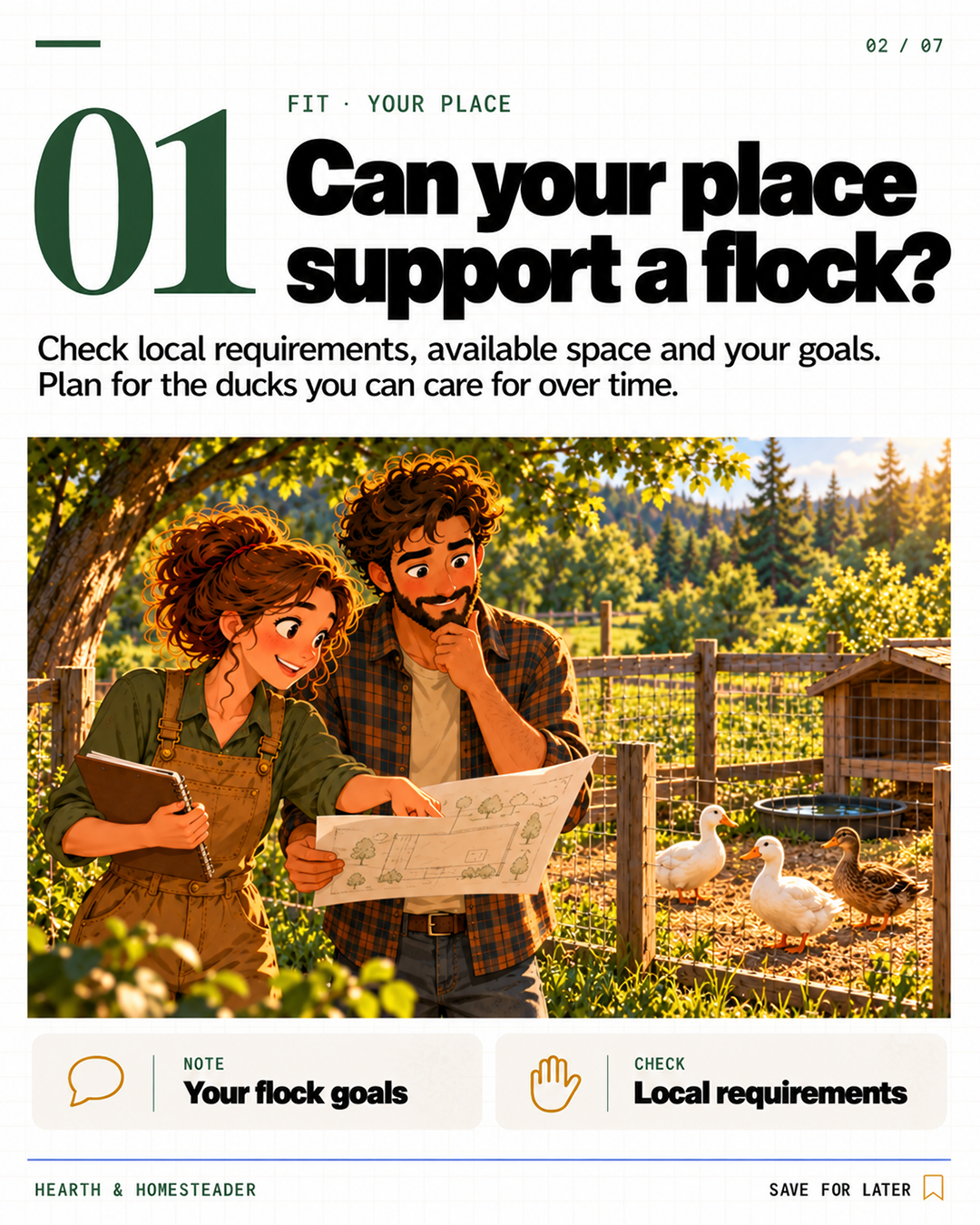
1. Can your place support a flock?
Write down why you want ducks and what that choice would add to an ordinary week. Iowa State Extension recommends checking current local requirements before starting backyard poultry. Confirm what applies at your address, then assess the area available for the birds and routine access for their carers. Discuss the plan with everyone sharing the space. Keep expected costs, willing help and unanswered questions together. Choose the scale only after those details make sense, and leave time to resolve gaps before setting an arrival date.
Try this: Record your goals, local requirements, proposed flock, available space, costs to investigate and household agreement.
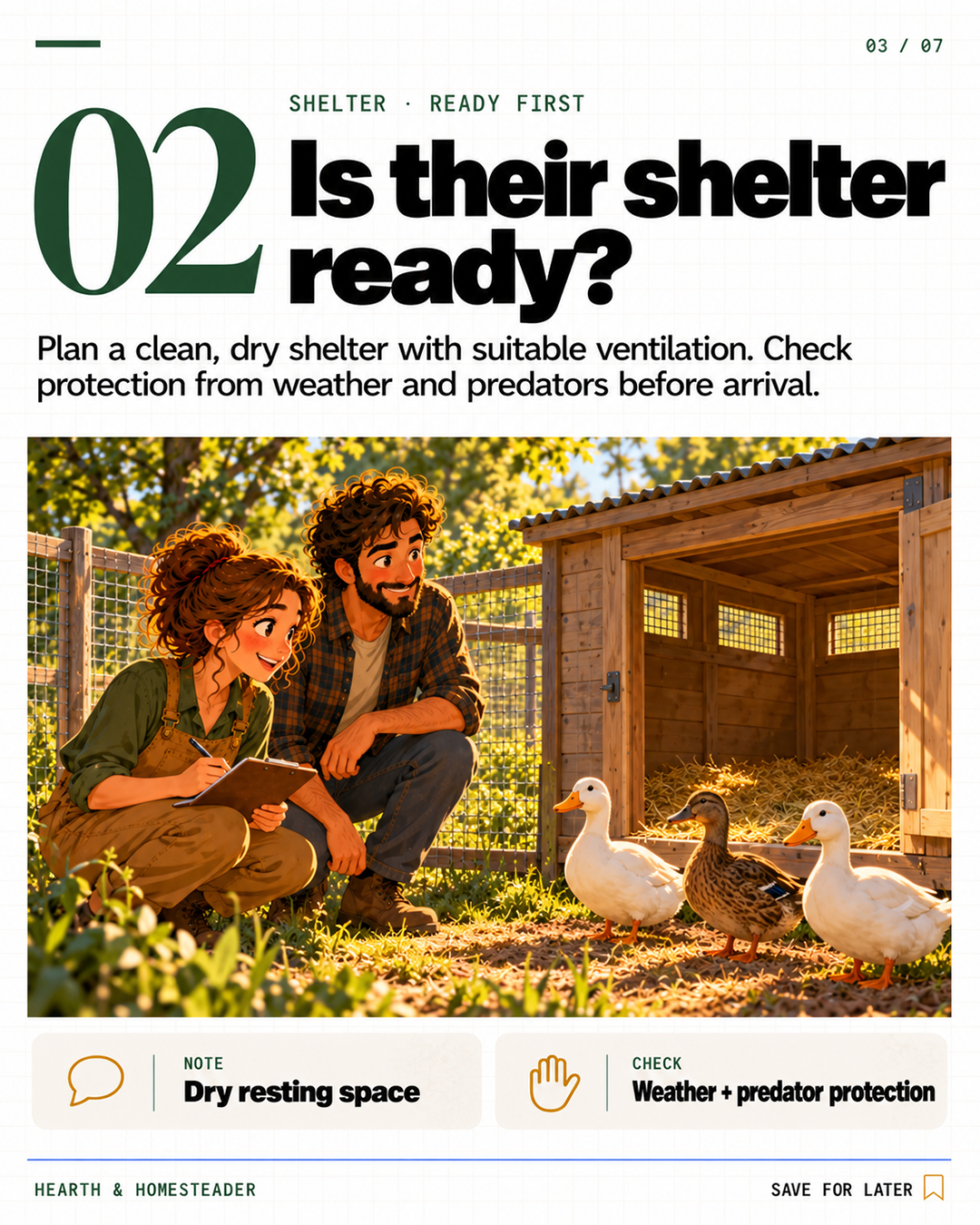
2. Is their shelter ready?
Walk the proposed setup before birds arrive. Cornell's Duck Research Laboratory identifies protection from weather and predators, along with a clean, dry sheltered resting area, as basic requirements. Review the location, ventilation and access for cleaning with a knowledgeable adviser. Use suitable plans or manufacturer instructions when choosing housing and enclosure details. Include the work of maintaining dry bedding in your routine. Put every unfinished item on a readiness list, with a person and a date for resolving it before the flock moves in.
Try this: Check resting space, ventilation, weather and predator protection, cleaning access and any work still unfinished.
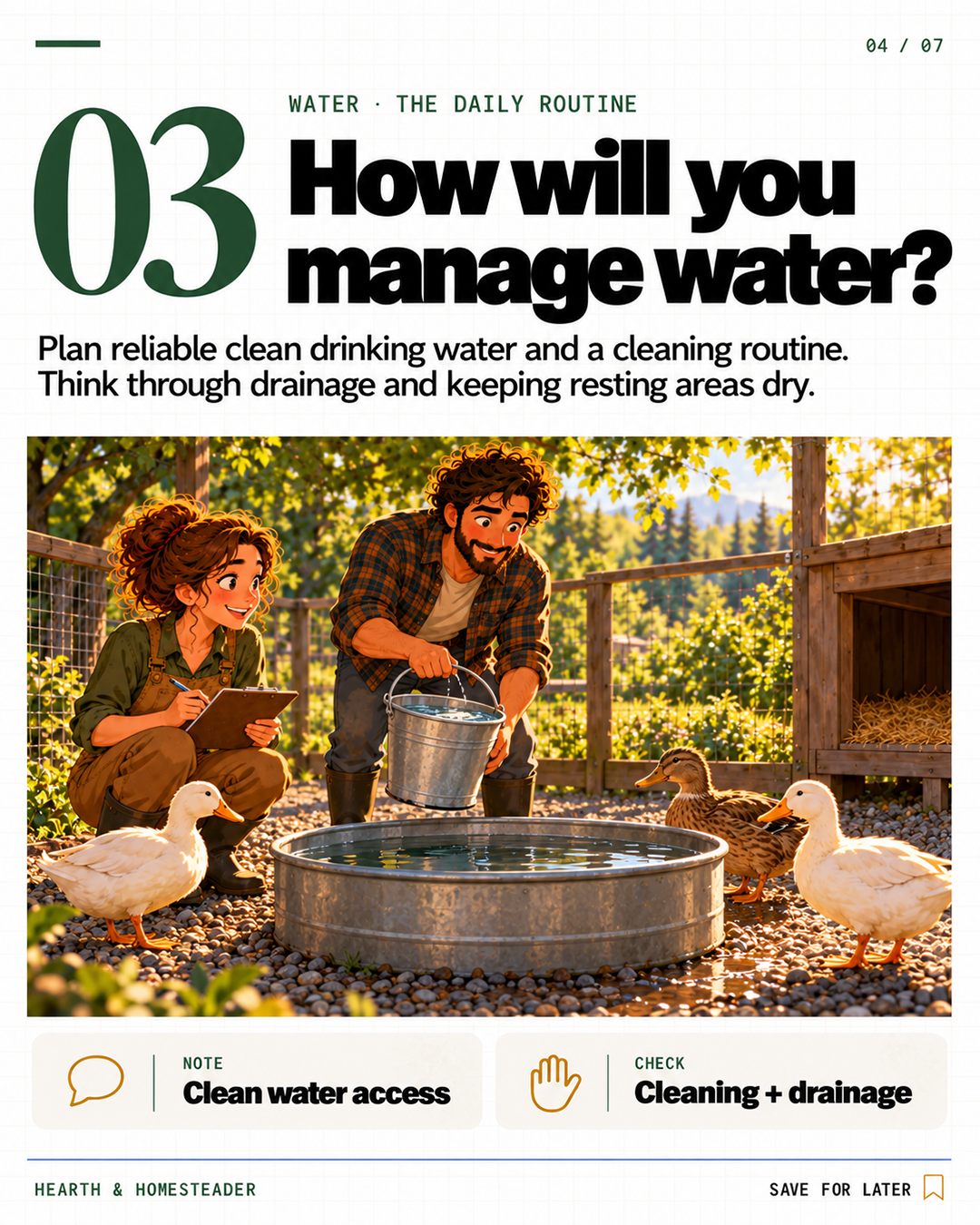
3. How will you manage water?
Make the water routine concrete. Cornell lists clean drinking water as a basic need, so decide how you will supply it reliably and keep equipment clean. Ask about an appropriate setup for the age and type of ducks you intend to keep. Walk the route for filling, emptying and cleaning containers, and consider drainage around the station. Keep dry resting space part of the same plan. Work through seasonal conditions with your adviser so the routine remains practical when the weather changes.
Try this: Map water access, suitable equipment, cleaning and drainage; note seasonal questions and who will handle each task.
4. What will you feed them?
Choose the feeding plan before bringing home the birds. Cornell explains that ducks need a diet supplying their nutritional requirements and that feed quality matters. Confirm a suitable feed for their age and purpose with a poultry adviser or veterinarian, then check availability with the supplier. Keep product instructions where the daily carer can find them. Plan dry storage, buying quantities and the route for replenishing supplies. Include ongoing feed costs in the household conversation, and resolve any uncertainty about the plan before arrival.
Try this: Record the proposed feed, age and purpose, expert guidance, supplier, storage arrangements and costs to check.
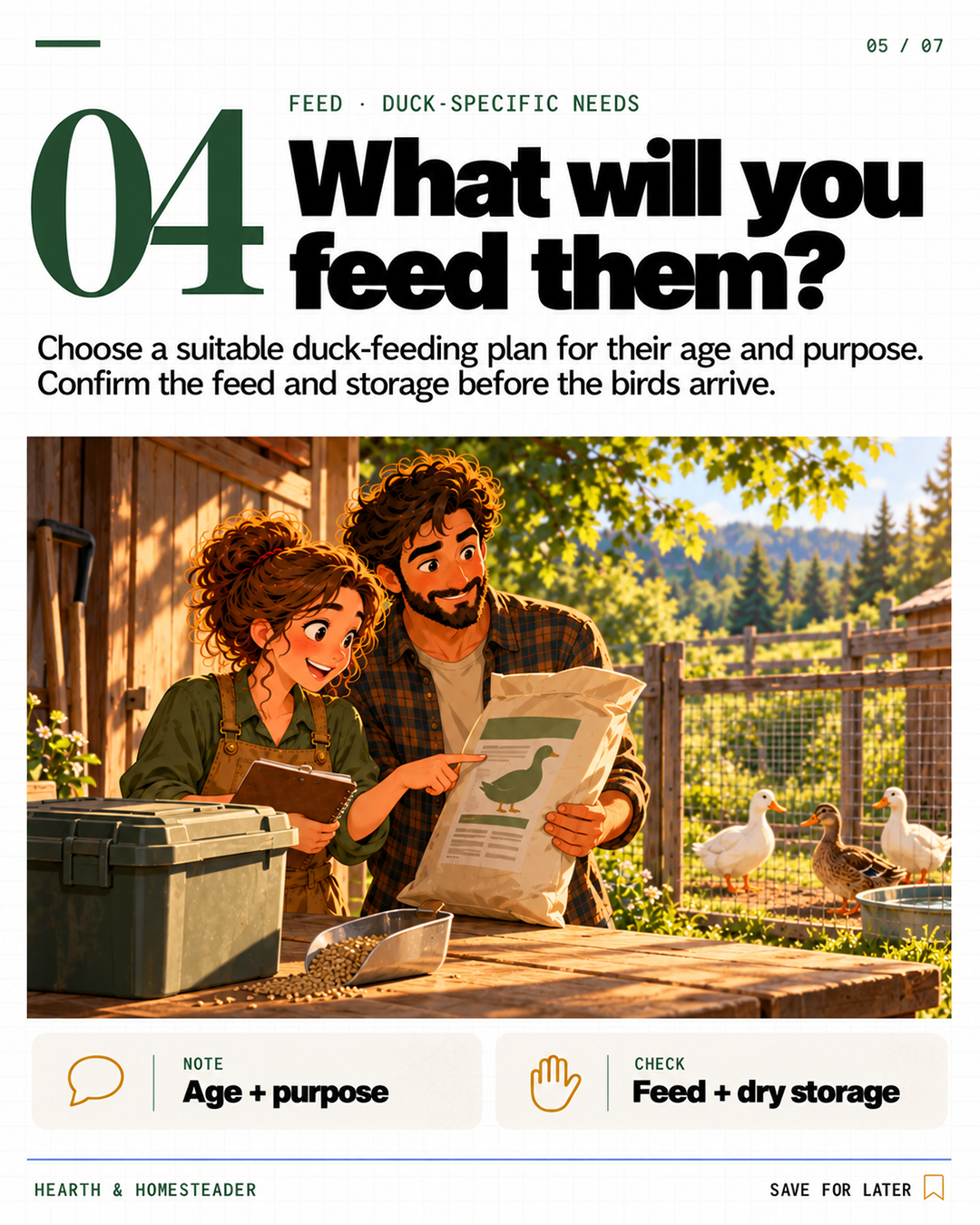
5. Who handles care every day?
Agree on the people behind the plan. Name the regular carer, a willing backup and where instructions will live. Include daily observations, cleaning and supply checks in a routine both can follow. Extension's poultry biosecurity guidance is a useful starting point for planning how to protect a flock from disease; ask local advisers how it applies to your setup. Find veterinary support in advance and keep the contact details accessible. Practice explaining the whole routine before assuming someone else can cover time away.
Try this: Name the daily carer and backup; record care instructions, biosecurity questions, expert contacts and time-away arrangements.
Your next step
Choose the question with the largest gap in your current plan. Gather the missing information, finish the setup and make sure the people doing the work understand the routine. Use the worksheet to keep decisions and questions together. A postponed arrival can give you time to make the care plan workable. Which comes first for your household: space, shelter, water, feed or daily care?
Duck readiness planning sheet
Work through the plan before setting an arrival date. Use current duck-specific guidance and local expert support; ducklings need their own age-appropriate brooding plan.
Open and print the planning worksheet
Optional planning resources
Affiliate links: we may earn a commission if you buy. As an Amazon Associate I earn from qualifying purchases. This optional editorial reading resource is not a hands-on product review. Begin with the free guides below or check your library.
Storey’s Guide to Raising Ducks, 2nd Edition — Dave Holderread
Optional background reading on breeds, housing and care. Check your library first and confirm the practical care plan with current poultry guidance and local expert support.
View on AmazonSources and further reading
- A Beginner’s Guide to Backyard Poultry — Iowa State University Extension
- Basic Duck Care — Cornell University Duck Research Laboratory
- Duck Housing and Management — Cornell University Duck Research Laboratory
- Duck Nutrition — Cornell University Duck Research Laboratory
- Biosecurity for Small Poultry Flocks — Extension Small and Backyard Poultry
- Storey’s Guide to Raising Ducks — Storey / Hachette Book Group