 Hearth & Homesteader
The Homestead List
5 Questions Before Bringing Goats Home
Goats can be an appealing part of a homestead plan. Bringing them home also creates work that continues after the excitement of choosing them. Before browsing breeds or arranging pickup, put five practical questions on paper. Your answers can reveal what is ready, what needs experienced help and what should wait. This is a first planning conversation for your household, with room for unknowns. Use it to prepare better questions for local livestock advisers and a goat-experienced veterinarian.
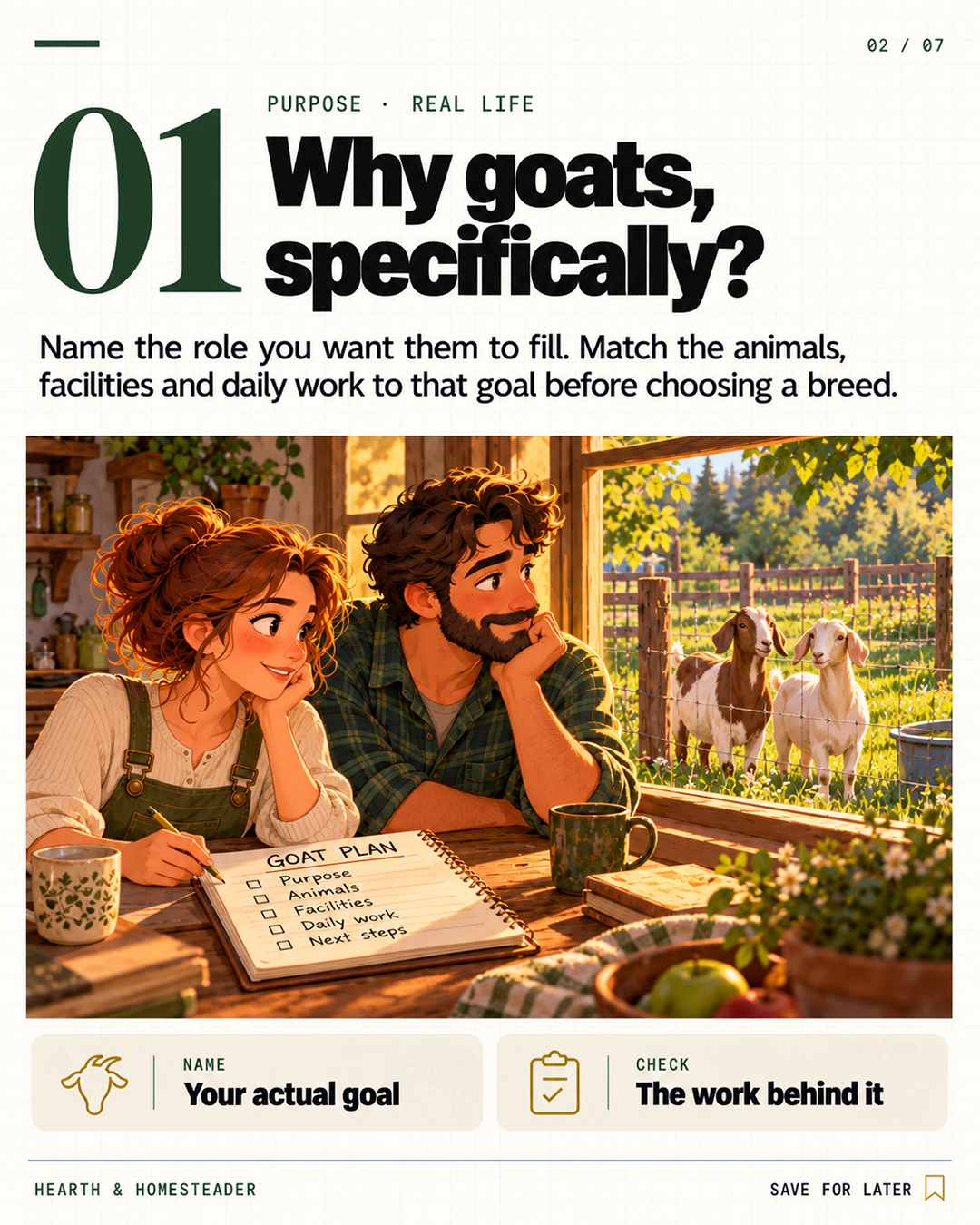
1. Why goats, specifically?
Write the role you want goats to fill before deciding which animals to keep. Penn State Extension recommends considering the type of operation and available resources, including land, facilities and feed. A household interested in dairy will have different questions from one considering companion animals. Make a list of the work behind your goal and ask someone experienced in that kind of goat keeping to review it. Include the limits of your time and space. A clear purpose helps you recognize when an appealing animal does not fit the plan.
Try this: Finish this sentence: We want goats for ____. Then list the facilities, recurring tasks and unanswered questions behind that goal.
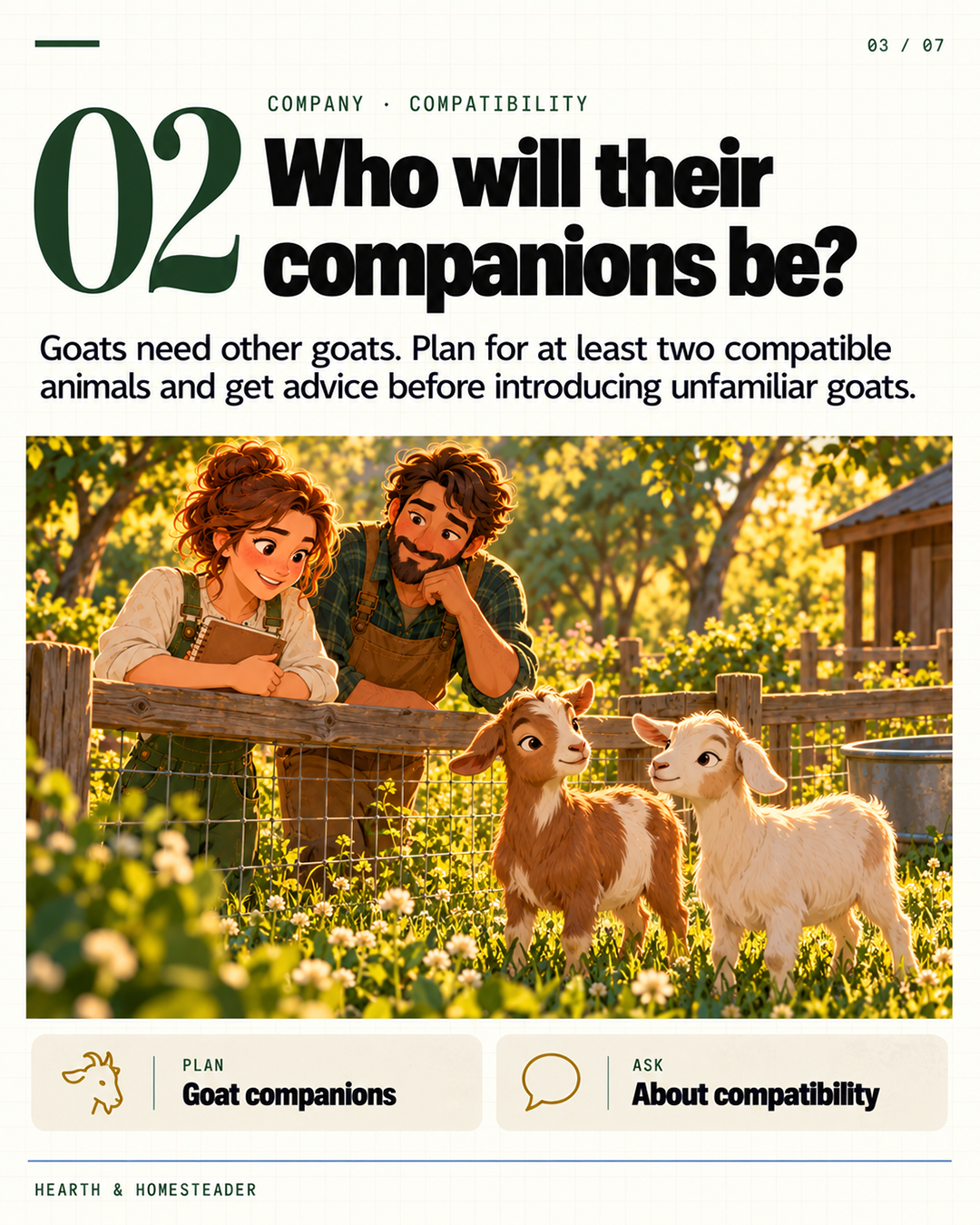
2. Who will their companions be?
Goats need goat company. The RSPCA recommends at least two compatible goats and advises getting expert guidance when introducing unfamiliar animals. Make companionship part of the initial plan rather than a problem to solve after bringing one home. Ask about the animals' existing relationships and the suitability of the proposed group. Leave space in your notes for advice about introductions and health precautions from the people supporting your setup. The choice involves compatible animals and a workable care plan, not simply choosing a second goat at random.
Try this: Record the proposed companions, what is known about their compatibility and who will advise on introductions.
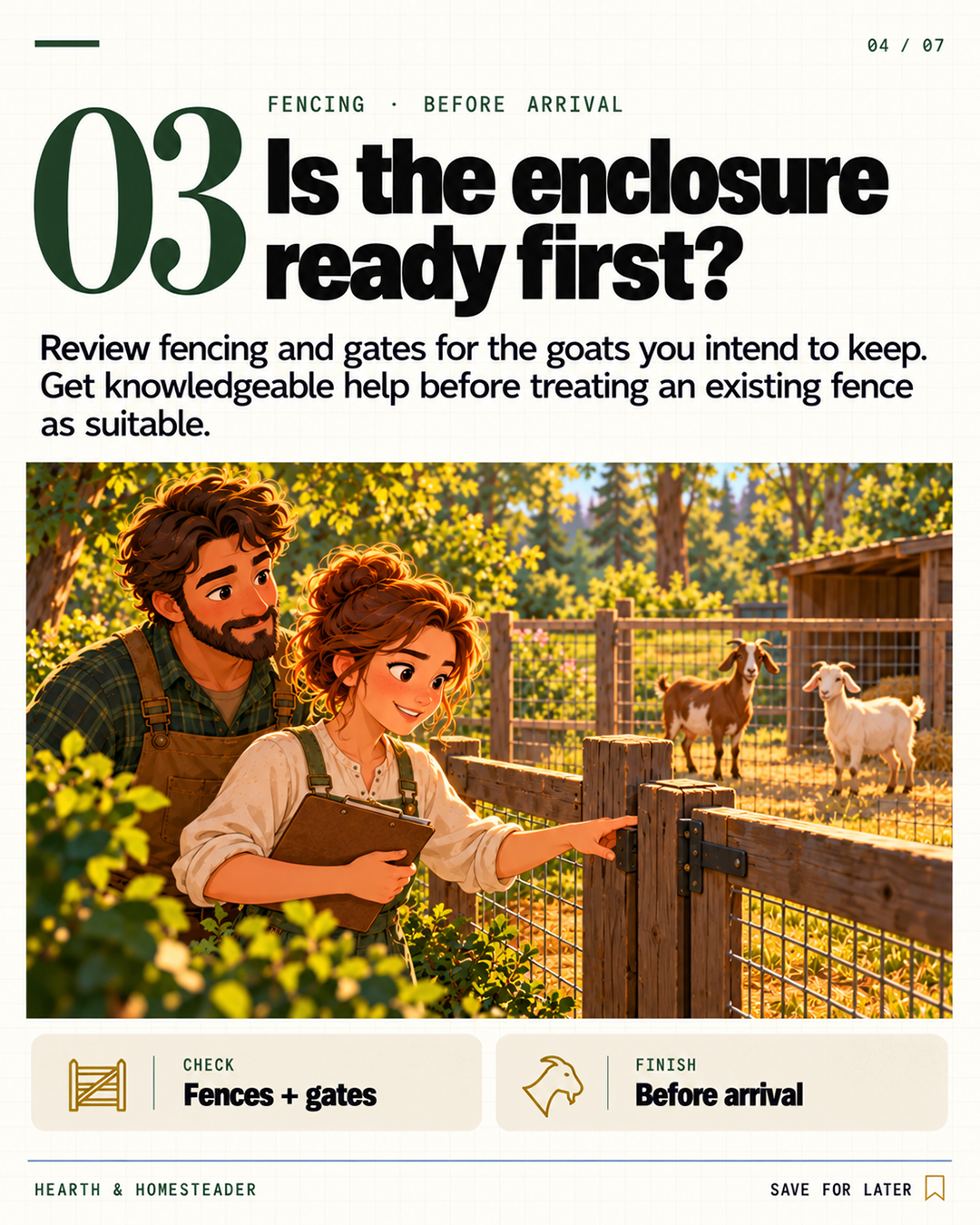
3. Is the enclosure ready first?
Walk the proposed enclosure before committing to animals. Penn State's management guidance emphasizes suitable fencing; an existing boundary should not be assumed suitable just because it held another species. Ask a knowledgeable livestock adviser to review the fences and gates for the goats you intend to keep. Record the changes, who will complete them and what still needs checking. Think through the route used for ordinary care, too. A sketch and a list of open questions can make that conversation more useful than shopping for fencing without a plan.
Try this: Sketch the enclosure and gates. Mark the parts that need assessment and the work to finish before arrival.
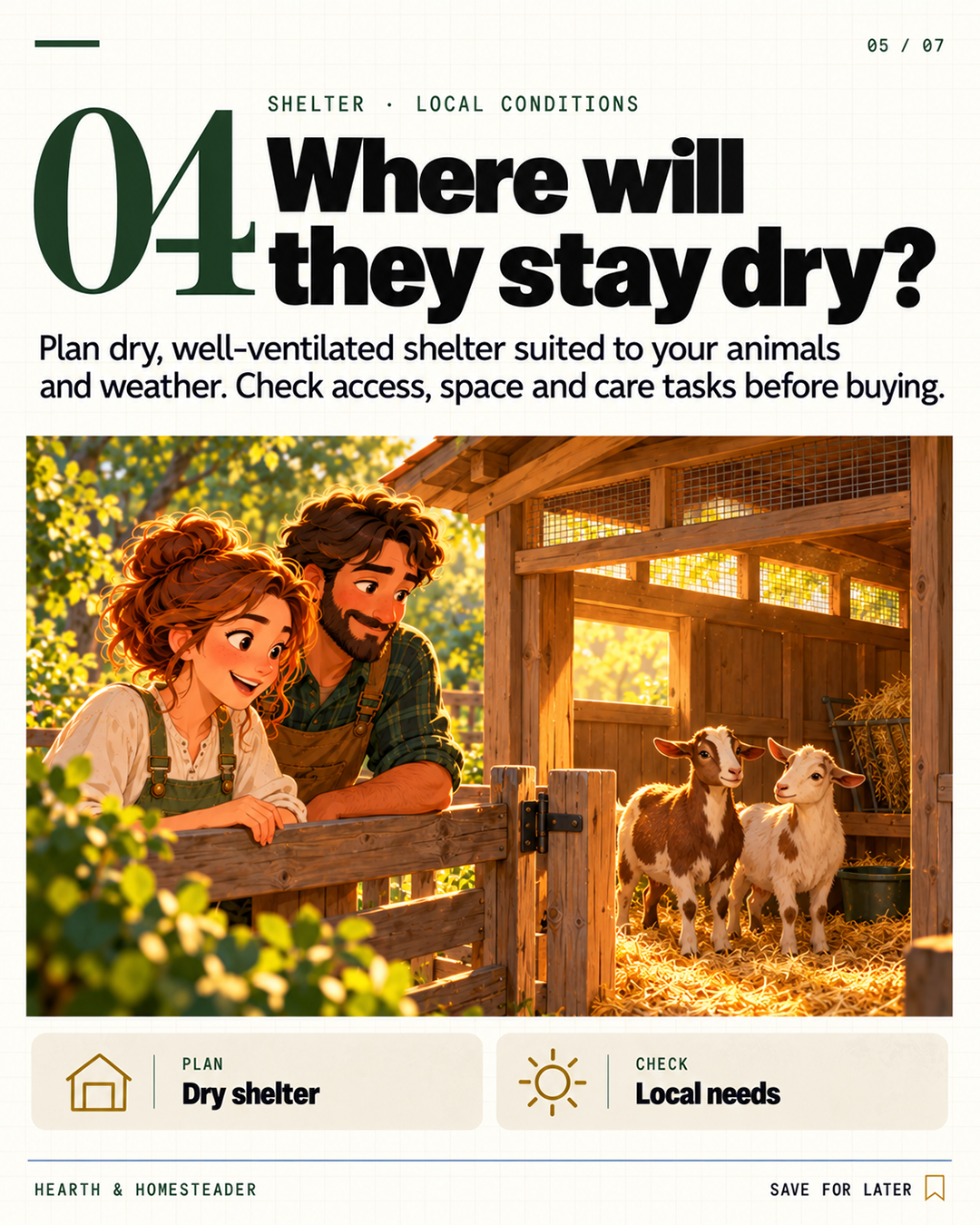
4. Where will they stay dry?
Plan dry, well-ventilated shelter suited to your animals and local weather. Penn State includes shelter in the resources to consider before starting. Review the proposed space with someone who understands the animals and your conditions. Alongside their advice, write down how you will reach the shelter and carry out routine tasks there. Note what needs repair, preparation or further investigation. Keep unanswered space and housing questions visible until you have appropriate guidance; a pleasing drawing is only the beginning of checking whether a setup will work.
Try this: Record the shelter location, local conditions, access route and questions for an experienced adviser.
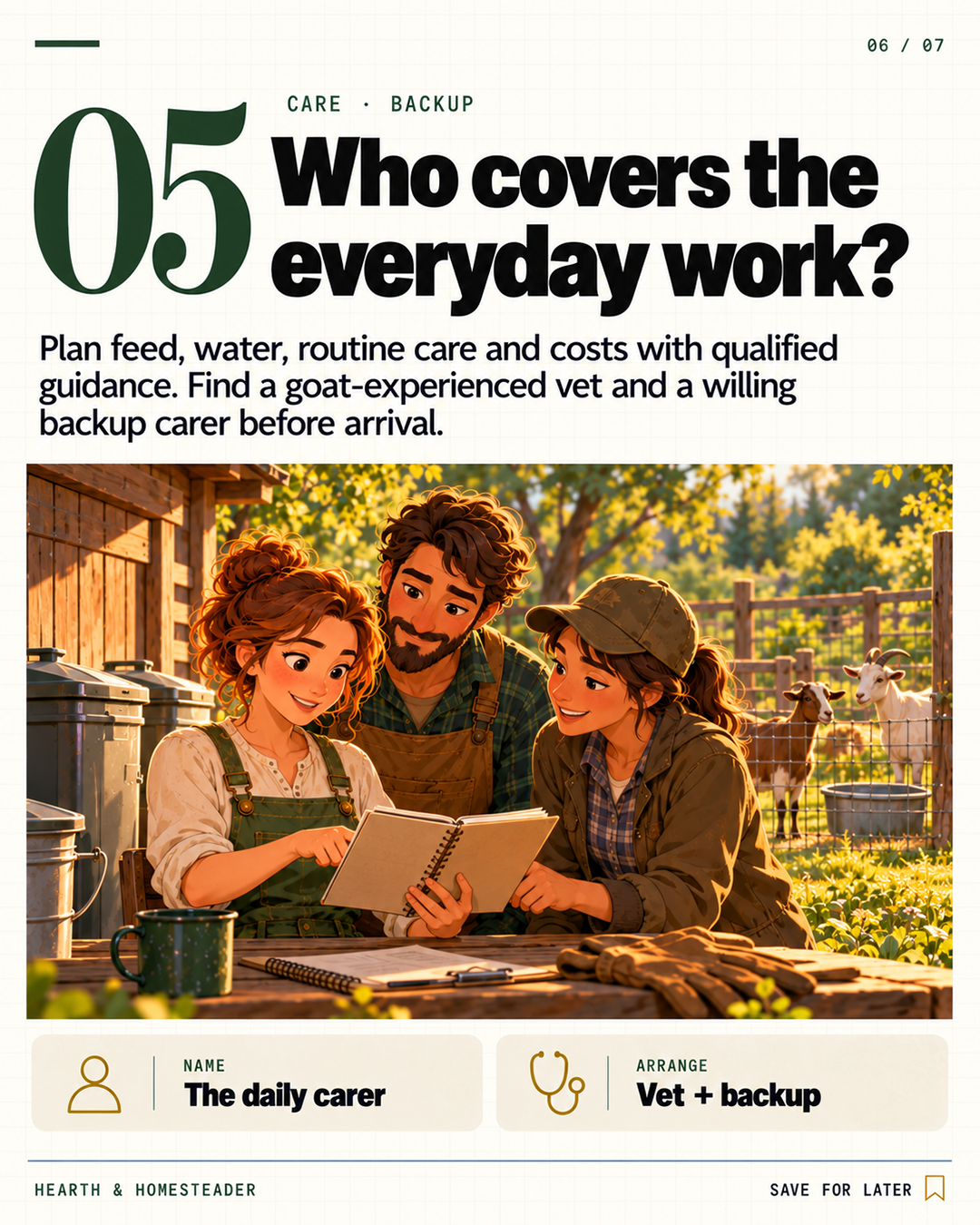
5. Who covers the everyday work?
Make a realistic plan for feed, water, routine care and ongoing costs with qualified guidance. Texas A&M Veterinary Medicine recommends consulting a veterinarian or experienced breeder before bringing goats home. Find a goat-experienced vet and ask about establishing care before you need urgent help. Then ask a willing backup carer what they would need to take over. Write down responsibilities and where current instructions will live. Include the ordinary week, time away and the next question you need answered. Do not assign someone a role without discussing it.
Try this: Name the daily carer, willing backup, veterinary contact and missing information needed for a workable care budget.
Your next step
Use the worksheet to sort your answers into ready, needs advice and needs work. Pick one unresolved question and arrange the next conversation. You can build the plan at a pace that fits your household before committing to animals. Which question comes first for you: purpose, companions, fencing, shelter or daily care?
Goat readiness planning sheet
Bring this question sheet to an experienced livestock adviser and goat-experienced vet. Mark each area ready, needs advice or needs work before committing to animals.
Open and print the planning worksheet
Optional planning resources
Affiliate links: we may earn a commission if you buy. As an Amazon Associate I earn from qualifying purchases. This is an optional editorial reading resource, not a hands-on product review. Begin with the free guides below or check your library.
The Backyard Goat — Sue Weaver
Optional background reading on choosing and keeping goats, including housing and care. Check your library first. Use local livestock guidance and a goat-experienced veterinarian for decisions about your animals.
View on Amazon