 Hearth & Homesteader
The Homestead List
5 Questions Before Building Your First Raised Bed
A first raised bed can make a garden plan feel real. Before buying a kit or bringing home boards, work through the decisions that shape how you will use it. Start with food your household wants to grow and an amount of work you can maintain. These five questions will help you prepare a practical brief for local gardening advisers and suppliers. You can begin with one manageable bed, learn from the first season and decide later whether another one belongs in the plan.
1. Will your crops get enough sun?
Choose a short crop list before settling on the location. University of Minnesota Extension recommends placing raised beds where the plants receive suitable light and where water is accessible. Observe your proposed spot and note nearby trees, buildings and shade. Then compare what you have seen with guidance for the particular crops. Keep observations separate from assumptions about other seasons. A sunny photograph is a starting point for questions, not a complete site record. Ask a local gardening adviser about anything you cannot establish from your own notes.
Try this: List your first crops, their light requirements, your site observations and the seasonal questions still unanswered.

2. Can you reach the whole bed?
Plan the bed for the people who will tend it. Minnesota Extension uses comfortable reach to the center as a guide when considering width, so maintenance does not require walking into the planting area. Think about height and the surrounding route as well. Mark a proposed footprint and ask each willing gardener to consider how ordinary tasks would work. Include room to approach the bed with the supplies you expect to use. Write down access questions before choosing fixed dimensions or ordering a kit.
Try this: Sketch the footprint, working sides and paths. Ask the people using the bed what reach and access they need.

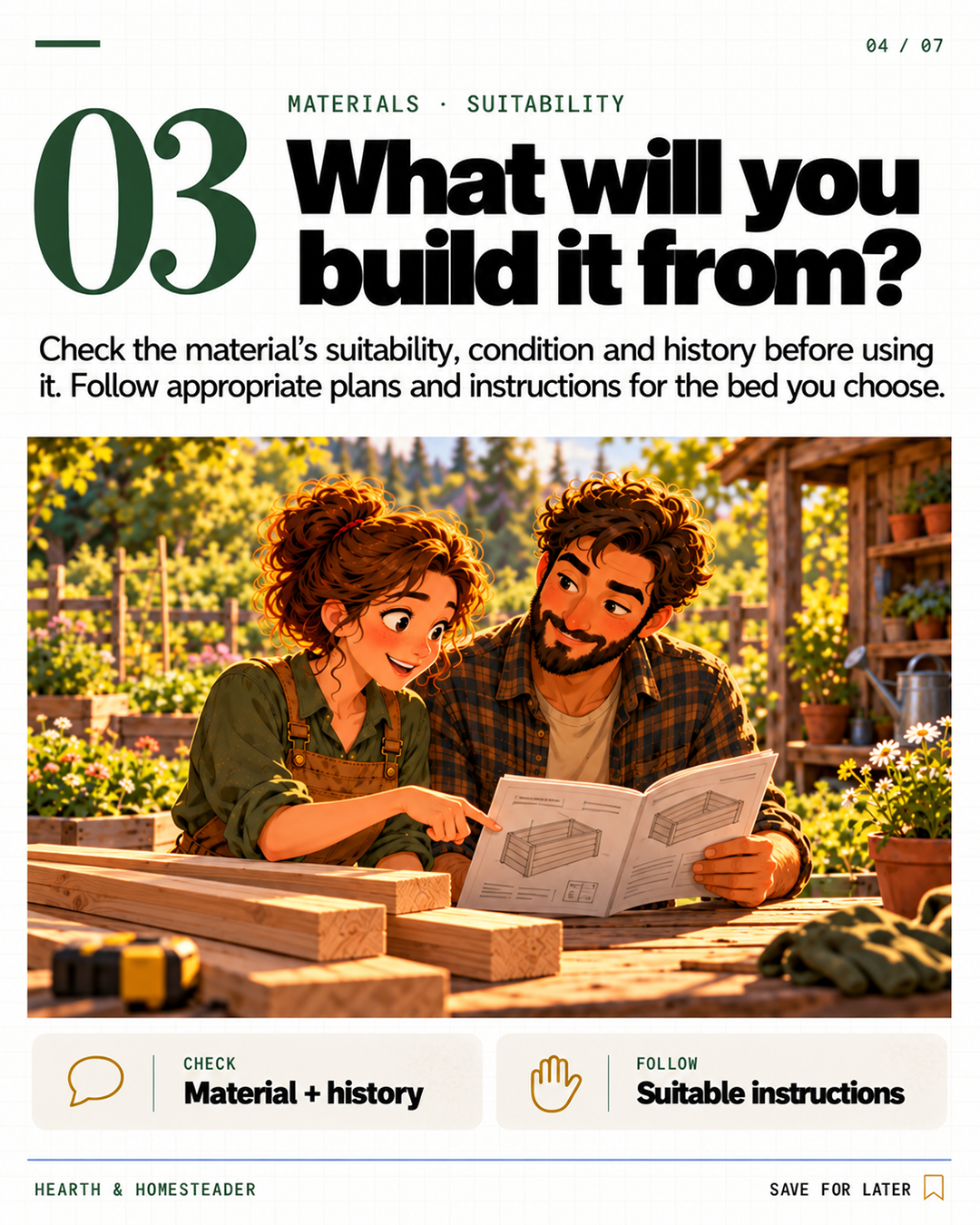
3. What will you build it from?
A low price or a pile of available boards does not settle whether a material suits the job. University of Maryland Extension describes several enclosure options and distinguishes between types of treated lumber. Check the identity, condition and history of anything you are considering, especially reclaimed material. Ask for appropriate product information and follow suitable plans or manufacturer instructions for the bed you choose. Record what you still need to verify instead of treating unidentified material as ready to use. Include assembly help and maintenance in your comparison.
Try this: Compare proposed materials: identity, source, known history, suitability information, instructions and questions for the supplier.
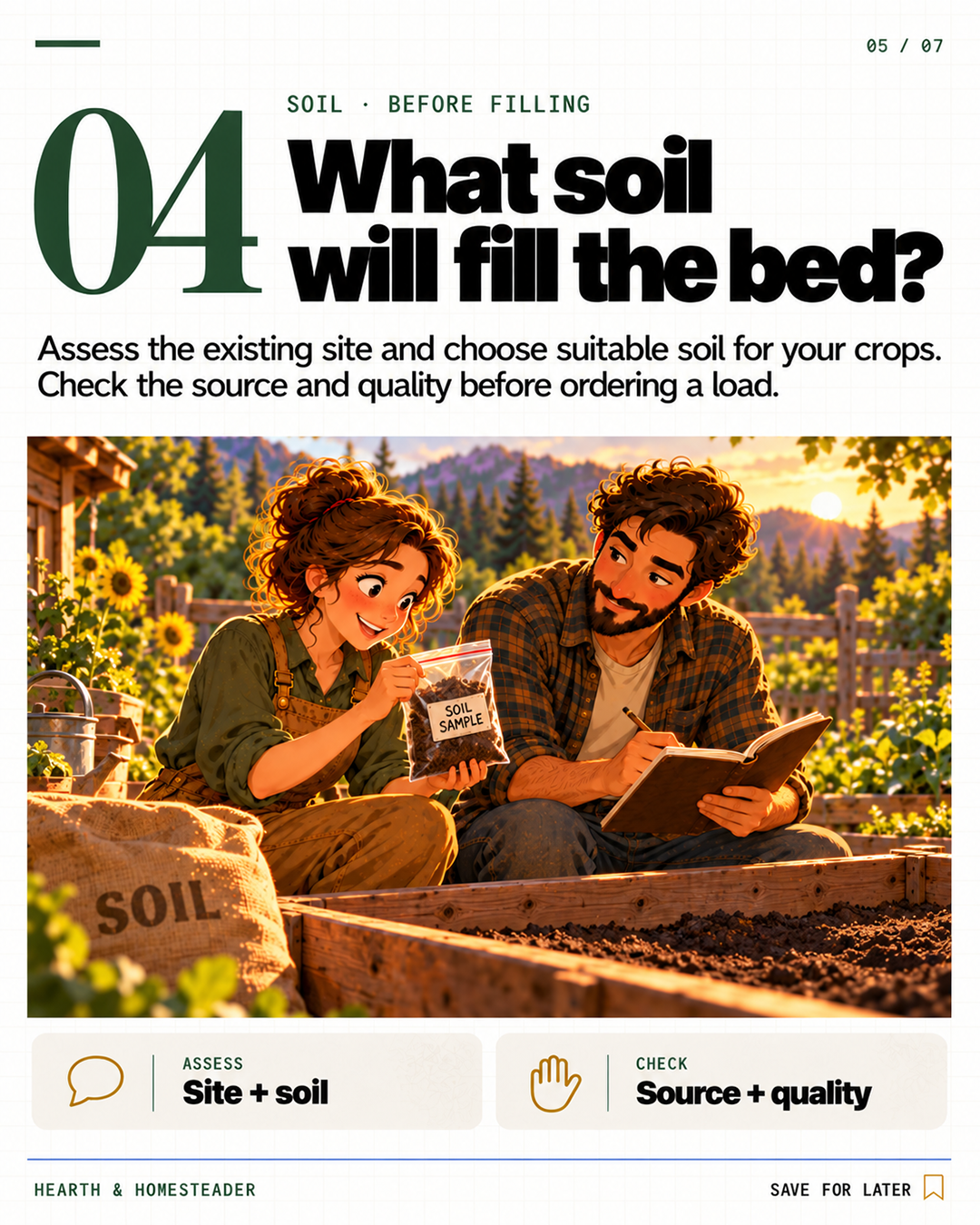
4. What soil will fill the bed?
Look at the existing site before ordering a load of soil. Maryland Extension recommends laboratory testing before changing the soil where a raised bed will sit, and checking lead when growing food. Ask your local Extension service or soil laboratory which tests and next steps fit your situation. Review the source and quality of any purchased soil, too. Keep the plan specific to your crops, site and type of bed rather than assuming one filling recipe fits everything. Get the unanswered questions resolved before arranging a delivery.
Try this: Record the site assessment, soil-testing questions, proposed soil source and information to obtain before ordering.
5. How will you keep it watered?
Plan the watering routine while the bed is still on paper. Minnesota Extension notes that raised beds can dry more quickly than in-ground gardens. Choose a water-access plan and monitoring routine that suit your crops, bed and weather. Walk the route you would use for an ordinary care visit. Ask who will do the regular checks and who is willing to cover time away. Keep current guidance where both people can find it. Review the first season before deciding that the same routine will support more beds.
Try this: Name the water source, care route, willing daily gardener and backup, plus the guidance they will use.

Your next step
Pick the question that most affects your next decision. Gather the missing observation, source information or advice before purchasing materials. Keep the first plan small enough to understand and maintain, then record what you learn. Which would you work through first: sunlight, reach, materials, soil or watering? One well-considered bed is a useful place to begin.

First raised bed planning sheet
Plan one manageable bed. Gather site and soil information, ask local gardening advisers about unanswered questions and use suitable construction instructions.
Open and print the planning worksheet
Optional planning resources
Affiliate links: we may earn a commission if you buy. As an Amazon Associate I earn from qualifying purchases. This is an optional editorial reading resource, not a hands-on product review. Begin with the free guides below or check your library.
Raised Bed Revolution — Tara Nolan
Optional design inspiration and background reading on building, filling and planting raised beds. Check your library first. Use current local guidance, site assessment and suitable construction instructions for the bed you choose.
View on Amazon