 Hearth & Homesteader
The Homestead List
5 Questions Before Starting Seeds Indoors
A shelf of seedlings makes next season feel close. It also puts a living project into your daily routine. Before opening every packet, decide what you want to grow, where it will fit and how you will care for it. Starting with one manageable batch gives you a useful first project to observe. Use these five questions to turn the idea into a plan, with crop instructions and local advice beside you. You can do the planning now and sow when the timing suits your garden.
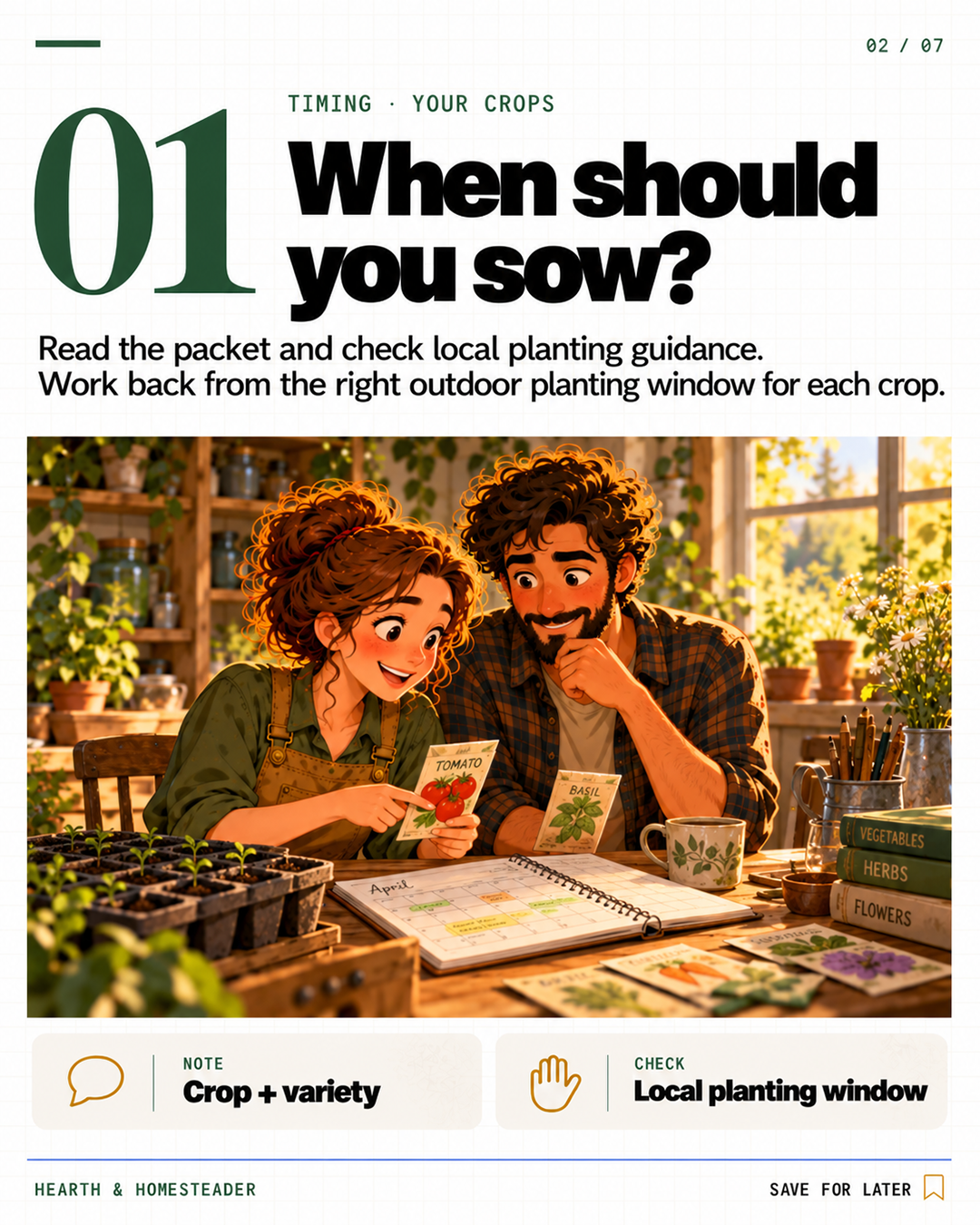
1. When should you sow?
Begin with a short crop list and the actual packets you intend to use. Maryland Extension explains that sowing time depends on the crop's outdoor planting date, germination and transplant growth. Find the relevant local planting window, then work back using the packet and crop guidance. Keep each variety on its own line so different schedules remain visible. Write down where the timing information came from. If sources disagree, take that question to your local gardening adviser before filling a tray.
Try this: Record crop, variety, local planting window, recommended indoor lead time, planned sowing date and source.
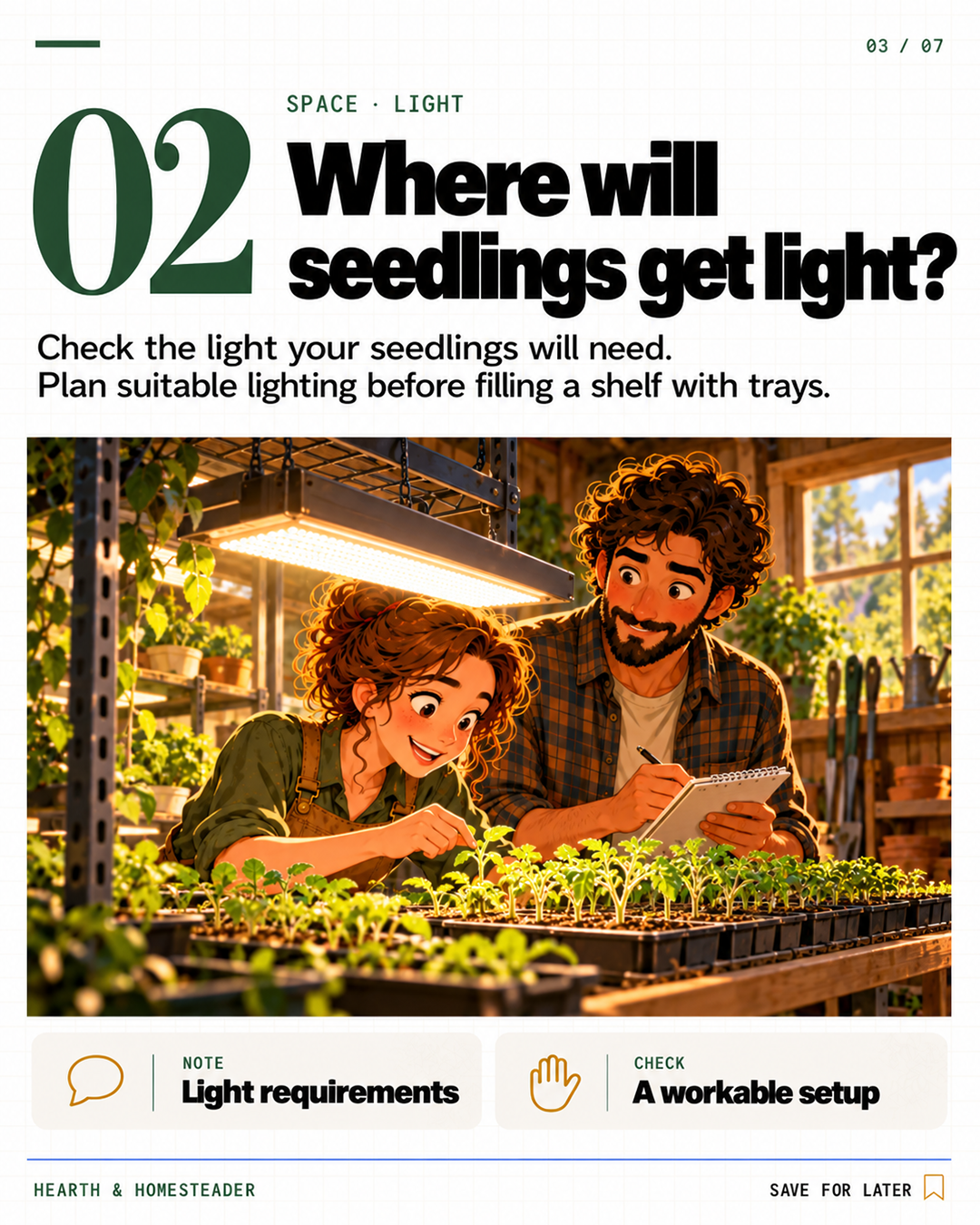
2. Where will seedlings get light?
Give the growing space as much thought as the seed order. Minnesota Extension explains that light quality, intensity and duration matter for indoor plants and seedlings. Check what your chosen crops need and what your space can provide. If you use supplemental lights, follow appropriate equipment instructions for placement and operation. Sketch a setup you can reach and maintain, including space for the plants as they grow. Make the available growing area part of your decision about how many seeds to start.
Try this: Sketch the growing area, note crop light requirements and list equipment or placement questions to resolve.
3. Are your containers ready?
Lay out the containers before adding mix. Minnesota Extension calls for drainage holes and recommends commercial seed-starting mixtures. Follow its guidance for preparing reusable containers, or ask a local adviser about your supplies. Keep catch trays and durable labels in the plan, too. Make a label for each crop and variety before sowing so identification travels with the batch. Take an inventory of what you already own, what is suitable to reuse and what still needs sourcing. A simple list makes shopping more deliberate.
Try this: Inventory clean containers, drainage, catch trays, appropriate starting mix and labels; note preparation still required.

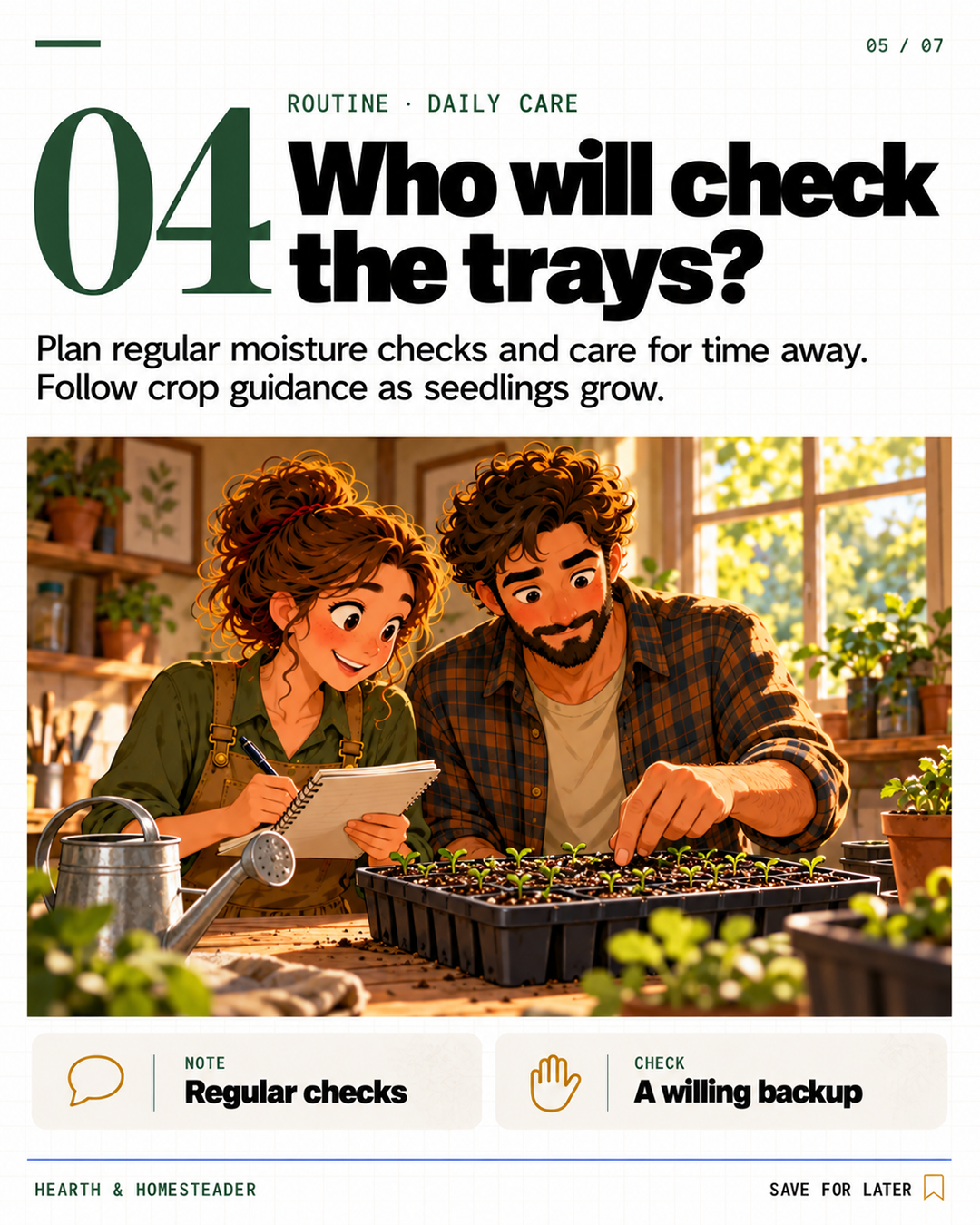
4. Who will check the trays?
Put a care visit into an ordinary day on your calendar. Maryland Extension advises monitoring moisture while avoiding both drying out and overwatering. Follow the specific growing guidance for your plants as they develop. Choose someone who wants to handle routine checks, and arrange a willing backup for time away. Keep instructions and observations together so either person can see what happened. Review the routine after your first batch. The useful question is whether the work fits your household before you add another tray.
Try this: Name the regular gardener and willing backup; agree where care guidance and observations will be kept.
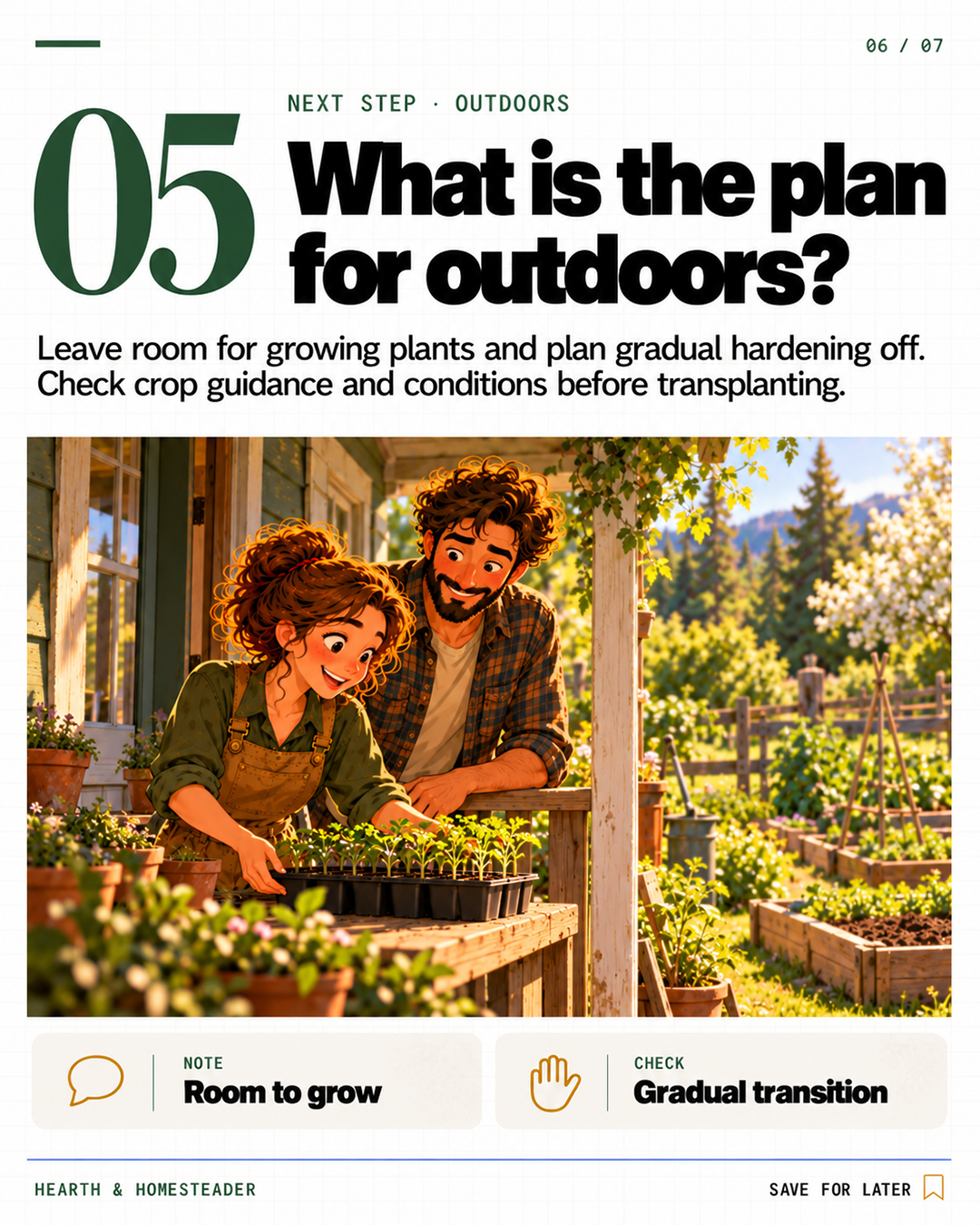
5. What is the plan for outdoors?
Think beyond germination. Utah State Extension describes hardening off as acclimating seedlings to outdoor conditions before transplanting. Read the guidance for your crops and plan a gradual transition that fits the weather. Keep space available while the plants are still indoors, and identify where they will eventually grow. Add the outdoor preparation and transition period to your calendar. If the destination is undecided, settle that question before starting more plants. You want a clear next step for the batch you already have.
Try this: Note the destination, growing room, crop-specific transition guidance, conditions to check and who will manage the move.
Your next step
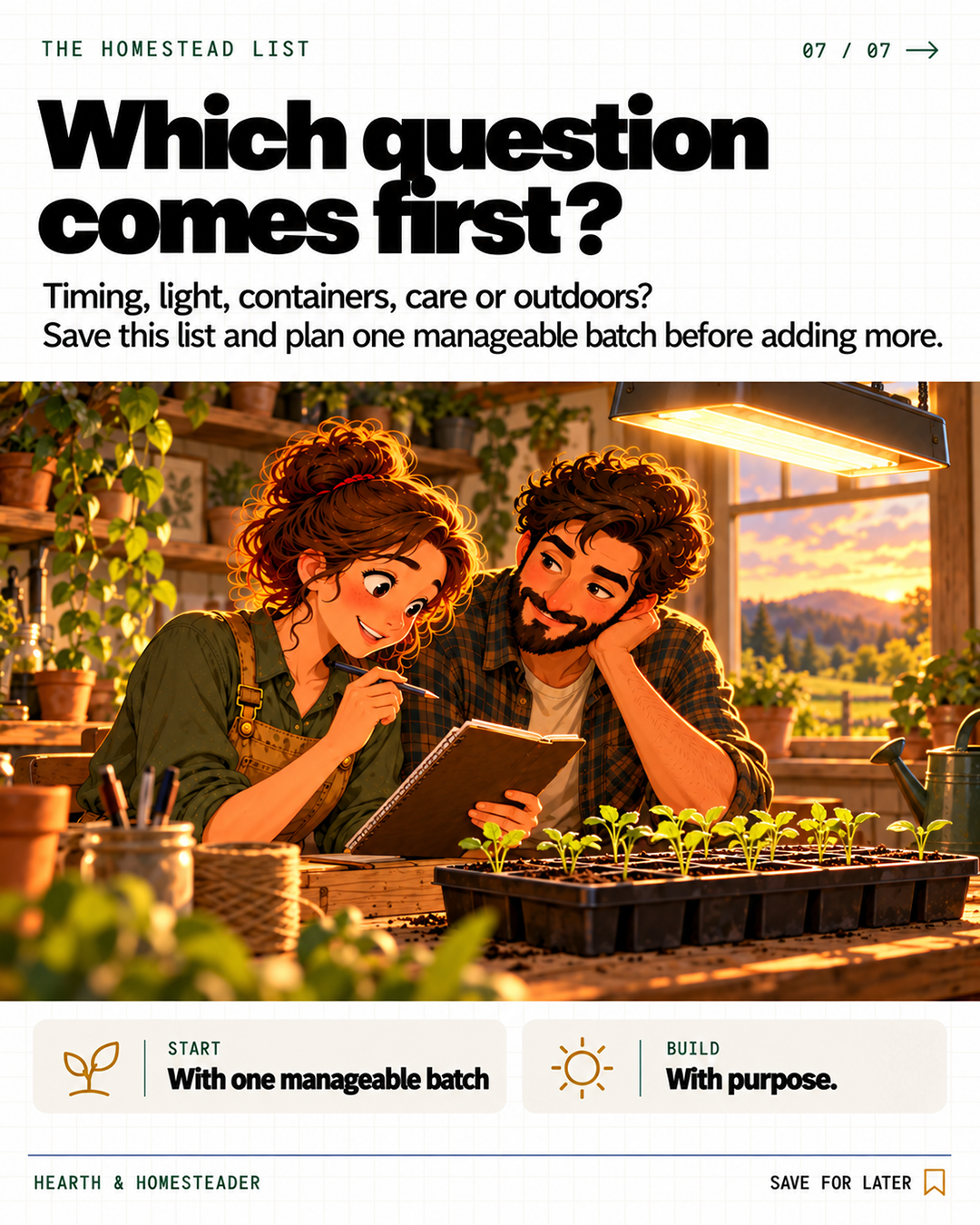
Pick the unanswered question that could change your plan most. It might be a planting date, a lighting decision or finding someone to check the trays while you are away. Use the worksheet to collect the details in one place. Start at a scale you can tend, record what you learn and adjust the next batch. Which would you answer first: timing, light, containers, care or outdoors?
Indoor seed-starting planning sheet
Plan one manageable batch using packet instructions, crop guidance and local planting advice. Record the source of each decision.
Open and print the planning worksheet
Optional planning resources
Affiliate links: we may earn a commission if you buy. As an Amazon Associate I earn from qualifying purchases. This optional editorial reading resource is not a hands-on product review. Start with the free Extension guides or check your library.
The New Seed-Starters Handbook — Nancy Bubel with Jean Nick
Optional background reading on starting seeds and caring for seedlings. Look for the edition credited to Nancy Bubel with Jean Nick; check your library before buying.
View on AmazonSources and further reading
- Starting Vegetable Seeds Indoors — University of Maryland Extension
- Starting Seeds Indoors — University of Minnesota Extension
- Lighting for Indoor Plants and Starting Seeds — University of Minnesota Extension
- Seedling Culture and Transplanting — Utah State University Extension
- The New Seed-Starters Handbook — Penguin Random House / Rodale Books