 Hearth & Homesteader
The Homestead List
5 Questions for Your Future Homestead Partner
A shared homestead starts with a conversation about the life you want to live there. Two people can love the same garden photo and imagine very different weekdays behind it. Before adding projects or making a bigger commitment, compare those pictures in ordinary language. These five questions are prompts for listening, not a test with a right answer. Write your own responses first, then talk through what matches, what differs and what you still want to explore together.

1. What does an ordinary day look like?
Describe a weekday from getting up to going to bed. Include paid work, travel, care responsibilities, meals, chores and time to rest. Ask which parts you expect to do together and which you would rather handle independently. Compare the busy parts of the day as well as the appealing ones. If either answer depends on a job change or a different schedule, mark that as a future possibility rather than something already available. Keep the discussion grounded in what your household can actually offer now.
Try this: Each person sketches an ordinary weekday, then circles one difference they want to understand better.

2. What are we willing to give up?
Start by naming what each person wants to keep. It might be a regular trip, time with friends, a familiar convenience or room in the week for another interest. Then discuss what you would willingly change and what you are unsure about. Avoid treating one person's preference as less committed to the dream. A useful answer is specific enough to discuss: which convenience, how often and under what circumstances? Record the tradeoffs you both accept separately from the ones that still need a conversation.
Try this: Write one thing you would change, one thing you want to keep and one question you have not answered.

3. Who wants which work?
List the work behind the projects you are considering. Include noticing supplies, arranging help and keeping notes, along with the hands-on tasks. Ask what each person enjoys, wants to learn or would rather avoid. Interest and availability can be different, so discuss both before naming responsibilities. Choose only the work someone has actually agreed to take on. University of Maryland Extension describes reflective listening as restating a concern and checking your understanding; try that when an answer surprises you instead of assuming you know what it means.
Try this: Choose one proposed task and record who is interested, what they can offer and what remains unassigned.

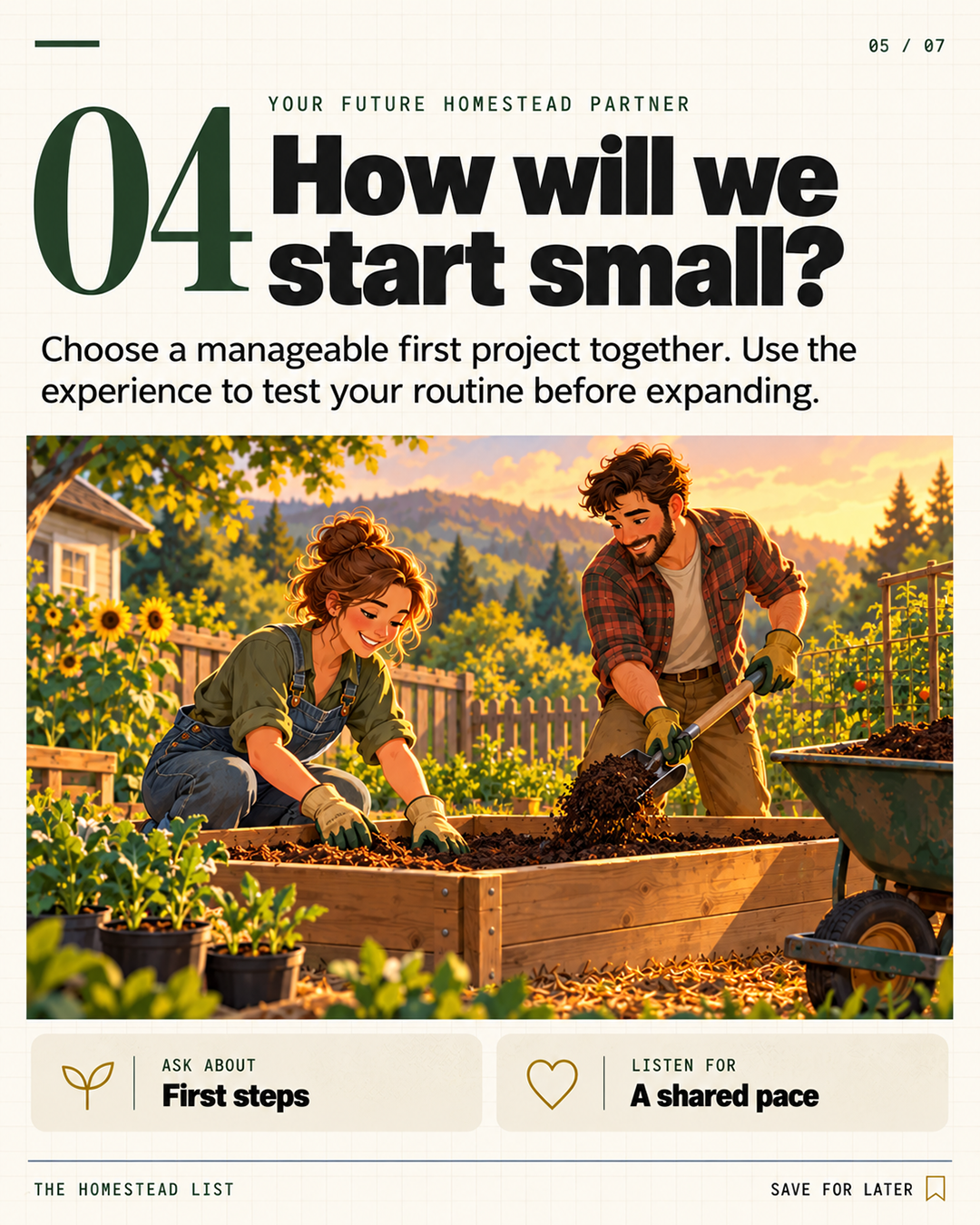
4. How will we start small?
Choose a first project with an end you can describe together. For example, learning to manage one small garden bed can give you something concrete to discuss afterward. Agree on the scope, the work each person will try and a date to review the experience. Keep guesses about time or supplies labeled as estimates until you have observations. At the review, talk about what felt enjoyable, awkward or unexpectedly demanding. The point is to learn about your shared routine before deciding whether another addition fits.
Try this: Name one first project, its agreed limits, each person's role and the date you will review what you learned.
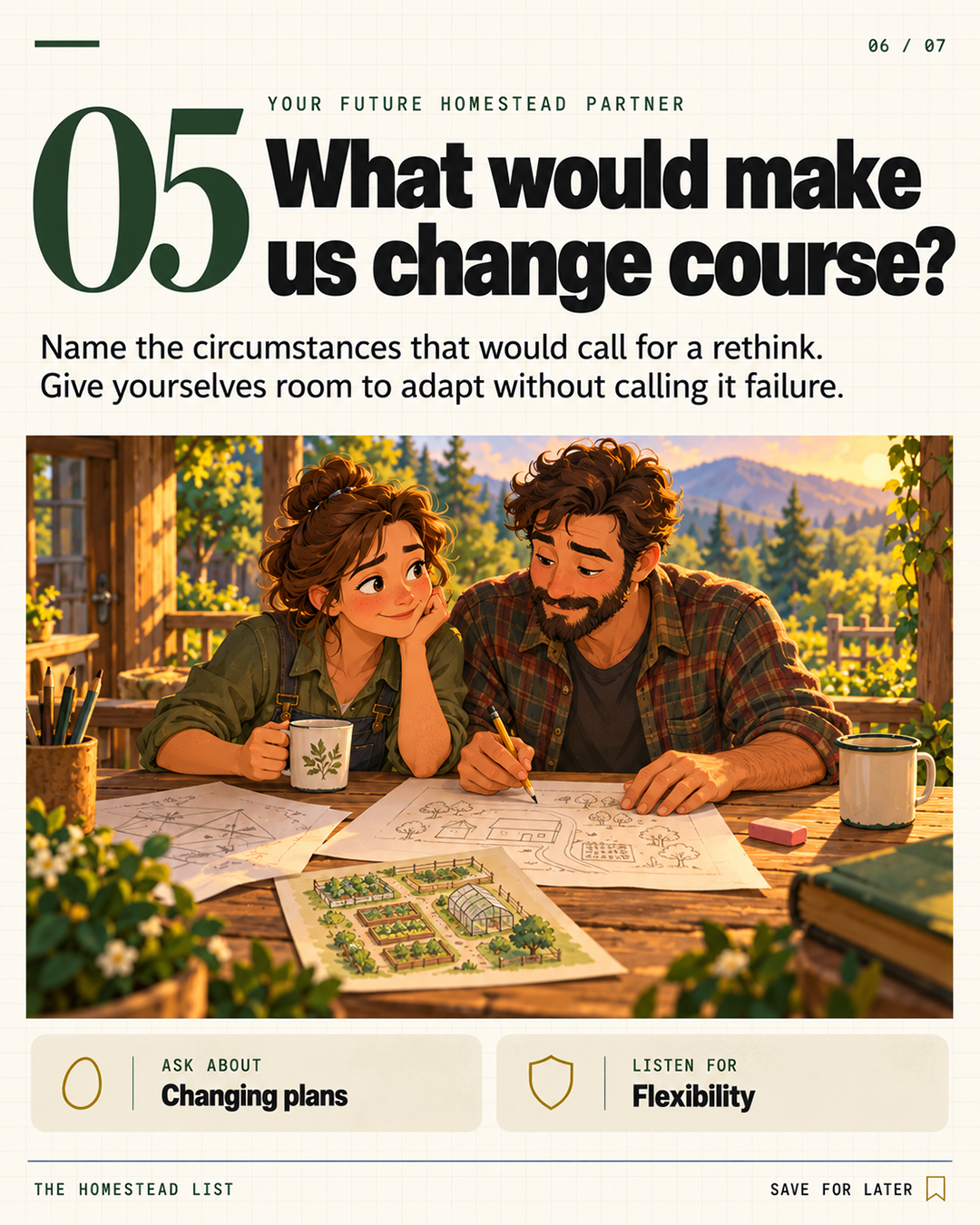
5. What would make us change course?
Discuss changes in work, health, caregiving, interests or available help before they force a rushed decision. Ask what would prompt a check-in and how either person can request one. Leave room to reduce a project's scope, pause an addition or choose a different goal. Record the questions you cannot resolve yet rather than promising that every future situation is covered. Returning to the plan can be part of the plan. Make the next conversation easy to arrange and keep both people involved in choosing the response.
Try this: Name one circumstance that would trigger a review, then agree on how to raise it and when to talk.
Your next step
Choose one question for a conversation this week. Let each person finish, summarize what you heard and check that you understood before moving to a solution. Keep the agreed next step small enough to try, with a date to revisit it. Which answer would matter most to you?

Future homestead partner conversation sheet
Answer separately first, then compare. Record agreement, differences and the next question without grading each other’s answers.
Open and print the planning worksheet
Optional planning resources
Affiliate links: we may earn a commission if you buy. As an Amazon Associate I earn from qualifying purchases. These are optional editorial resources, not hands-on product reviews. Plain paper or an existing notebook works too.
Oxford composition notebooks · 12-pack
Optional for separate first answers, dated discussion notes and a shared project review. This is a bulk pack; paper or a notebook you already own works too.
View on Amazon