 Hearth & Homesteader
The Homestead List
5 Records to Keep From Day One on Your Homestead
A useful homestead record starts with something you want to remember. What did you try in that bed? Where did the spare supplies go? Which care instructions are current? You do not need to build an elaborate system before making your first note. These five records give your household places to put everyday observations and questions. Start with one page, keep the dates and choose a format you will return to. Add more only when the information has a clear use.

1. Keep the project story.
Give a project a name you will recognize later, then record what you tried and when. Add the location, the materials or method you chose and a photo if it helps explain the note. Separate what you observed from what you think caused it. A garden bed that struggled might leave you with a question to research rather than a confident diagnosis. University of Maryland Extension includes planting dates, varieties and locations among useful production records. For your first page, choose the details that answer your own next question.
Try this: Write one dated project entry with what you tried, what you noticed and one thing you would investigate or change.

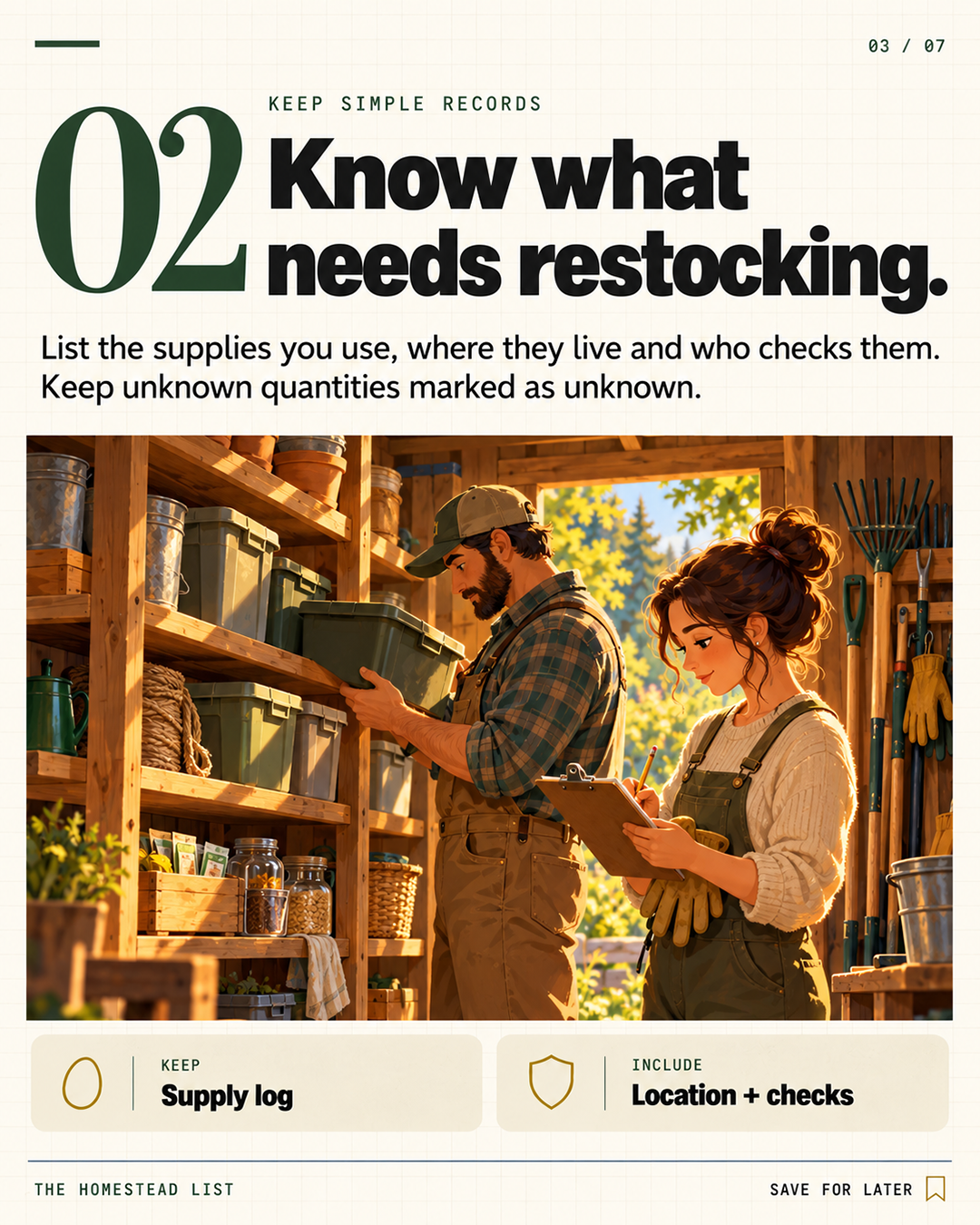
2. Know what needs restocking.
Choose a small supply area instead of trying to inventory everything at once. List each item, its location and the person who has agreed to check it. Record the quantity only when you have actually checked; an unknown amount can stay labeled unknown. Add the product information needed to identify the right replacement, and keep storage directions available. Ask everyone sharing the task how they should flag a low supply. A record should point to a next action, not leave a mysterious mark nobody understands.
Try this: List three supplies with their locations, the date checked and who will handle the next stock check.
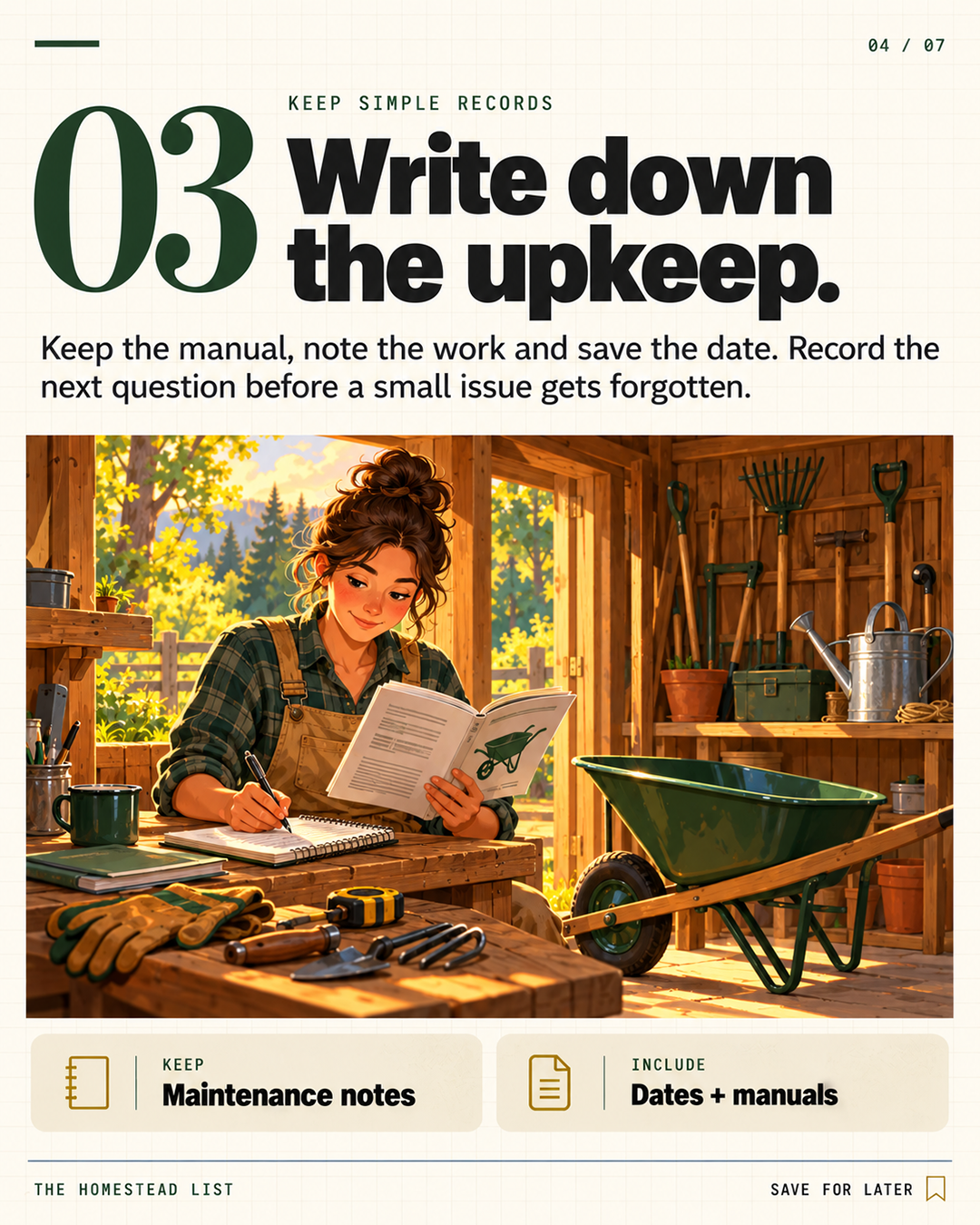
3. Write down the upkeep.
Keep equipment information where the household can find it: the model, the manual's location and the date of work completed. Note what was done and who did it, then record an unresolved issue or question separately. Use the manufacturer's instructions and qualified help to establish maintenance needs rather than inventing a schedule from memory. This page is a history and a reminder; it is not a repair procedure. Start with one item you already use, such as a wheelbarrow or a frequently used hand tool.
Try this: Choose one item and record where its instructions live, the last known work and the next question to resolve.
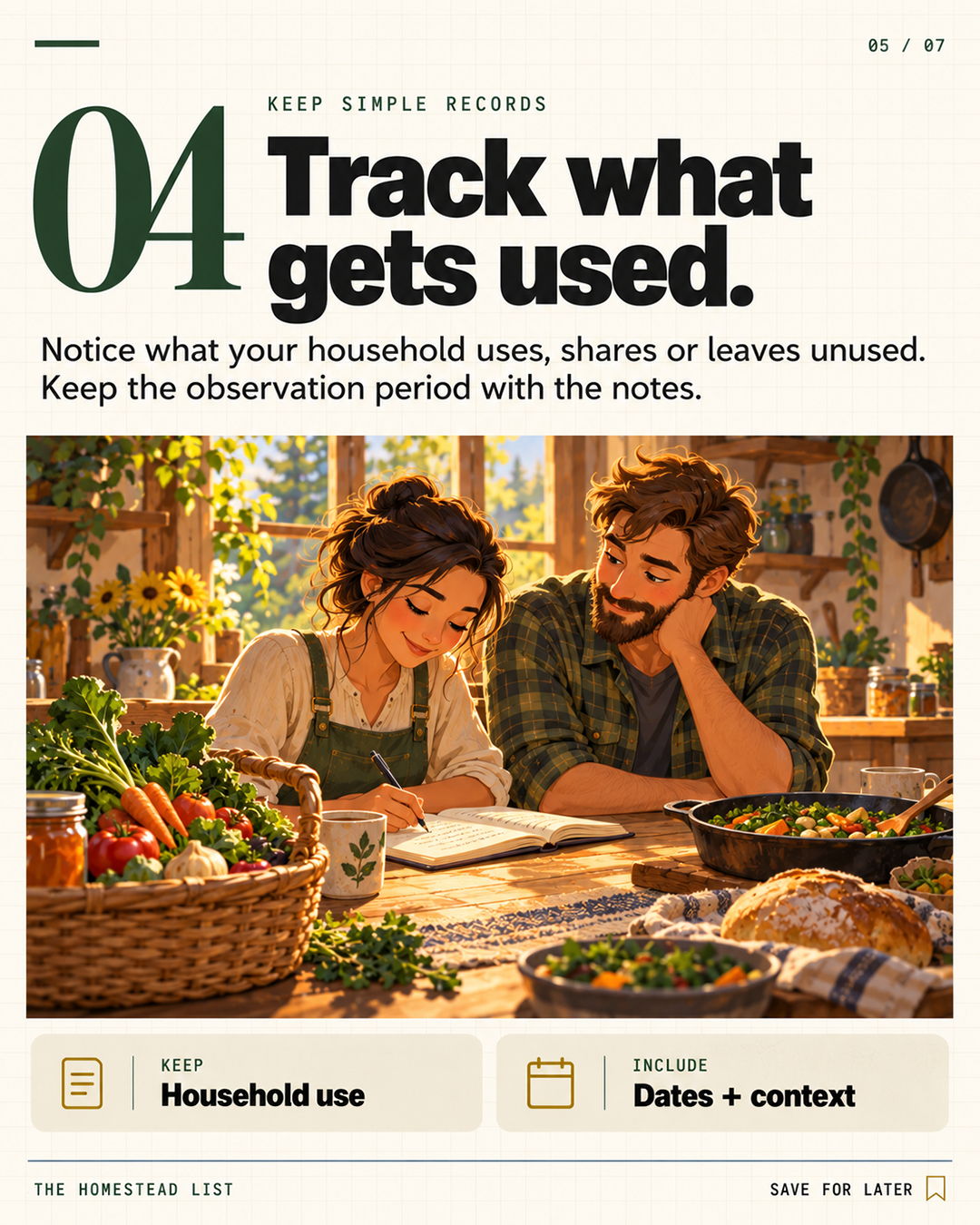
4. Track what gets used.
Record the period you are observing and what happened to the output of one project. For a garden crop, note what your household used, shared or left unused. Keep quantities in a consistent unit if you choose to measure them, and mark unusual weeks so they do not disappear into an unexplained total. For a tool or workspace, write the jobs it actually supported. Use those observations in your next planning conversation without treating a short record as a forecast of future harvests, savings or needs.
Try this: Pick one crop, tool or project and make a dated note about how it served the household this week.
5. Keep one current care plan.
Put the agreed routine and its latest changes in a place a willing helper can find. Include the source of animal-specific care guidance, supply locations and relevant contacts, while keeping personal details private. Date the plan and make it clear which version to use. Ask a helper to walk through the notes with you and identify missing explanations. Keep old records if you need their history, but label them so they cannot be mistaken for today's instructions. Confirm responsibility with the people doing the work.
Try this: Date one current instruction sheet and ask an agreed helper where they would look for its latest version.

Your next step
Choose the record that would answer a recurring question at your place. Make one entry today and decide when you will look at it again. If a column never helps you act, simplify it. The aim is a record your household can understand and use, with enough context to remember what actually happened. Which page would help you first?

Homestead records starter sheet
Choose one section to begin. Date observations, label unknowns and leave private contact details in your household copy.
Open and print the planning worksheet
Optional planning resources
Affiliate links: we may earn a commission if you buy. As an Amazon Associate I earn from qualifying purchases. These are optional editorial resources, not hands-on product reviews. Plain paper or an existing notebook works too.
Oxford composition notebooks · 12-pack
Optional for dated project notes and household logs. This is a bulk pack; begin with paper, an existing notebook or a spreadsheet if that fits your routine.
View on Amazon