 Hearth & Homesteader
The Homestead List
5 Things Your Seed Packet Can Tell You
The picture on the front can help you imagine a harvest. The details on the back help you work out what comes next. Before opening a seed packet, give yourself a few minutes to read it and record the information you will need. Packets differ in how much they explain, so an unanswered question can become a reason to check the supplier or local Extension guidance. Start with one packet and a notebook rather than trying to plan every crop at once.

1. What are you actually growing?
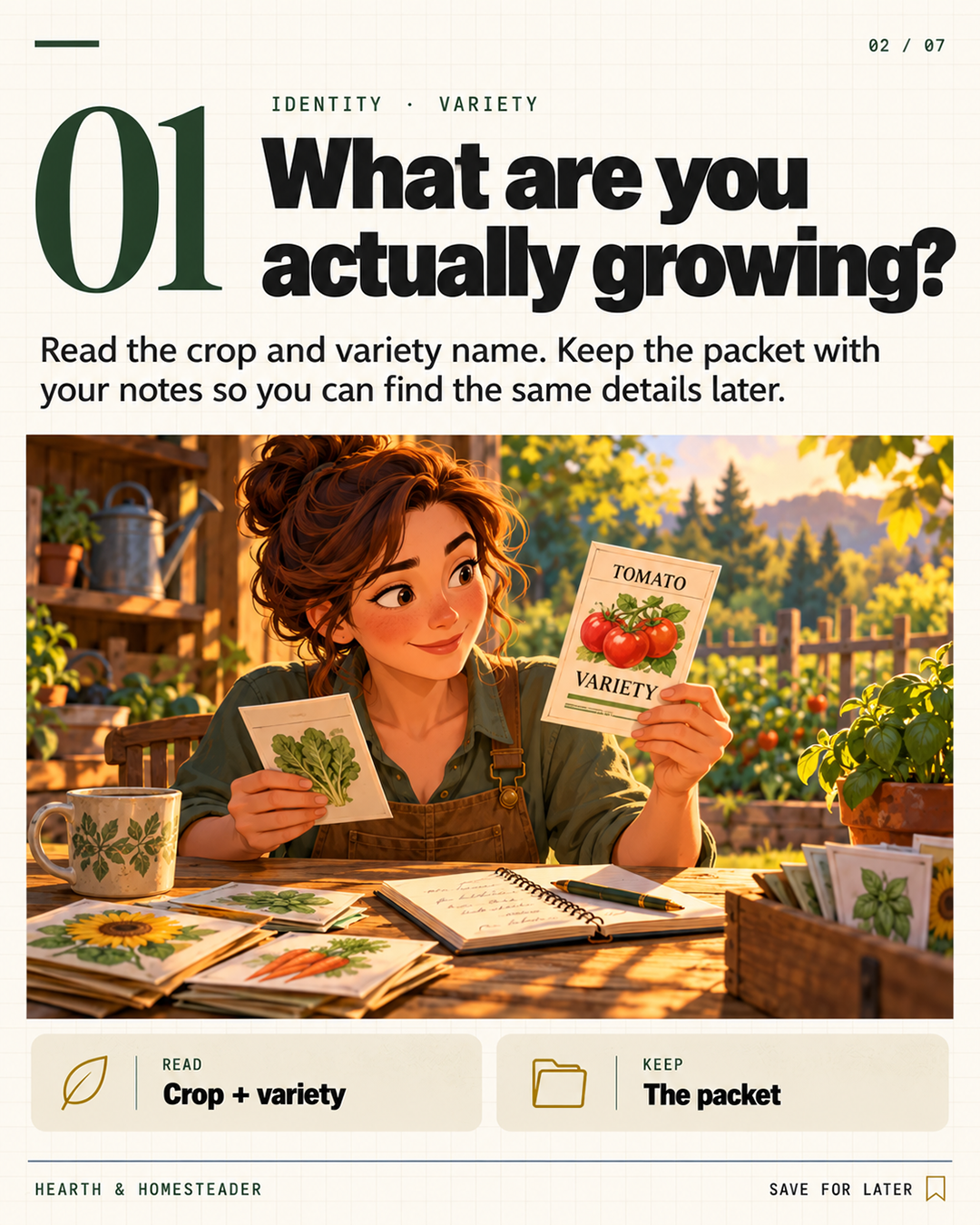
Read the crop and variety name and keep them together in your notes. A packet picture is easier to remember than a precise name, but the name helps you find the same information later. Illinois Extension describes the range of identifying and growing information seed packets can carry. Save the packet or photograph both sides before it gets wet or misplaced. Add the supplier and packet year when shown. Label your own notes clearly enough that another household member can connect them with the right seeds.
Try this: Make one entry with crop, variety, supplier and the location of the packet or its photos.
2. When and where should it start?
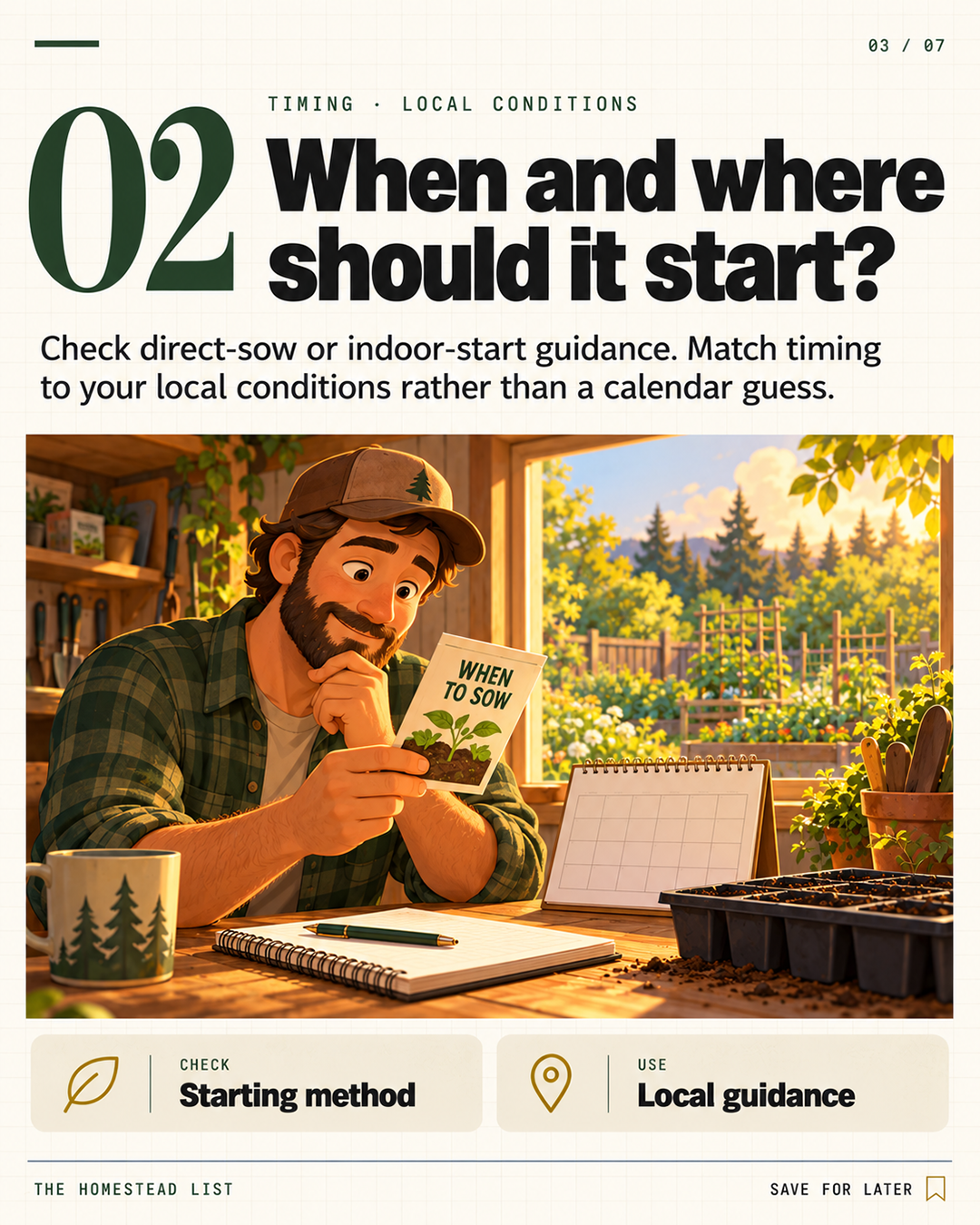
Look for the starting method and timing guidance: direct sowing outdoors, starting indoors or transplanting may involve different steps. Nebraska Extension notes that sowing information can refer to frost dates and soil temperature. Match the instructions with locally suitable guidance before turning them into a calendar entry. A date borrowed from a gardener in another region may not answer the question for your place. Keep the source of your timing decision beside the date, and mark anything that still needs checking.
Try this: Record the stated starting method, the local guidance source and one timing question to resolve.
3. How deep should the seed go?
Find the sowing-depth instruction and read any special germination notes before making holes. Nebraska Extension explains that some seeds need light to germinate. Avoid assuming that every seed belongs under the same amount of mix. Copy the instruction for this packet into your planting notes and check unclear wording with the supplier. Keep the packet nearby while you prepare the task. You can pause before opening it if you still need information, instead of trying to reconstruct the directions after seeds are scattered.
Try this: Write the packet's depth guidance and any special germination instructions, keeping the original wording available.

4. How much room will it need?
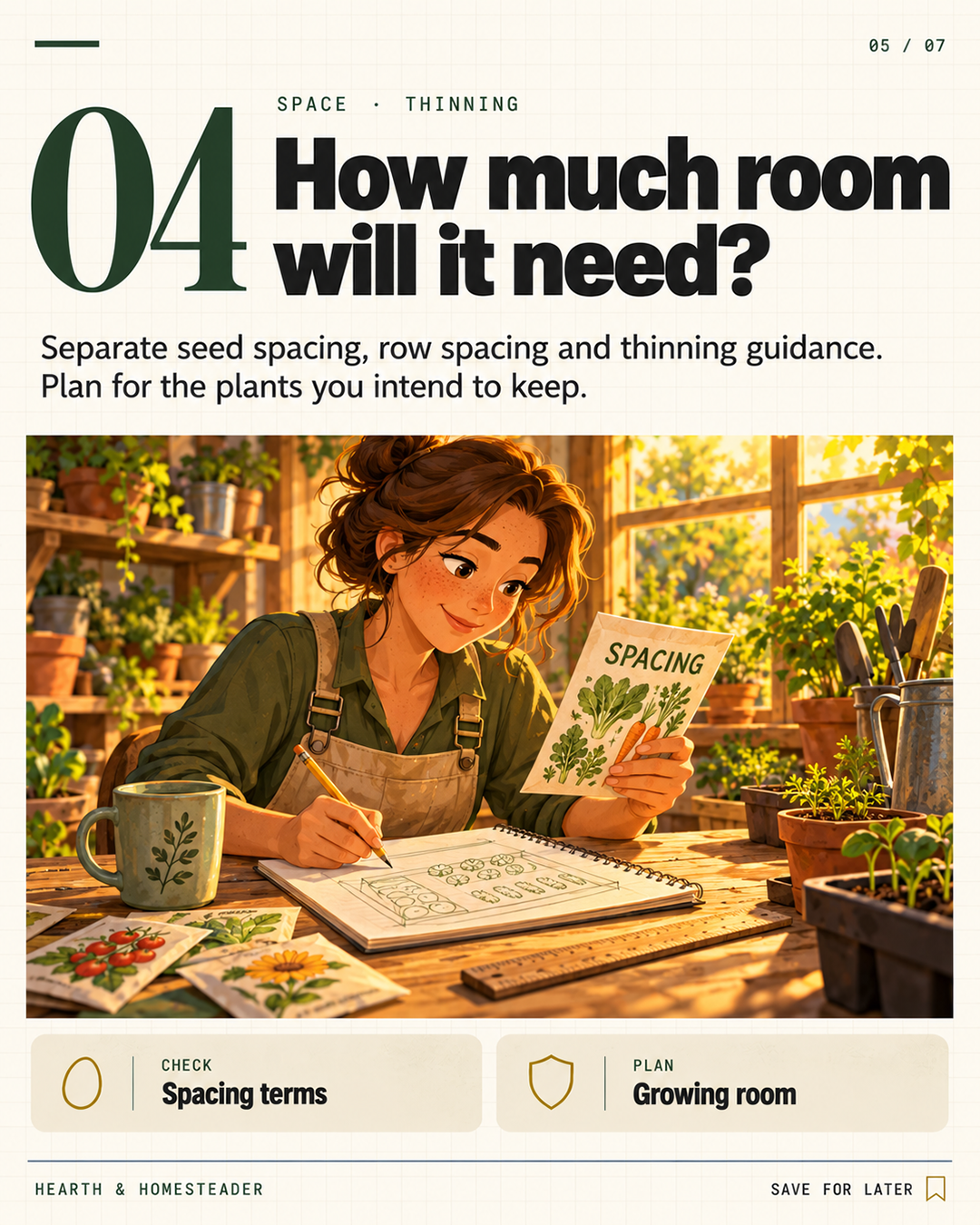
Separate the spacing terms rather than choosing the first number you see. Illinois Extension lists seed spacing, row spacing and thinning information among useful packet details. Think about the plants you intend to keep as they grow, then sketch a layout using the directions for that crop. If the packet leaves a term unclear, ask before filling the whole bed or tray. Keep measurements and units with the notes. A readable first sketch gives you something specific to compare with the growing space you actually have.
Try this: List each spacing instruction separately and label which one describes the plants you intend to keep.
5. What does days to maturity mean?
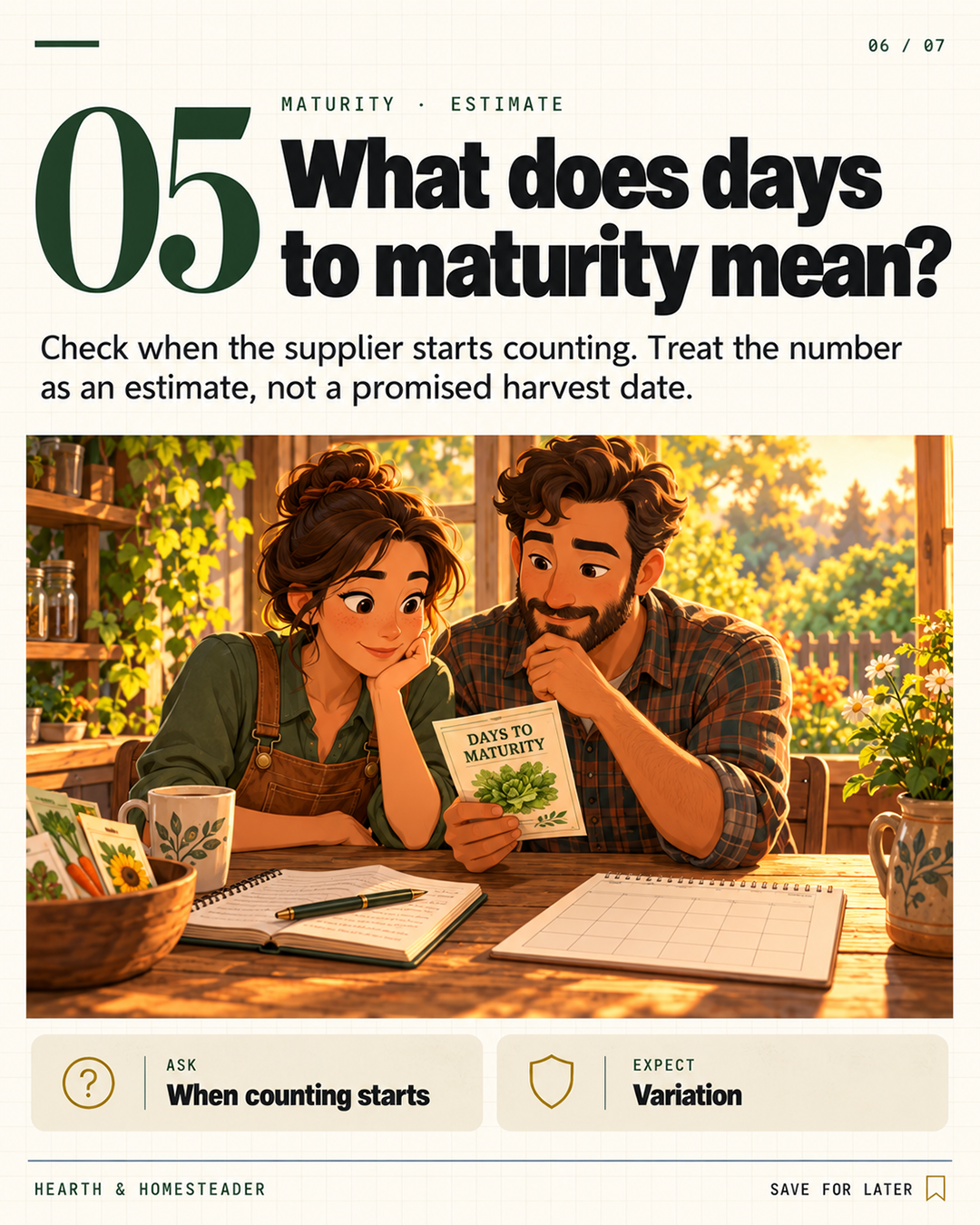
Check what the supplier means by the maturity figure and when its count begins. University of Saskatchewan guidance lists germination time and days to harvest as distinct packet details. Treat a stated number as an estimate shaped by growing conditions rather than a guaranteed harvest appointment. Keep the original label with your plan so you can return to its definition. When comparing two packets, make sure you understand what each count represents. Record actual planting and transplant dates later instead of replacing those observations with a forecast.
Try this: Record the maturity figure, its stated starting point and the supplier question to ask if that definition is missing.
Your next step
Choose one packet and fill in the five headings before planting. Keep the original directions and any local advice together, with unknowns clearly marked. The packet is a starting reference you can return to as the project develops. Which detail will you check first: variety, timing, depth, spacing or maturity?
Seed packet reading sheet
Use one sheet per packet. Keep the original directions and local guidance; mark missing details as questions to check.
Open and print the planning worksheet
Optional planning resources
Affiliate links: we may earn a commission if you buy. As an Amazon Associate I earn from qualifying purchases. This is an optional editorial reading resource, not a hands-on product review. Start with the free Extension guides below or check your library.
The New Seed-Starters Handbook — Nancy Bubel with Jean Nick
Optional further reading on starting plants from seed. Check your library first and begin with your packet, the supplier's instructions and locally suitable Extension guidance. This is an editorial reading resource, not a hands-on review.
View on Amazon