 Hearth & Homesteader
The Homestead List
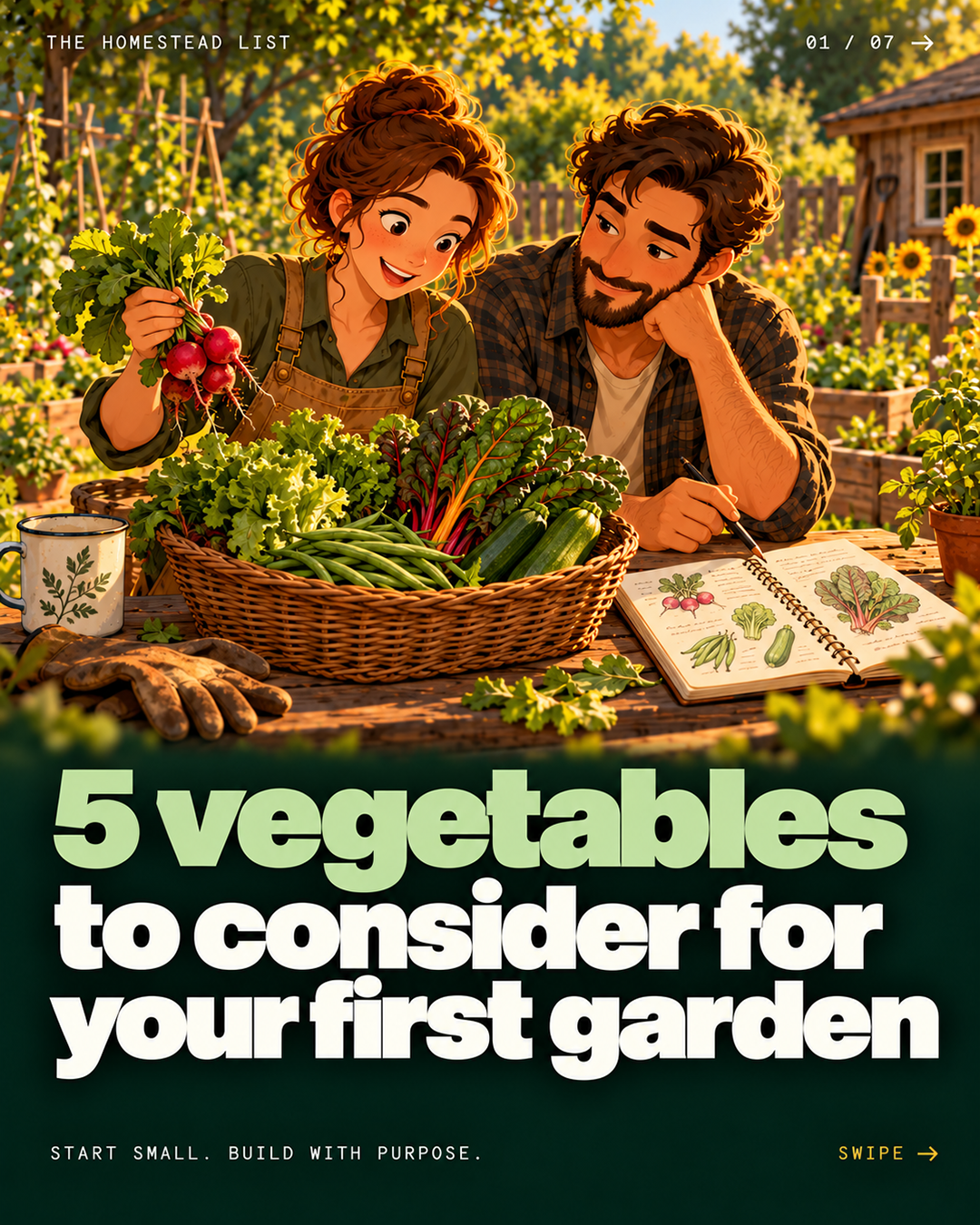
5 Vegetables to Consider for Your First Garden
A first garden does not need to include every vegetable in the seed catalog. Start with something your household eats, then compare its growing needs with your space, season and available time. Radishes, leaf lettuce, bush beans, Swiss chard and zucchini offer different ways to begin learning. This is a shortlist to investigate, not a promise of effortless harvests. Use the packet for the variety you choose and locally suitable Extension advice when turning an idea into a planting plan.
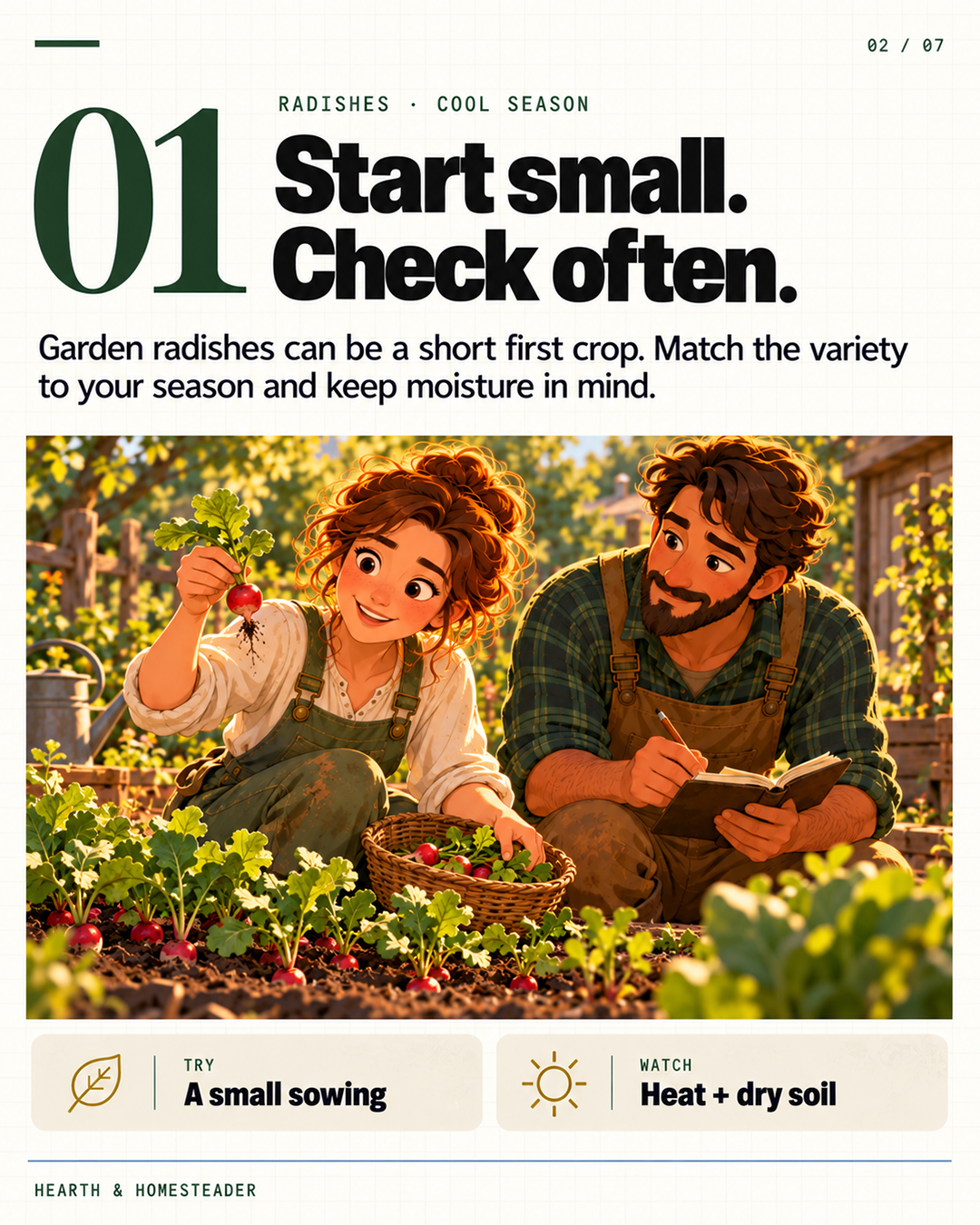
1. Radishes: start small and check often.
Garden radishes can offer a relatively short growing project, but quick does not mean care-free. University of Minnesota Extension explains that radishes favor cooler conditions and that drought stress can affect texture and flavor. Compare the type on the packet with the season you have available; a small garden radish and a large daikon are different planning choices. Keep the first sowing modest enough that you can watch it develop. Record what you planted and return to the packet when deciding what to check next.
Try this: Choose one radish variety to investigate and record its locally suitable season, space and moisture questions.
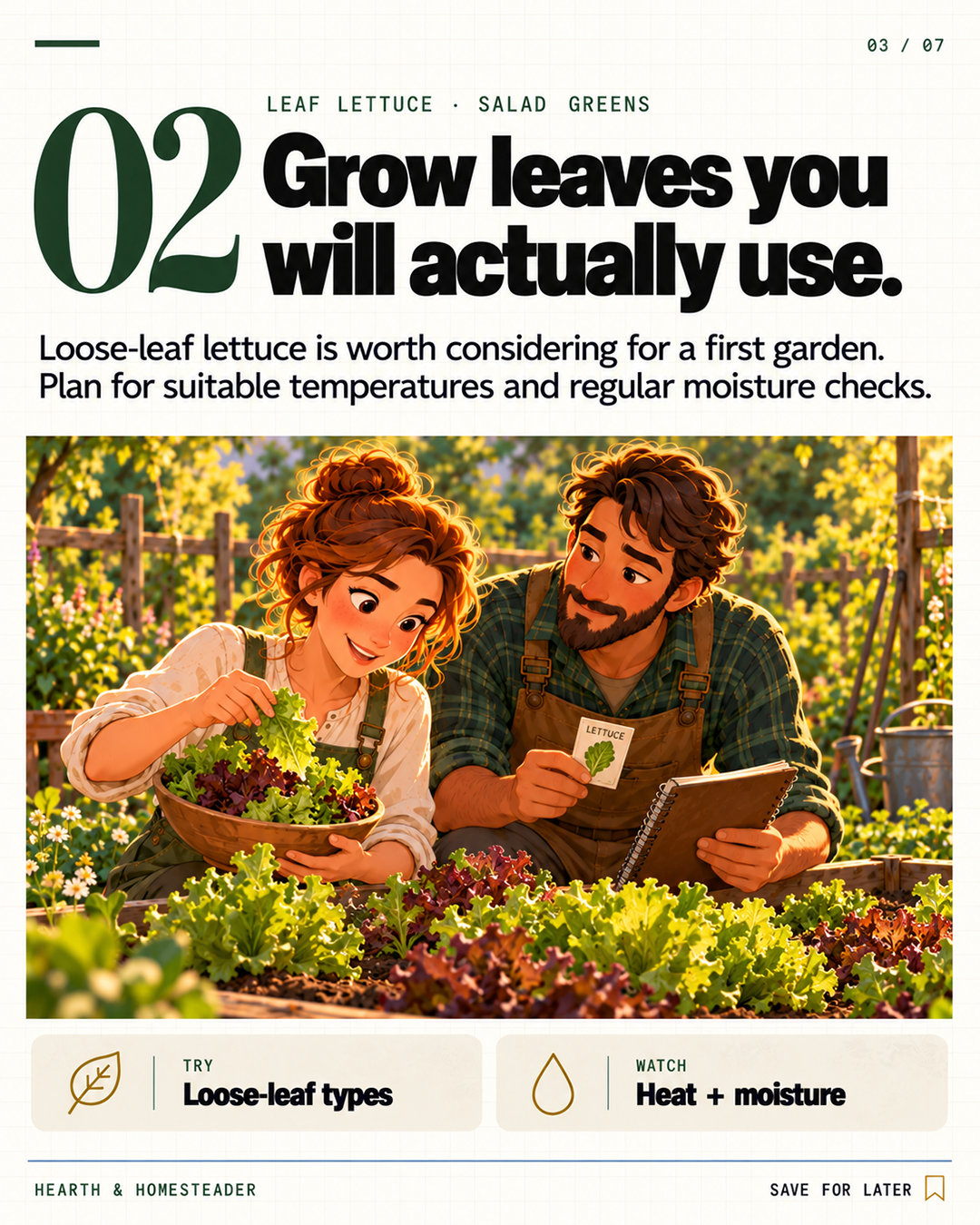
2. Leaf lettuce: grow leaves you will use.
Think about the salads or sandwiches your household already makes. Minnesota Extension identifies loose-leaf varieties as the easiest lettuce types to grow, while emphasizing suitable growing conditions and moisture. Heat can change the project, so check local timing instead of copying another gardener's calendar. Choose one variety rather than assuming every lettuce behaves alike. Put its instructions beside your notes, and learn its harvest method before you start picking. A small first planting gives you one crop to understand before filling every available corner.
Try this: Name a meal that uses leaf lettuce and find a local timing source for the variety you are considering.
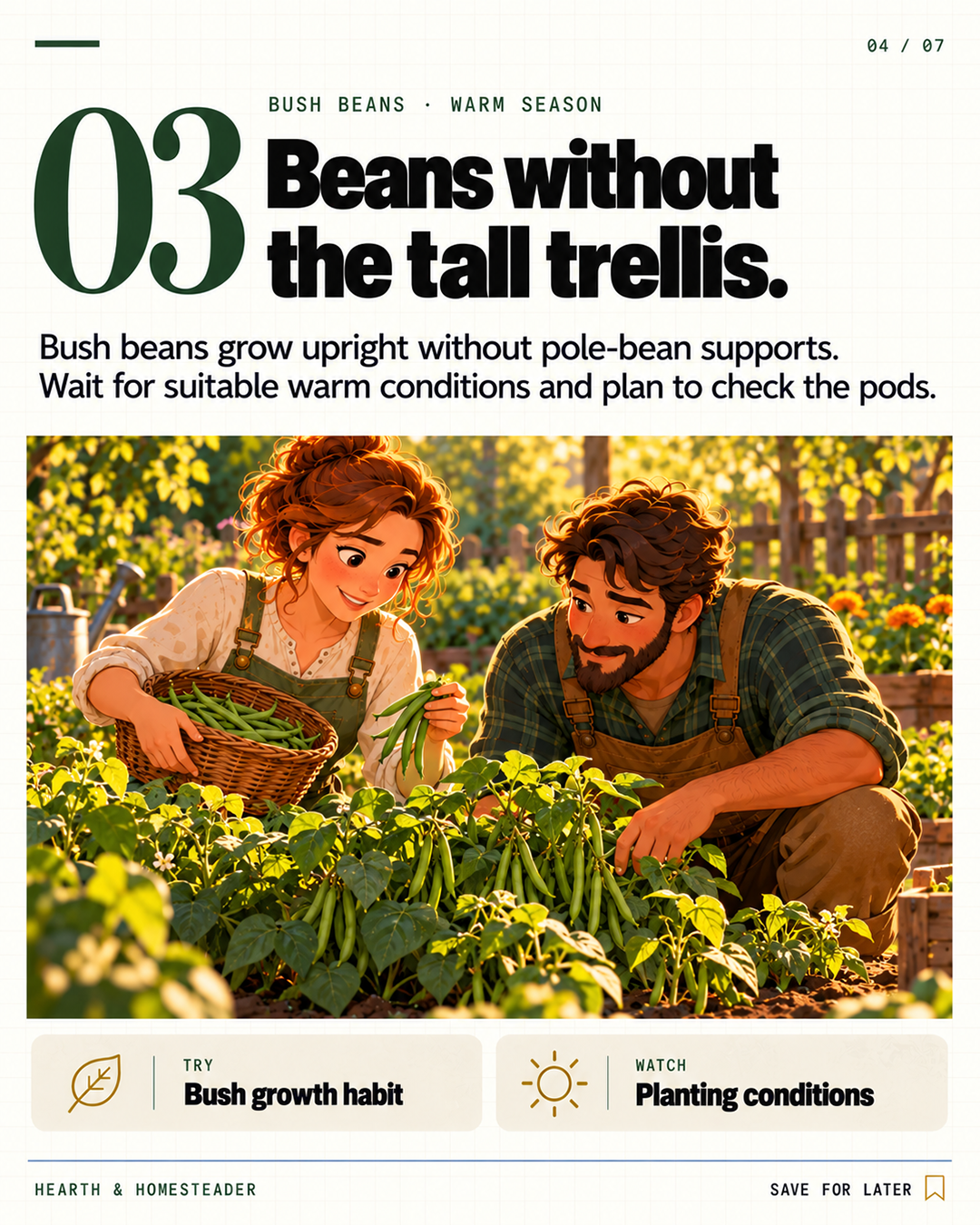
3. Bush beans: check the growth habit.
Read bush or pole on the label before planning the bed. Minnesota Extension describes bush beans as upright plants that do not require the supports used for pole beans. Its guidance also calls for warm soil before direct sowing. Match that advice to local conditions and the variety's instructions. Decide whether you want snap beans for pods, shelling beans or dry beans, because the harvest goals differ. Keep the packet with the plan so that a familiar-looking bean does not stand in for the plant you actually selected.
Try this: Record the bean's growth habit, intended harvest use and the local planting conditions you need to check.
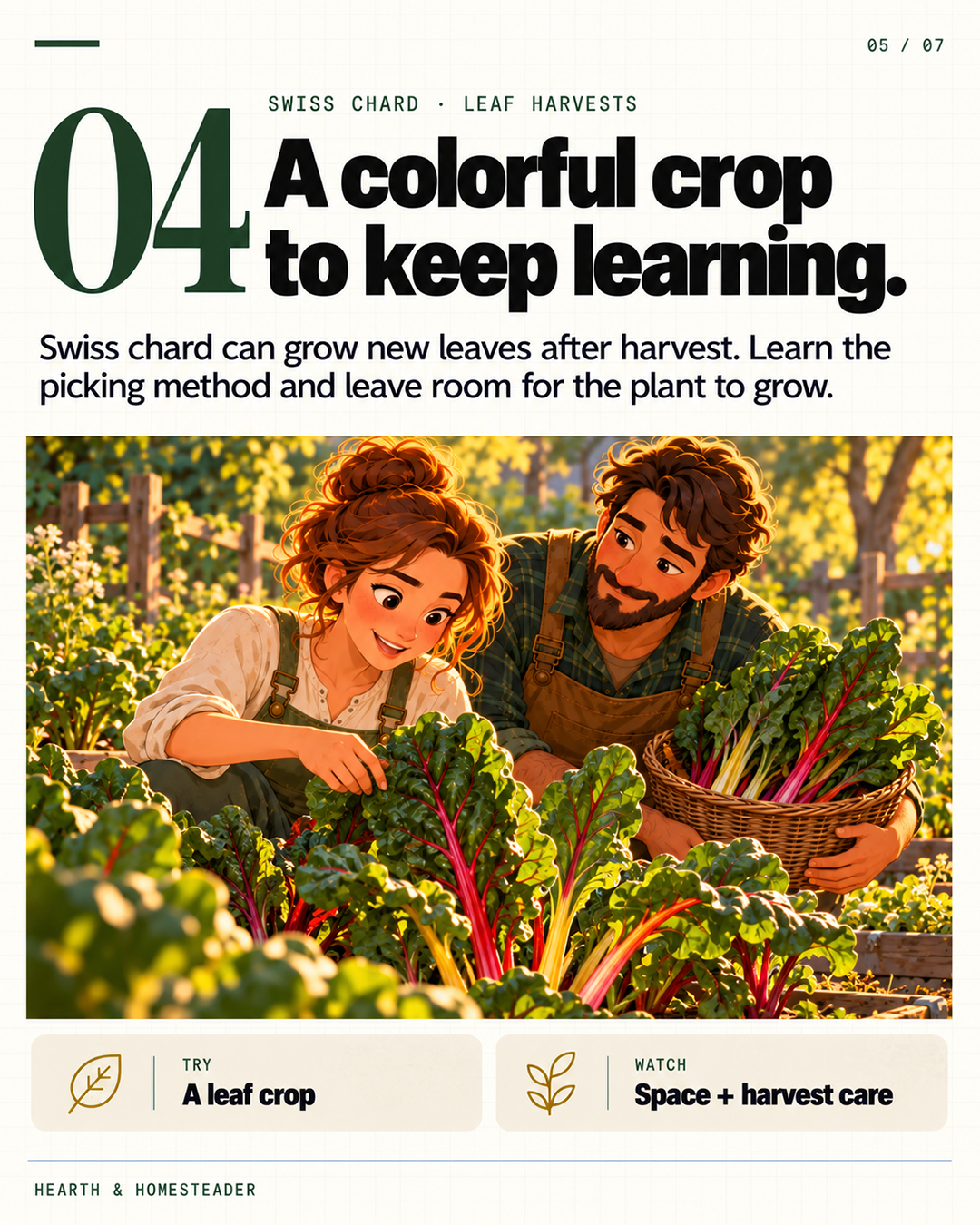
4. Swiss chard: learn a leaf harvest.
Swiss chard brings colorful stalks and broad leaves to the shortlist. Minnesota Extension notes that plants can produce more leaves after an initial harvest, particularly when individual young leaves are picked. That possibility is a reason to learn the method, rather than a promise of an unlimited kitchen supply. Check the room your variety needs and how you would use the leaves. Keep observations about growth and picking together. Start with a manageable planting and make the next decision from what you actually see.
Try this: Choose one use for chard, note the space it needs and save a crop-specific harvest guide.
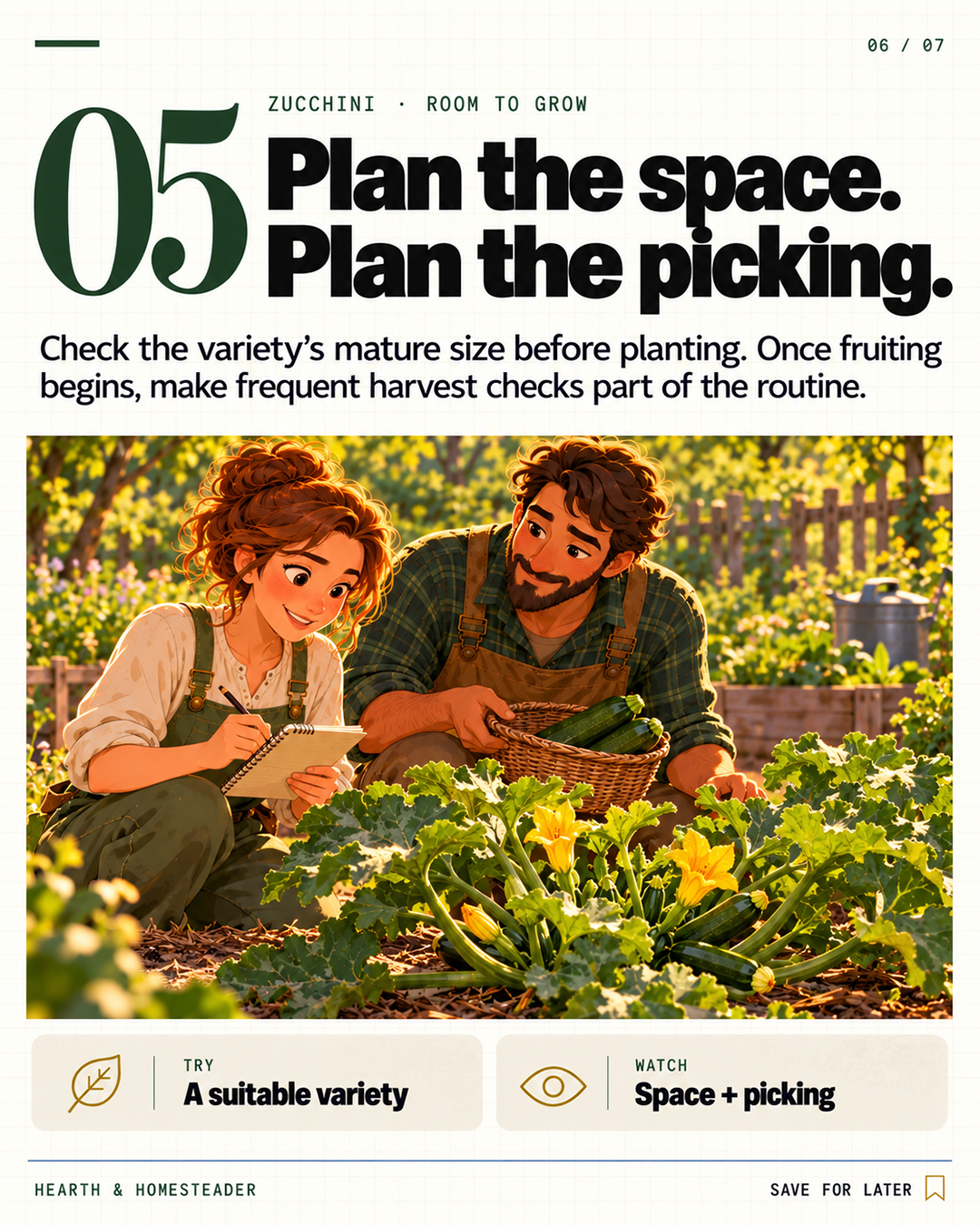
5. Zucchini: plan the space and picking.
Zucchini deserves a space check before it earns a place on the shopping list. Minnesota Extension distinguishes bush types from varieties with longer vines. Read the mature size for your choice and sketch it into the bed without crowding the rest of the plan. Maryland Extension recommends daily checks once plants begin bearing fruit. Decide whether that routine fits your household. A modest start leaves room to learn about growth, flowering and harvest without committing the whole garden to a crop you have never managed.
Try this: Sketch the chosen variety's mature footprint and name who would willingly make harvest checks once it fruits.
Your next step
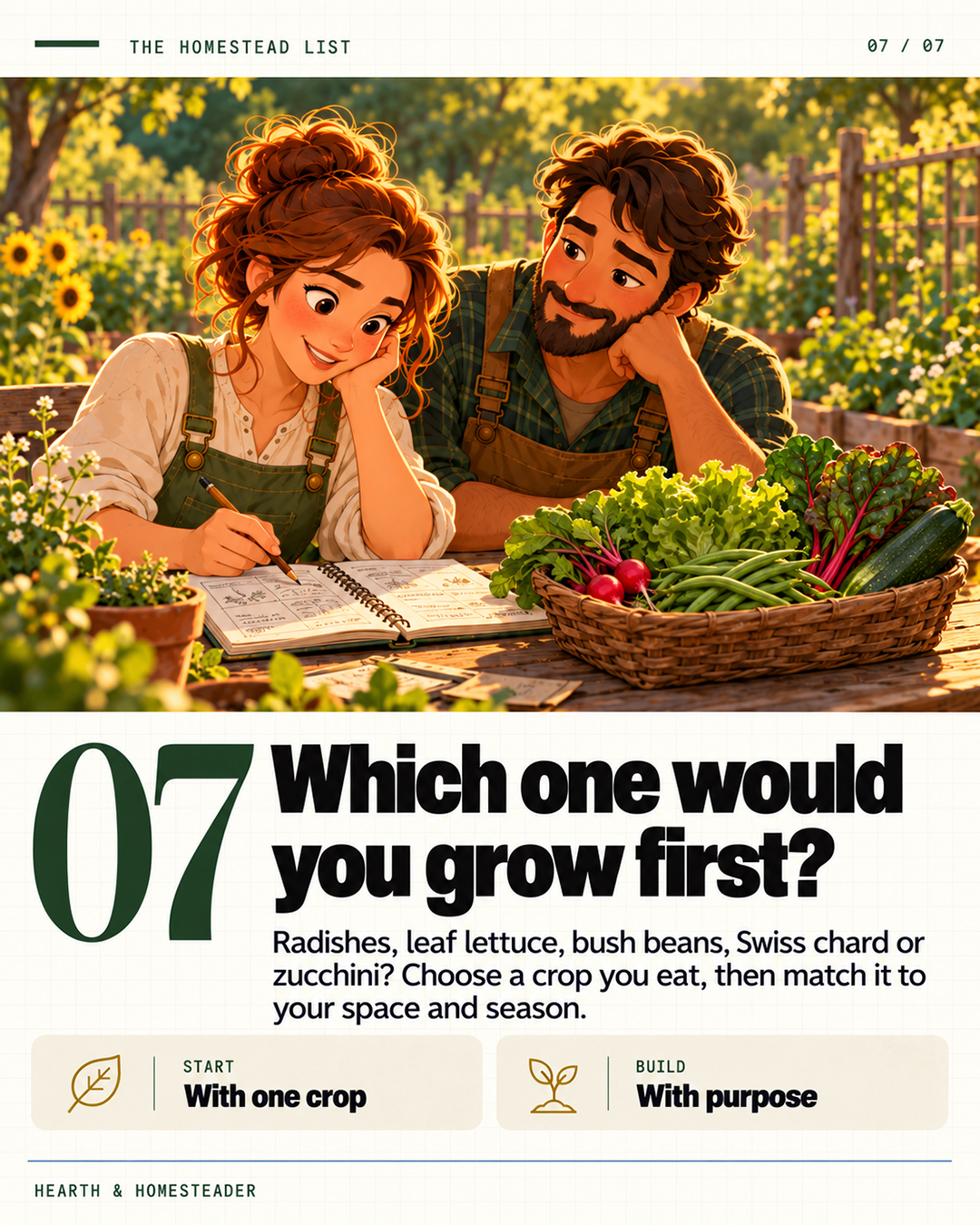
Pick one candidate and complete the crop shortlist before buying a full collection. Keep the variety, meal idea, space, local timing source and care questions together. You can compare all five without planting all five. Which would you grow first: radishes, leaf lettuce, bush beans, Swiss chard or zucchini?
First garden crop shortlist
Compare candidates before choosing one manageable first planting. Use the exact variety's packet and locally suitable crop guidance.
Open and print the planning worksheet
Optional planning resources
Affiliate links: we may earn a commission if you buy. As an Amazon Associate I earn from qualifying purchases. This is an optional editorial reading resource, not a hands-on product review. Start with the free crop guides below or check your library.
The Vegetable Gardener's Bible, 2nd Edition — Edward C. Smith
Optional further reading as you compare crops and plan a vegetable garden. Check your library first and keep the packet and locally suitable Extension guidance with your actual planting plan. This is an editorial book suggestion, not a hands-on product review.
View on AmazonSources and further reading
- Growing radishes in home gardens — University of Minnesota Extension
- Growing lettuce, endive and radicchio in home gardens — University of Minnesota Extension
- Growing beans in home gardens — University of Minnesota Extension
- Growing spinach and Swiss chard in home gardens — University of Minnesota Extension
- Growing summer squash and zucchini in home gardens — University of Minnesota Extension
- Growing Summer Squash (Zucchini) in a Home Garden — University of Maryland Extension
- Edward C. Smith — Hachette Book Group