 Hearth & Homesteader
The Homestead List
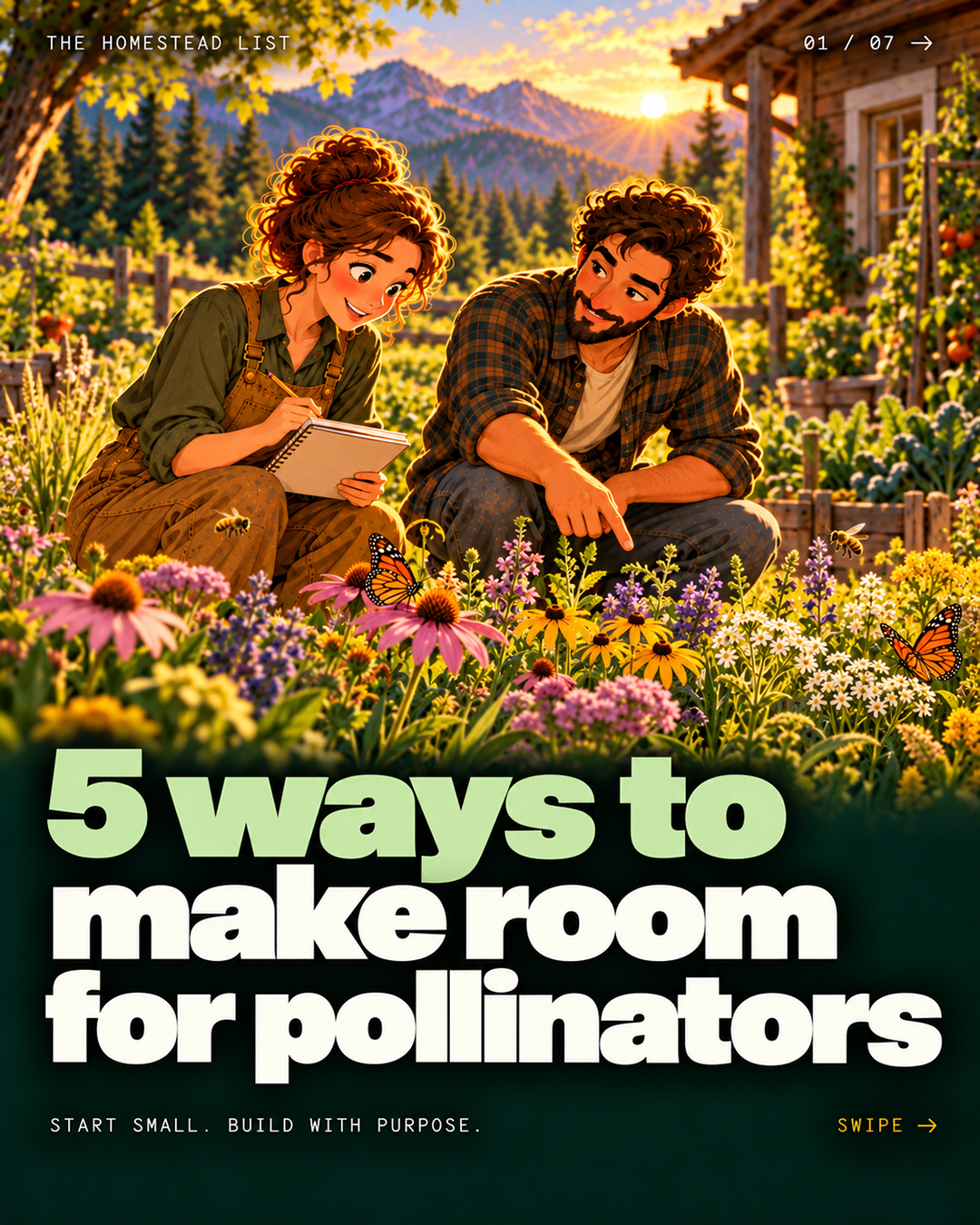
5 Ways to Make Room for Pollinators
A garden can offer more than a harvest for the household. A small, thoughtfully planned patch can also make room for the insects sharing the land. Before buying a tray of flowers, look at what is already growing and what your space can support. These five ideas give you a starting brief for a local native-plant nursery or gardening adviser. Choose one manageable area, gather the missing information and keep notes as it develops. The illustrations show the idea; your planting choices should follow your region and site.
1. Choose plants for your place.
Walk the proposed area and record sunlight, soil moisture and the space available at maturity. Maryland Extension recommends matching plants to garden conditions and using regional plant resources. Build a short list of locally appropriate native plants, then check it with a knowledgeable nursery or adviser. Bring your site notes so the conversation starts with actual conditions. Keep the botanical names and advice together. Before ordering, mark where each plant might fit and note any site-preparation questions you still need to answer.
Try this: Record site conditions, proposed plant names, regional guidance and questions for a local adviser.

2. Plan blooms beyond one weekend.
Look beyond the plants flowering on the day you visit a nursery. The University of Minnesota Bee Lab encourages planning for flowers from early spring through fall. Make a simple bloom-time chart for your location and look for gaps. Add existing flowering trees, shrubs and perennials to the chart before deciding what is missing. Treat the first chart as a plan to check through observation. Record when plants actually flower in your garden so the next purchase answers a specific need.
Try this: Create a local bloom-time chart, include existing plants and circle the gaps you want to investigate.

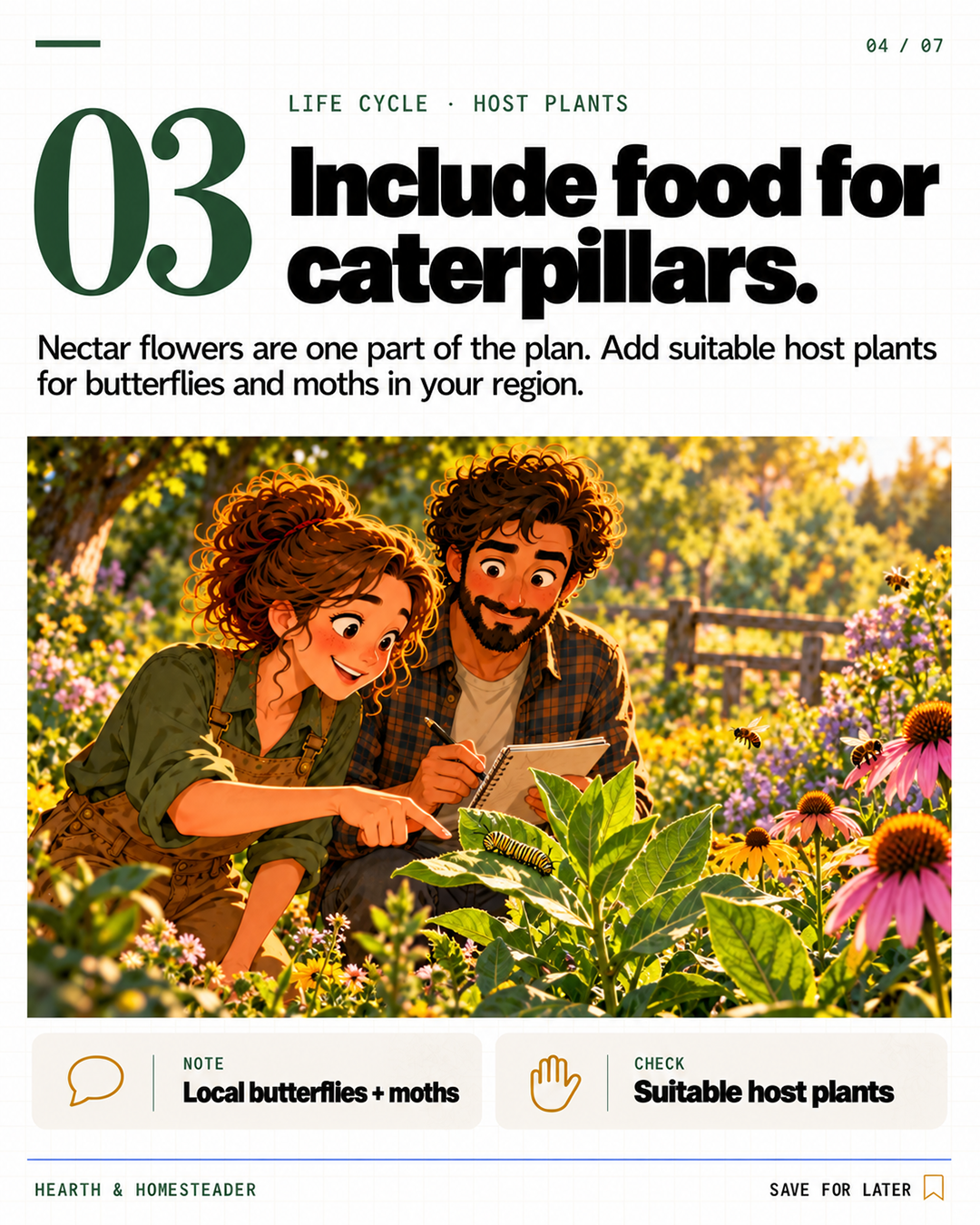
3. Include food for caterpillars.
Flowers for visiting adults are only part of the picture. Maryland Extension recommends including host plants that feed young caterpillars as well as nectar plants. Ask which butterflies and moths occur locally and which host plants suit your site. Make those relationships part of the shortlist instead of selecting only by flower color. Discuss the purpose with the people tending the patch, too. If a leaf looks chewed, pause to identify what is happening before assuming that the planting has failed.
Try this: List local butterflies or moths, suitable host plants and the source used to check each relationship.
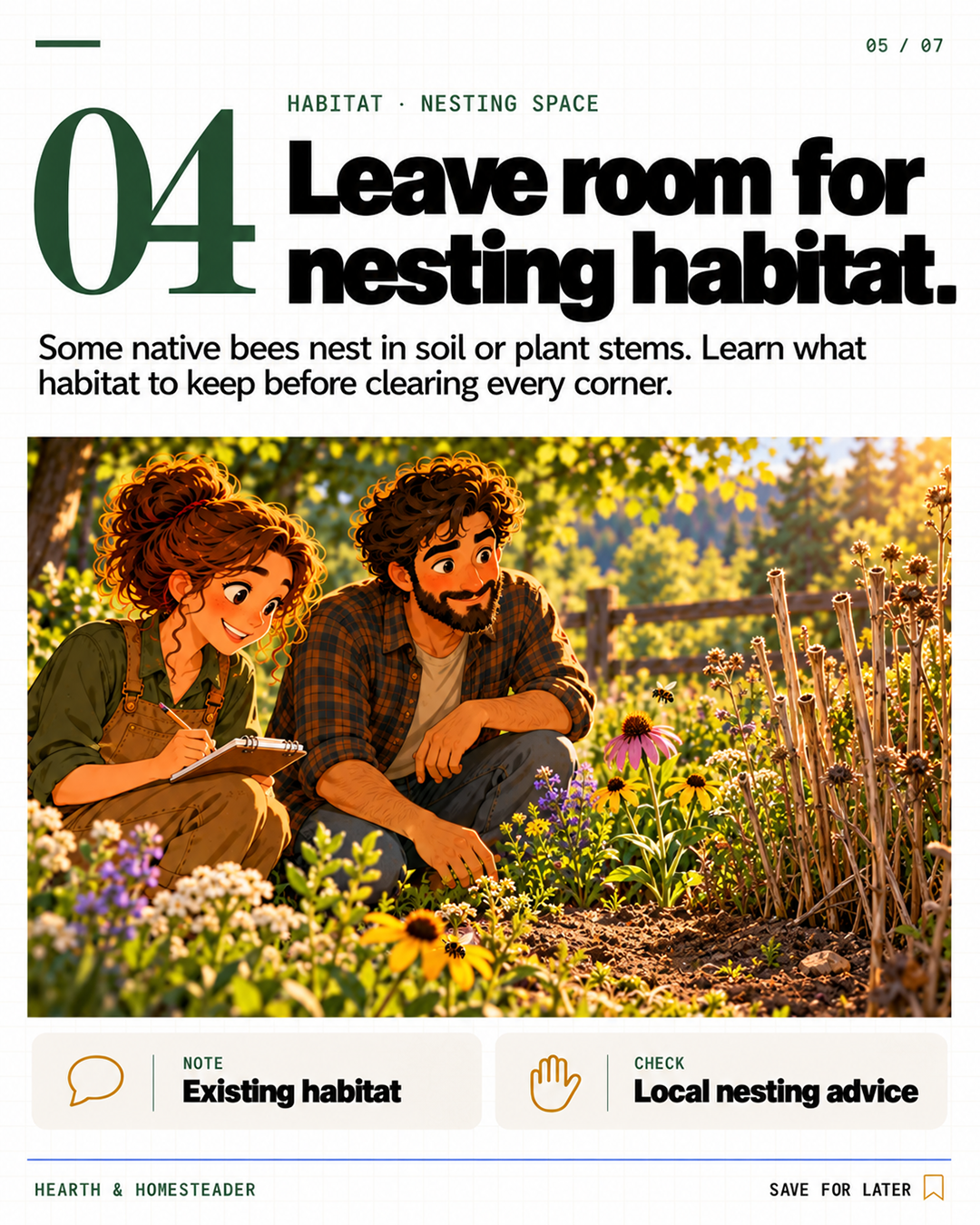
4. Leave room for nesting habitat.
Study the quiet corners before tidying them. Minnesota Extension explains that different native bees nest in the ground or use plant stems and other cavities. Read its habitat guidance and ask what is appropriate to retain in your setting. Mark the area on your garden sketch so ordinary maintenance does not accidentally undo the plan. Agree with the household on paths, working areas and the patch boundary. A clear shared understanding helps the space remain intentional while you learn more about its visitors.
Try this: Map existing habitat, note local nesting guidance and agree which areas to retain during routine maintenance.
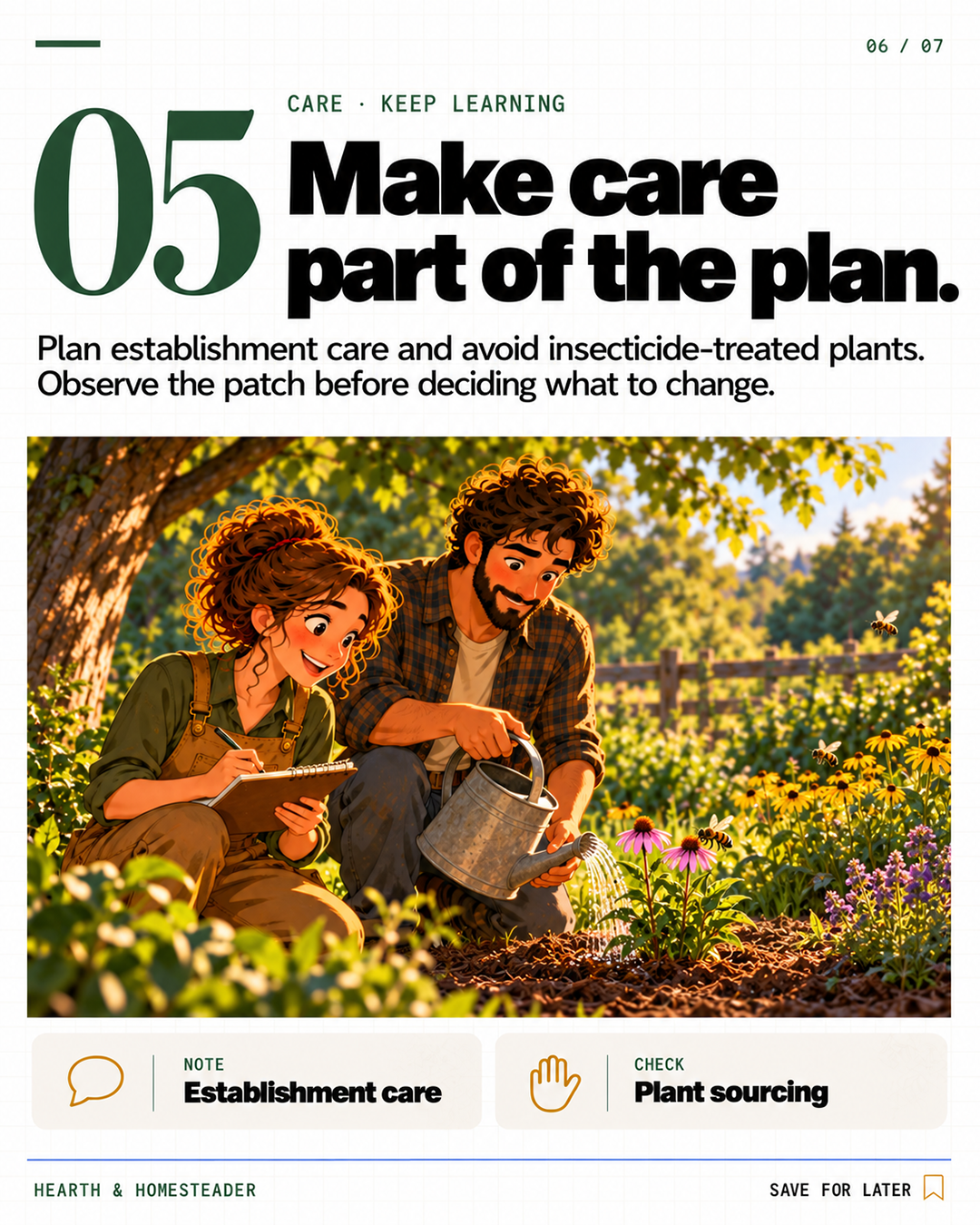
5. Make care part of the plan.
Ask about the plants before bringing them home. The Minnesota Bee Lab advises checking that purchased plants and seeds have not been treated with insecticides. Discuss sourcing and the establishment care needed for your chosen plants with the supplier. Decide who will handle regular checks, watering when needed and follow-up questions. Keep those instructions beside your observations. If a plant struggles, record the conditions and seek advice before changing several things at once. Review the first patch before committing to a larger one.
Try this: Record plant sourcing, establishment instructions, the willing gardener, backup arrangements and observations to review.
Your next step
Choose one next step you can explain clearly: observe the site, fill a bloom-time gap, research a host plant, identify habitat to retain or arrange the care routine. Use the worksheet to collect the details before shopping. Save photographs and dated observations as the patch develops, and bring unanswered questions to a local adviser. Where would you begin? A small area you understand is a useful place to start making room for pollinators.

Pollinator patch planning sheet
Plan one manageable patch using current local plant and habitat guidance. Keep observations separate from questions still to research.
Open and print the planning worksheet
Optional planning resources
Affiliate links: we may earn a commission if you buy. As an Amazon Associate I earn from qualifying purchases. This optional editorial reading resource is not a hands-on product review. Begin with the free guides below or check your library.
Attracting Native Pollinators — The Xerces Society
Optional background reading on native pollinators and habitat planning. Check your library first and use current regional guidance for plant selection.
View on Amazon