 Hearth & Homesteader
The Homestead List
5 Ways to Use Fall Leaves on Your Homestead
Before filling another yard-waste bag, decide where some of those leaves could serve your place. A small garden or yard gives you options, even without acres of land. Start with leaves from a known source, separate litter and diseased plant debris, and choose a use that fits the space. These five ideas can share the same yard. You might keep one corner undisturbed while moving leaves off a walkway and into a garden project. Begin with one manageable area.
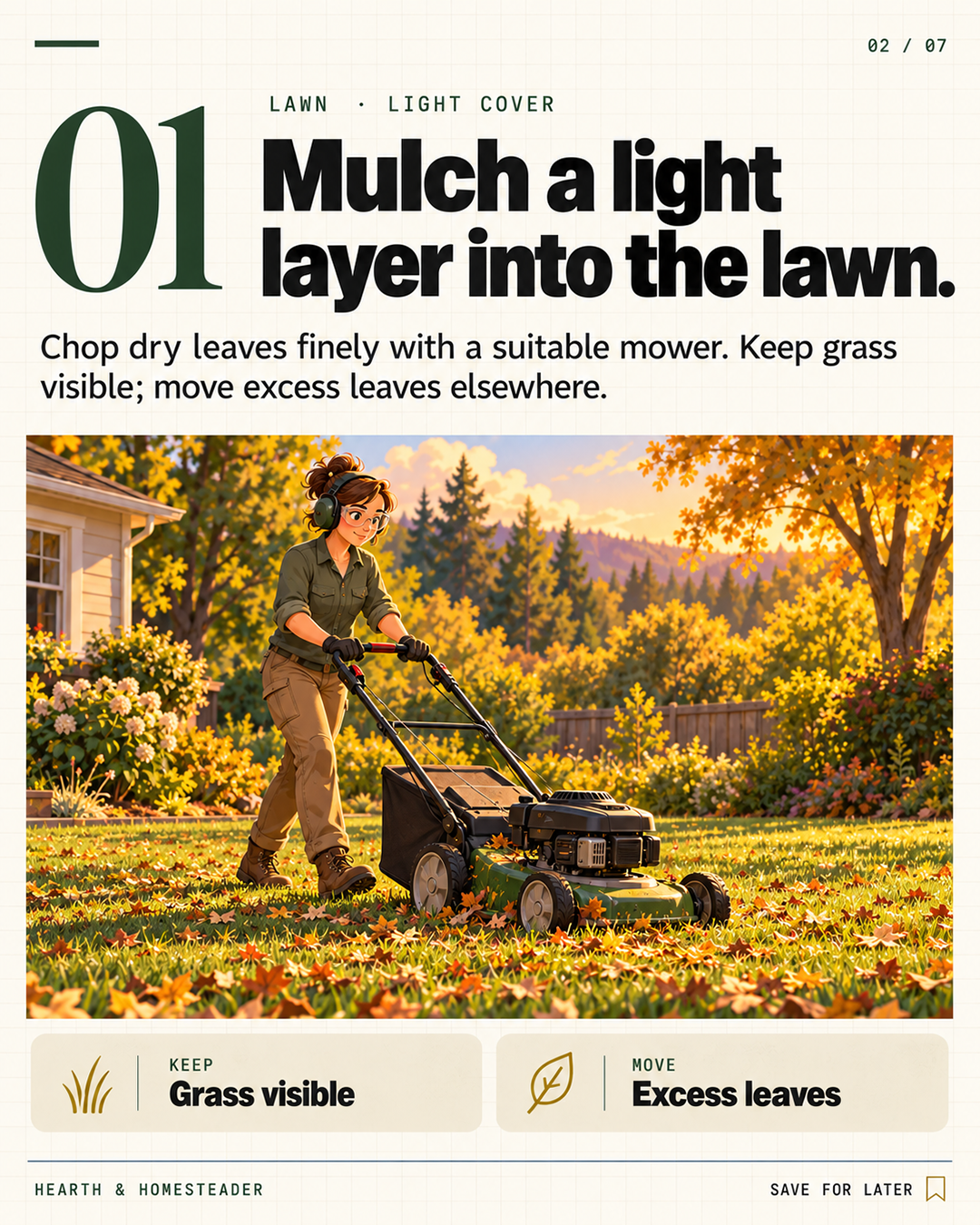
1. Mulch a light layer into the lawn.
Where lawn conditions and your equipment allow, finely chop dry leaves rather than leaving a dense blanket over the grass. Maryland Extension includes mulching leaves on lawns among its fall options. Keep grass visible and move excess leaves to another suitable use. Follow the mower manual, clear debris first and keep others away while operating it. Pick a small test area so you can see the result. If the leaves remain in heavy clumps, choose a different destination for that material.
Try this: Choose one lawn area. Note whether the grass remains visible and where any excess leaves will go.
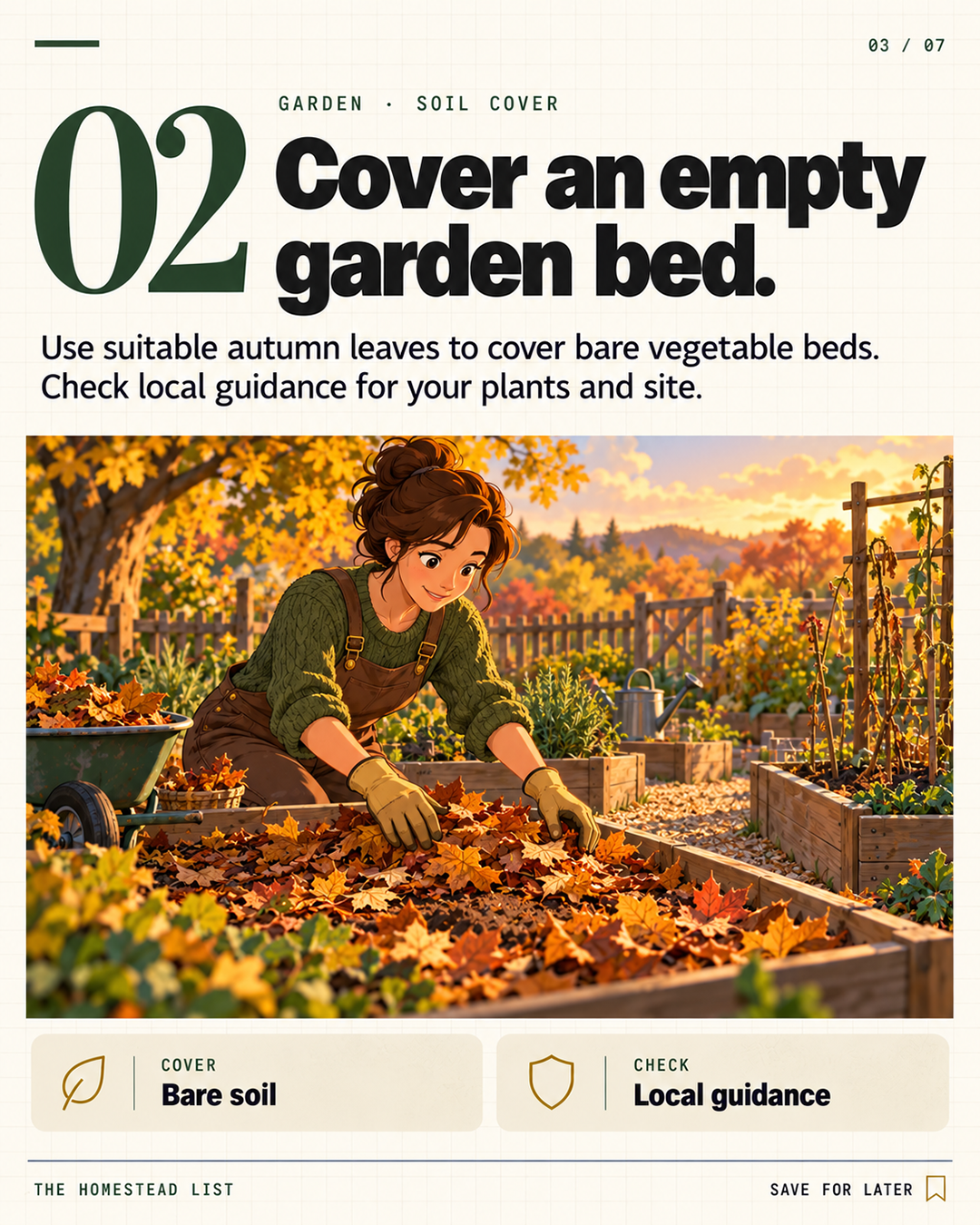
2. Cover an empty garden bed.
Maryland Extension suggests autumn leaves or mulch for bare vegetable beds without a cover crop. Choose a harvested bed and check guidance for the plants and conditions at your site. Keep the bed name and your intended next crop in your notes so you can revisit the choice before planting. Ask local Extension about leaf suitability if you are unsure of the tree species or material history. A first attempt can stay small, leaving you an easy area to observe and adjust.
Try this: Label one candidate bed, the leaf source and the site-specific question you will check before covering it.
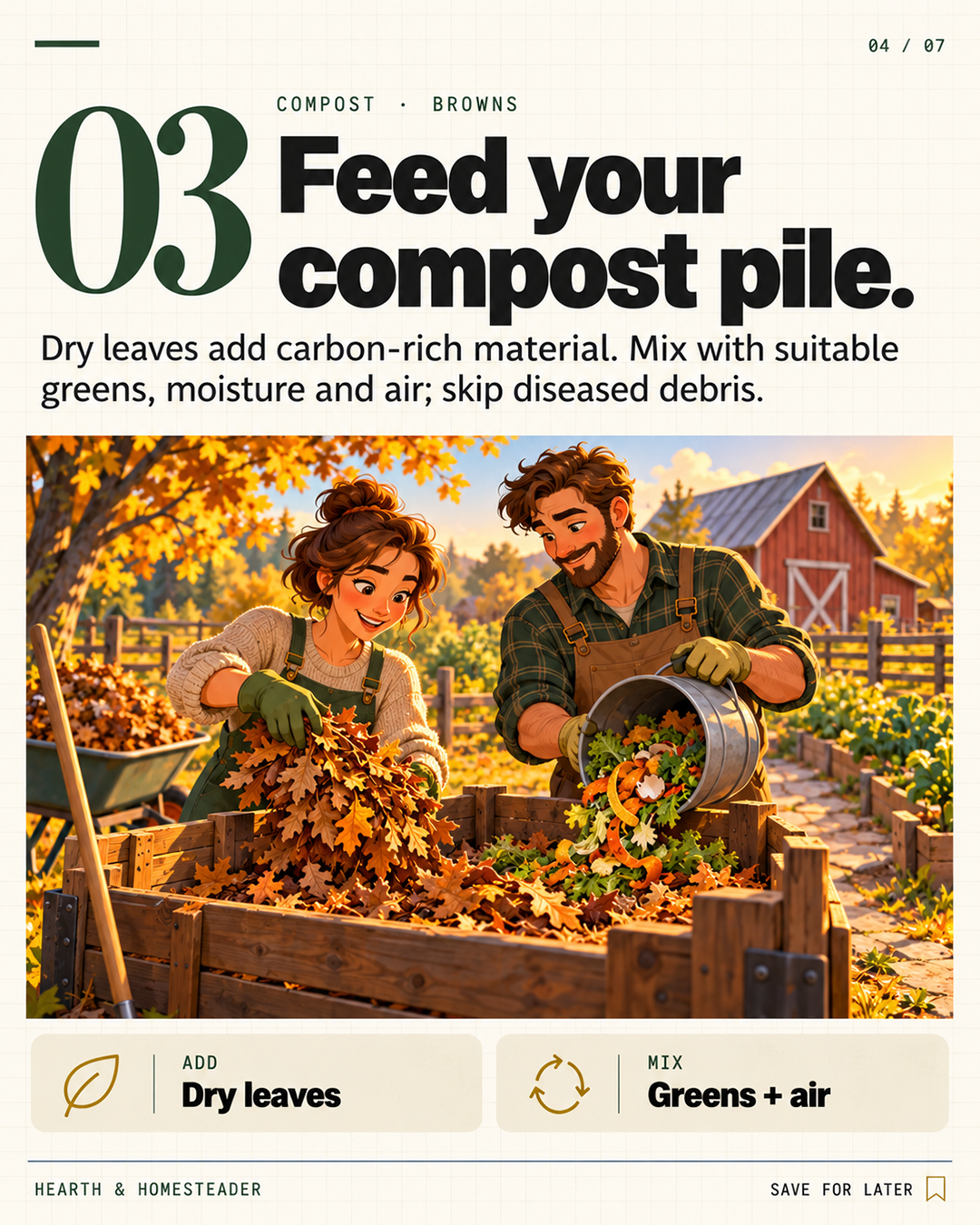
3. Feed your compost pile.
Dry leaves are carbon-rich compost ingredients. Iowa State Extension explains that decomposition also needs nitrogen-rich material, moisture and oxygen. Mix suitable greens with the leaves and follow a home-composting guide for managing the pile. Keep meat, dairy, pet waste and diseased plants out. Record what you added so an unexpected smell or slow change gives you something concrete to investigate. If more than one person contributes scraps, put the accepted-materials list where everyone can see it.
Try this: Write a short accepted-materials list and record the date of one addition to the pile.
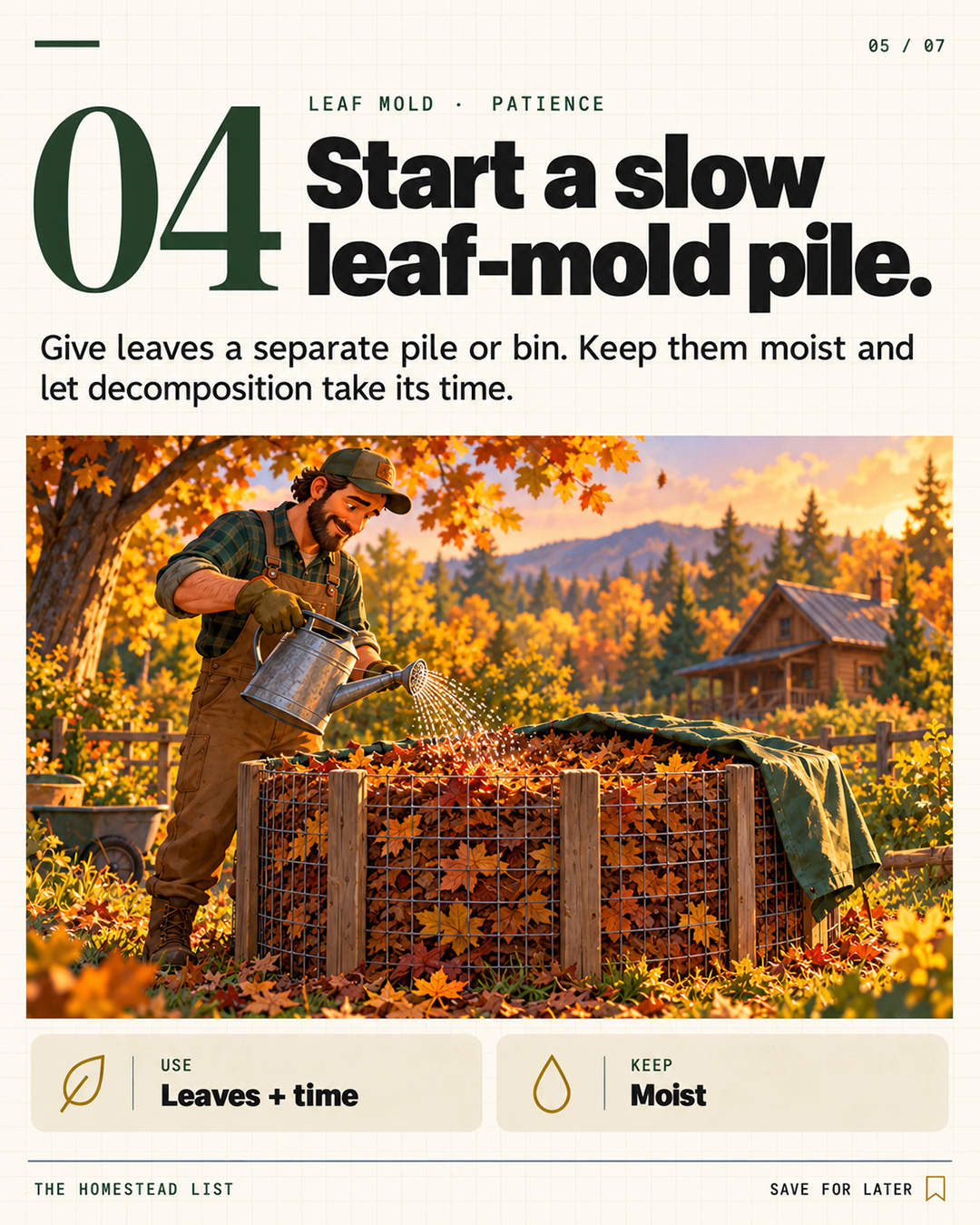
4. Start a slow leaf-mold pile.
For another option, keep leaves in a separate heap or bin and maintain moisture as they break down slowly. Iowa State describes leaf mold as a material formed mainly through fungal decomposition. It can become a soil amendment or mulch. Give it time; do not count on a fixed finishing date. Choose a spot you can return to and label the start date. Keep a simple observation log with changes in texture and moisture. The separate label helps your household distinguish this project from the mixed compost pile.
Try this: Mark a possible location and decide who will check the leaves and record changes over time.
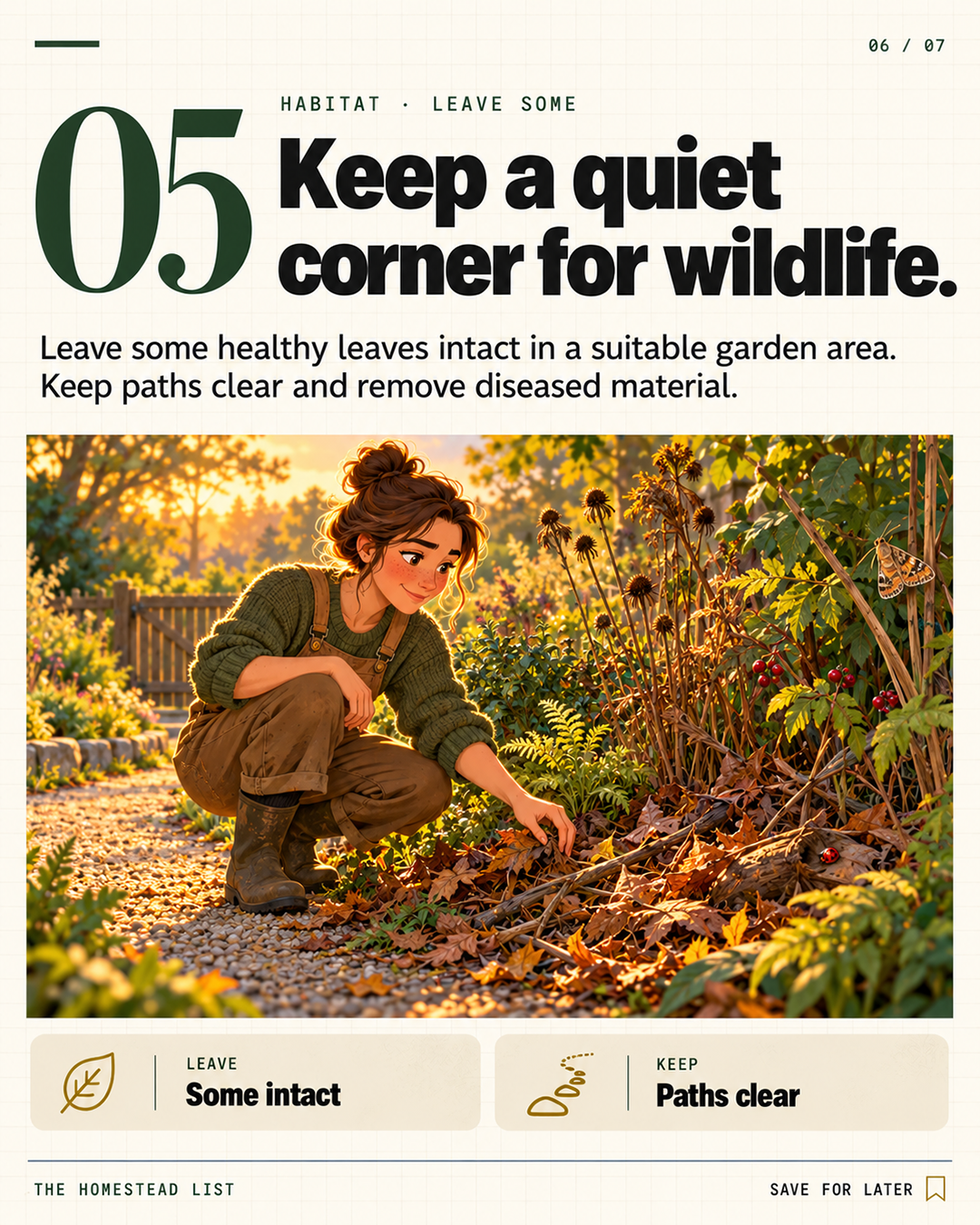
5. Keep a quiet corner for wildlife.
Some leaves can stay whole in a suitable garden area. Maryland Extension describes leaf litter as overwintering habitat for beneficial insects and advises removing infected plant material. Choose the area deliberately: keep walking routes clear and, where ticks are a concern, keep leaf litter away from places people and pets frequently use. Share the location with everyone who helps in the yard so the corner is not cleared by accident. Observe from the path instead of repeatedly disturbing the leaves to look for insects.
Try this: Sketch the area you will leave intact, the paths that stay clear and who needs to know about the choice.
Your next step
Give each area a clear purpose before starting the cleanup. One part of the yard might need a clear path; another might hold a leaf project or an undisturbed habitat patch. Use the printable sheet to choose one job, name the person doing it and set a time to check the result. Where will your leaves go this fall?
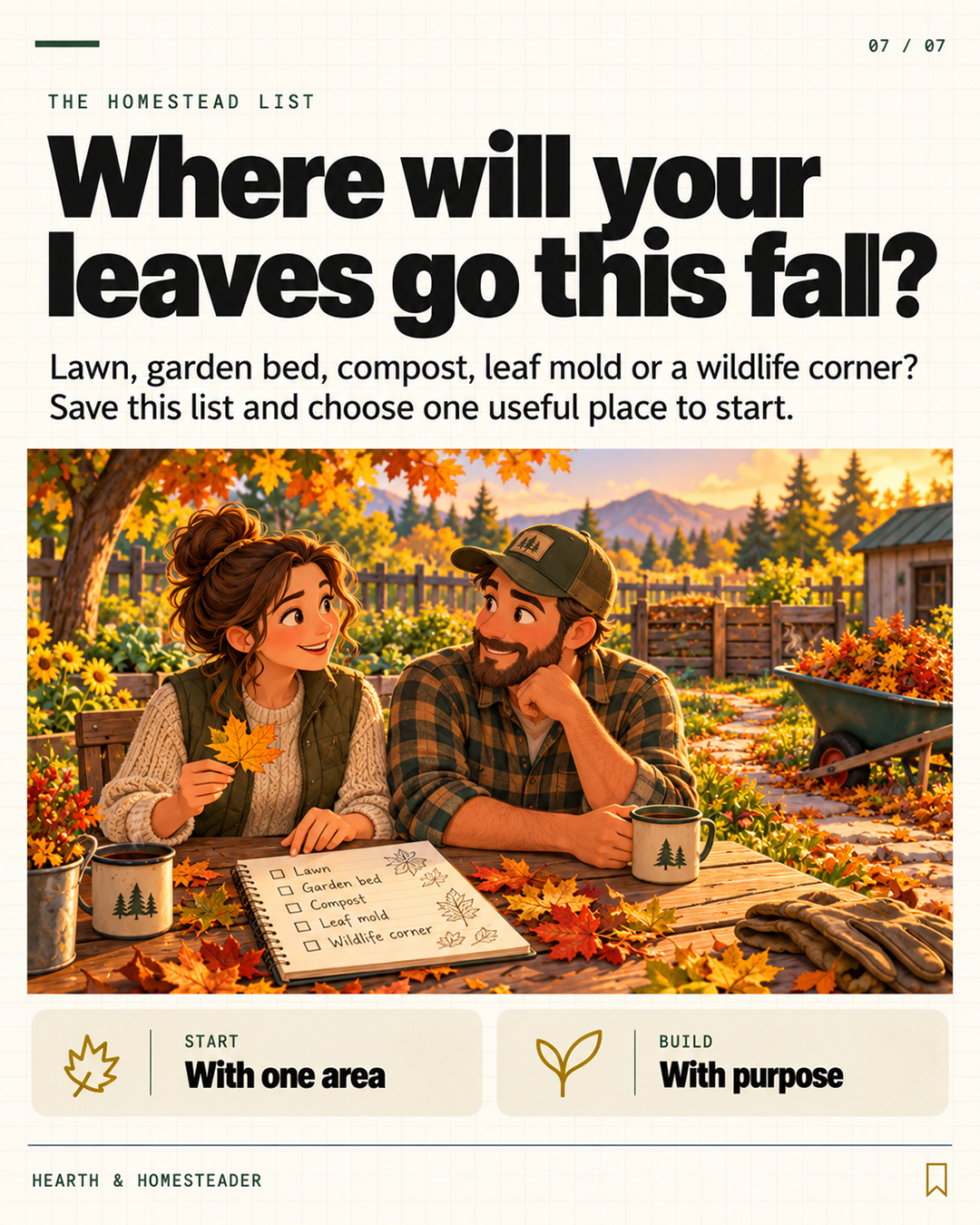
Fall leaf use planning sheet
Choose a suitable destination for leaves from a known source. Keep diseased debris separate and use local guidance for your site.
Open and print the planning worksheet
Optional planning resources
Affiliate links: we may earn a commission if you buy. As an Amazon Associate I earn from qualifying purchases. This is an optional editorial reading resource, not a hands-on product review. Start with the free Extension guides below or check your library.
The Rodale Book of Composting, Newly Revised and Updated
Optional further reading on making and using compost, edited by Grace Gershuny and Deborah L. Martin. Check your library first; a book purchase is not required to use the free Extension guidance.
View on Amazon